These resources are designed as a jumping-off point for students entering our writing prize on the theme, ‘Acts of Courage’.
They are not intended to be a complete guide, but rather to inspire ideas, help you explore different angles, and point you towards reliable, balanced information. Courage can mean many different things. It might mean standing up to someone more powerful than you, speaking out when other people remain silent, defending somebody who is being treated unfairly, challenging an idea you disagree with, admitting that you were wrong, or finding the courage to do something that scares you.
Whether you’re writing an article, an essay, a story, or even a poem, research can help you explore what courage means in the world around you. You might find stories of people who have taken enormous risks, discover examples of everyday courage, or come across arguments that make you rethink what it means to be brave.
We asked writer and researcher Sujana Crawford to tell us a little about her own research methods – read her tips for getting started here.
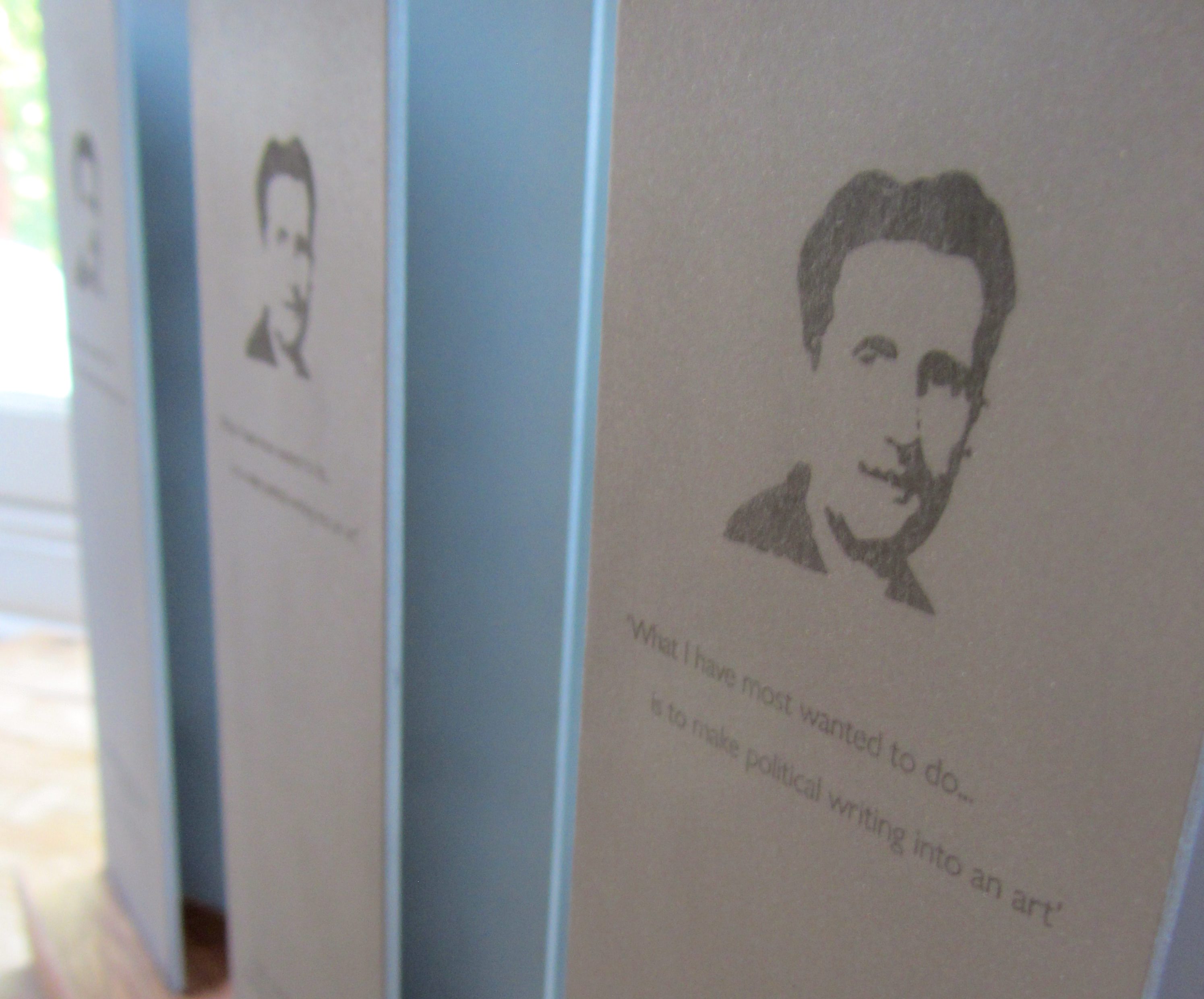
For George Orwell, courage was closely linked to intellectual honesty. He famously defined freedom as the right to tell people what they do not want to hear. This meant having the moral courage to speak uncomfortable truths and challenge prevailing orthodoxies, even when doing so invited intense backlash.
“If liberty means anything at all it means the right to tell people what they do not want to hear.” George Orwell, ‘The Freedom of the Press’
Orwell’s own life embodied this principle. He risked his physical safety fighting in the Spanish Civil War, where he was badly wounded. Later, while suffering from severe tuberculosis, he lived on the remote Scottish island of Jura while writing Nineteen Eighty-Four, driven by a desire to expose the dangers of totalitarianism.
In his essays and journalism, Orwell often championed the underdog while refusing to romanticise any political party or movement. He believed that writers had a responsibility to face unpleasant facts, even when those facts were inconvenient to their own political commitments.
The Orwell Foundation continues this tradition by recognising intellectual courage in political writing and reporting: the willingness to investigate, question, challenge and write honestly without simply following the crowd.
Writing is a creative process, but research can help you discover the people, ideas and events behind the things you want to write about. You might come across surprising acts of courage, untold stories, difficult questions, or people who found courage in circumstances where they had very little power.
As 2026 Orwell Prize for Political Writing winner Karen Bartlett put it:
“All my books have a historical impulse, but without political purpose I’d never start and without enthusiasm I’d never finish. Most of my books are about people fighting for justice … We all know that human beings can be terrible, but I am always motivated to write about those who are also turn out to be amazingly brave and heroic.”
What does courage mean?
Before you start researching, think about what you mean by courage.
Is courage about doing something frightening? Is it possible to be brave without being physically courageous? Can telling the truth be an act of courage? What about changing your mind? Is standing up to your friends sometimes braver than standing up to an obvious enemy?
You might want to explore the difference between courage, heroism and recklessness. Does doing something dangerous automatically make someone brave? Or does courage depend on why they did it?
You could also think about whether courage is always visible. Some forms of courage happen in public, such as protesting or speaking in front of a crowd. Others happen privately: asking for help, leaving an abusive situation, admitting a mistake, defending someone who is being bullied, or continuing with something difficult when nobody else knows how hard it is.
Think about the people you consider brave. What have they actually risked? Their safety? Their reputation? Their friendships? Their career? Their freedom? Their lives?
And who gets remembered as a hero? Are there forms of courage that are less visible, or people whose courage has been overlooked?
The Amnesty International resource Here I Stand: Stories That Speak for Freedom contains stories and poems exploring courage, solidarity, freedom and standing up against injustice.
Our very own Trainee Trustees have been thinking about courage too…
Bella says:
‘I believe that in order to be courageous, you have to first be scared. A veteran actor is not as brave as someone who stands up and delivers their part with shaking hands. A thrill-seeking skydiver is not as brave as someone who parachutes out of a burning plane. Courage is uncomfortable. It forces you to change shape, to adapt, to grow.
Bravery comes from finding the thing that matters more to you than your fear. This could be a dream, a loved one, or a political cause – sometimes it’s simply the desire to live freely and authentically. Often the things that make us brave are, helpfully, also the things that inspire us to write – this was certainly the case for Orwell, whose relentless pursuit of his principles galvanised his writing and not infrequently put him in harm’s way.
Bravery is passion that defies your instincts. First, find what scares you and then, find what you hold dear. Courage will follow.’
Eleni says:
‘Courage is the ability to speak, act, and exist as one’s authentic self. It doesn’t mean acting without fear, but instead having the courage to adapt and continue forward despite being afraid. It means being motivated by a personal ethos and set of values that allow for acts of strength and authenticity despite adversity. George Orwell showed courage in a range of ways, such as risking his life in the Spanish Civil War, choosing to resign from a job that didn’t align with his values, and publishing books and essays that were censored and lost him allies in publishing. However, it can also be seen in smaller actions, such as allowing for personal growth, speaking up against bullying, showing persistence in a class or a job you don’t always enjoy, or choosing to express yourself despite the fear of judgement.
Fundamentally, to show courage is to be honest with yourself and to prioritise a moral conviction above potential consequences. Whether this is shown loudly through globally recognised acts of political resistance, or quietly through prioritising authenticity in your everyday life, courage is a bridge between the person you are and the person you want to be.’
Standing up to power
Some of the most famous examples of courage involve people challenging those with much greater power than themselves.
Why do people decide to speak out when they know there may be consequences? What makes someone willing to risk their job, reputation, freedom or even their life for something they believe in?
Orwell provides one example. He fought against fascism in Spain because he believed that the conflict was about more than the politics of one country. His experience there also changed his understanding of propaganda and political truth, and became an important influence on his later writing.
You could research:
1/ George Orwell and the Spanish Civil War
2/ Rosa Parks and the Montgomery Bus Boycott
3/ Nelson Mandela and the struggle against apartheid
4/ Emmeline Pankhurst and the women’s suffrage movement
5/ The Civil Rights Movement
But remember that courage does not have to belong to famous historical figures. Orwell encouraged us to look at what is in front of our nose. You could look for stories of people in your own community who have challenged injustice, campaigned for change or stood up for somebody else.
What makes an ordinary person decide that something is important enough to take a risk?
Courage and journalism
What does it mean to be a brave journalist?
Journalists sometimes have to report from war zones, investigate powerful organisations, expose corruption or tell stories which governments, businesses or powerful people would rather remain hidden.
But courage in journalism does not necessarily mean putting yourself in physical danger. It can also mean spending months investigating something nobody wants you to investigate, publishing an unpopular story, admitting an error, or allowing people whose experiences are often ignored to tell their own stories.
The Orwell Foundation’s own Orwell Prizes celebrate writing and reporting that combines political purpose with clarity, courage and fidelity to truth.
In 2026, the Orwell Prize for Political Writing recognised Karen Bartlett’s The Escape from Kabul, while Fatemeh Jamalpour was a finalist for For the Sun After Long Nights. Their books offer very different examples of what courageous political writing can look like.
Jamalpour was banned from journalism in Iran and told by interrogators that she could not produce any kind of content. She continued to write, recording her interrogations, and later reported from the streets of Tehran during the Woman, Life, Freedom uprising.
“I felt a responsibility: if they were in prison, I had to report from the streets of Tehran, to watch and write.”
Fatemeh Jamalpour, For the Sun After Long Nights — Political Writing finalist 2026
She describes writing under dictatorship as having both a political and historical purpose:
“My reporting may not change events immediately, but it documents them for the future — so that one day people will know the long and painful road we travelled toward freedom.”
Fatemeh Jamalpour, For the Sun After Long Nights
You can read more about Jamalpour and the other 2026 Political Writing finalists here.
You could also explore Andrey Kurkov’s Three Years on Fire, which documents his experience of Russia’s full-scale invasion of Ukraine and the realities of living through war.
Ask yourself: What does it take to keep writing when someone is trying to stop you?
Courage and bearing witness
Sometimes courage means making sure that something is not forgotten.
Ukrainian novelist, poet and human rights activist Victoria Amelina left her career as a fiction writer after Russia’s full-scale invasion of Ukraine. She began working as a war crimes researcher, documenting evidence of atrocities and helping to preserve the stories of people affected by the war.
Among other things, Amelina helped uncover the buried diary of Ukrainian children’s author Volodymyr Vakulenko, who had been executed after his abduction by Russian forces.
Her story raises difficult questions about the relationship between writing, truth and responsibility.
What makes someone decide to stop writing fiction and begin documenting reality? What does it mean to preserve someone’s story after they are gone? Is documenting an injustice itself an act of resistance?
You could explore the work of journalists, historians, photographers, human rights investigators and ordinary people who have documented events which others wanted to conceal.
The International Committee of the Red Cross and Amnesty International also provide resources on conflict, human rights and the protection of civilians.
Speaking out
Sometimes the bravest thing you can do is say something when everyone else is staying quiet.
This could mean challenging a racist joke, defending someone who is being bullied, reporting wrongdoing, questioning an authority figure, or telling someone that their behaviour is unacceptable.
But speaking out can have consequences. You might lose friends, be criticised online, damage your reputation or find yourself isolated from the people around you.
This raises some interesting questions:
- When should we speak out?
- Is it ever right to remain silent?
- Does courage require risk?
- Why can it be so difficult to disagree with our friends?
- Does social media make speaking out easier or harder?
- What happens when speaking out makes you unpopular?
You could research whistleblowers – people who expose wrongdoing from inside organisations. What motivates them? What happens to them afterwards? What protections should they have?
You could also explore journalists who have risked their safety or careers to report stories that people in positions of power would rather keep hidden.
The Committee to Protect Journalists documents attacks on journalists around the world and the risks involved in reporting difficult stories.
Orwell’s writing repeatedly returned to the importance of speaking honestly, even when doing so was uncomfortable. In essays such as ‘Politics and the English Language’, he argued that language could be used to conceal reality rather than describe it.
What would you be willing to say if you knew that some people would be angry with you for saying it?
Courage and activism
Young people have often been at the centre of campaigns for social and political change. Sometimes courage means taking to the streets; sometimes it means organising a campaign, persuading other people, writing to a politician or simply being the first person to say that something is wrong.
The UNICEF Youth Action Guide provides practical advice on advocacy, research, networking, action planning and campaigning.
The UNICEF UK Youth Advocacy Toolkit offers advice on choosing an issue, developing a campaign and communicating with decision-makers.
Amnesty International UK also has a Youth Activist Toolkit with advice on starting groups, organising campaigns and taking action on human rights.
Ask yourself: What makes someone courageous enough to act? And what makes it difficult for people to act together?
Courage and disagreement
It can take courage to change your mind.
We often think of courage as standing firmly by what we believe. But what happens when new evidence shows that we were wrong?
Changing your mind can mean admitting that you misunderstood something, apologising to someone, or accepting that an argument you believed was convincing does not stand up to scrutiny.
Orwell was deeply concerned with the dangers of political conformity. His writing repeatedly challenged the pressure to accept ideas simply because everyone around you appeared to believe them.
The Orwell Foundation’s criteria for the Orwell Prizes include critical thought and intellectual courage. These qualities involve questioning assumptions rather than simply accepting the views of the people around you.
Ask yourself: Is it braver to defend your beliefs, or to change them when the evidence demands it?
Courage and everyday life
Courage does not always make the news.
Think about the kinds of courage you encounter in everyday life. Someone might move to a new country and have to build an entirely new life. Someone might tell their friends that they are struggling. Someone might stand up for a classmate who is being bullied. Someone might challenge a prejudice they have previously held themselves.
These stories can be just as interesting as stories about famous heroes.
You might interview someone you know about a moment when they had to be brave. Ask them:
- What were you afraid would happen?
- Why did you decide to act?
- Did anyone help you?
- What happened afterwards?
- Would you make the same decision again?
- Did you feel brave at the time?
Remember to ask permission before using somebody else’s personal story in your writing, and be sensitive when discussing experiences that may be difficult or private.
When courage goes wrong
Not everything described as courage is necessarily brave.
History is full of people who have taken enormous risks for causes which caused terrible harm to others. People can also use the language of courage to justify violence, cruelty or reckless behaviour.
This gives you another interesting question to explore: Can something be courageous and wrong at the same time?
What is the difference between courage and recklessness?
Is someone brave if they are willing to hurt themselves? What about if they are willing to hurt someone else?
Can a person be courageous in service of a bad cause?
You might find that thinking about these questions makes your definition of courage much more complicated – and much more interesting.
Creative Forms
The Orwell Youth Prize supports many different forms of writing and mediums for expression.
You could write an essay about an issue that requires courage to discuss. You could write a piece of journalism about someone who has stood up for others. You could write a short story about a character facing a difficult choice. You could write a poem about fear, resistance or resilience.
You could even create a game in which the player has to make difficult moral choices.
If you are interested in Game Design, you can start with this video made by Youth Prize Winner Benjamin McEwan.
We welcome both concepts and games themselves, and here are some places you can turn your narratives into games:
1/ Twine is a great place to start because it can be used to create interactive, nonlinear stories without needing coding knowledge.
2/ This helpful Twine guide may help.
3/ Godot Engine
Think about how the form you choose might change the way your reader experiences courage. Would a poem communicate fear differently from an essay? Could a game make a reader experience the consequences of a difficult decision?
Full-length Fiction Works
There are lots of novels which explore courage, fear, resistance and morality.
You might start with:
George Orwell’s 1984 and Animal Farm
Harper Lee’s To Kill a Mockingbird
Ray Bradbury’s Fahrenheit 451
Aldous Huxley’s Brave New World
Markus Zusak’s The Book Thief
Malorie Blackman’s Noughts & Crosses
Lois Lowry’s The Giver
Khaled Hosseini’s The Kite Runner
Poems
Poetry can be a powerful way of exploring courage.
You might explore:
‘Still I Rise’ by Maya Angelou
‘Invictus’ by William Ernest Henley
‘If—’ by Rudyard Kipling
‘The Hill We Climb’ by Amanda Gorman
‘Caged Bird’ by Maya Angelou
You could also look for poems written by people who have experienced war, imprisonment, exile, discrimination or political repression.
What does courage look, feel, or sound like in a poem?
Our Youth Fellows suggest…
Paul Gallico’s The Snow Goose
Anne Bronte’s The Tenant of Wildfell Hall
Prize-winning Inspiration
Below are some previous Orwell Youth Prize entries which might inspire you to think about this year’s theme.
Look beyond the subject matter and ask yourself what is courageous about the writing itself. Is the writer tackling something difficult? Challenging an assumption? Telling a story that is usually ignored? Taking an unusual creative risk?
‘The Faceless Drug’ by 2019 Junior Winner Francesca Morgan explores the death penalty through fiction.
‘Brick Lane: A Case Against Social and Ethnic Exclusion in Britain’ by 2019 Winner Asher Gibson explores social and ethnic exclusion in Britain.
‘If Liberty means anything at all, it means the right to tell people what they do not want to hear’ by 2016 Winner Alexander Butcher explores free speech and censorship – and asks what it means to defend the right to express unpopular ideas.
You could also explore The Orwell Youth Prize’s previous winners and see how young writers have approached difficult subjects in very different ways.
Ready to get started?
You don’t need to find the biggest or most dramatic example of courage.
Start with something that interests you.
Think about something you have seen, experienced, read about or disagreed with.
Then start researching.
Talk to people. Read different perspectives. Look for evidence. Follow stories beyond the headline.
Be prepared to discover that your first idea was incomplete or even wrong (!).
And remember that courage can be part of the writing process too. Sometimes the most interesting thing you can write is the thing you have been wondering about but have been afraid to ask, or put on paper before.
Once you’ve started exploring the theme, head to our Find Your Form page to start thinking about which form will allow you to best express your ideas.