Search Results for: george-orwell/by-orwell/essays-and-other-works/hop-picking

Resources

We hope teachers will find the Orwell Youth Prize a valuable way of introducing students to writing independently, as well as Orwell’s own work. But there are many other ways of using Orwell in the classroom.

Whatever your subject  – politics, English, history, citizenship, drama to name but a few – whatever the age group – the Orwell Foundation website also has a wealth of resources about Orwell and his work. Over the year’s, we’ve also produced a range of resources to accompany our Youth Prize themes. These are available free to everyone.

Our resources include works by George Orwell, works about George Orwell and video of events run by the Orwell Prize on politics and literature. Below we provide a useful guide to material that might be of particular interest in the classroom; much more is available through the publishers of Orwell, Penguin and Harvill Secker, and the works below are reproduced under copyright of them and the Orwell Estate and with their kind permission.

Works by Orwell

We have dedicated webpages for each of Orwell’s six novels – Burmese Days, A Clergyman’s Daughter, Keep the Aspidistra Flying, Coming Up for Air and of course Animal Farm and Nineteen Eighty-Four – and three major non-fiction works – Down and Out in Paris and London, The Road to Wigan Pier and Homage to Catalonia. Additionally, a selection of other essays and short works (including poetry) by Orwell is available.

Orwell Daily is our weekly Substack serial, picking out highlights and hidden gems from Orwell’s journalism, letters and diaries and sharing them with subscribers “on the day” that they were first published. Please not that the serial is pitched at adult readers.

Orwell and Journalism

In July 2022, the Orwell Youth Prize teamed up with University College London Special Collections and the Orwell Archive to run a summer school for Year 12s on ‘Orwell and Journalism: In Pursuit of Truth’. As part of this project, we also produced online resources, designed for students in Years 12 and 13, on Orwell’s work as a journalist and how his life experiences informed his work.

The written resource includes materials from the Orwell Archive, while the short film includes background about Orwell’s life, journalism and writing style, as well as insights from contemporary journalists.

Events and films

Many of our Orwell Foundation events based on Orwell’s life and work and might be useful: we keep a library of free-to-view recordings on our YouTube.

The Orwell Youth Prize also filmed our own exclusive interview with Richard Blair, which you can see here. Additionally, there are events based on themes Orwell wrote about and many events discussing different aspects of politics and society. In 2020, we also created a new resource on “Orwell and Empire” to accompany Dr Tristram Hunt’s Orwell Memorial Lecture.

Orwell in the Classroom

Below are a few examples of works, or combinations of works, which could work particularly well in the classroom or workshops. They have been selected based on the depth of what we have available, but also the sorts of exercises that they could be used for (e.g. comparing source material with the finished product) and curriculum relevance.

Individual essays that could prompt discussion – a few suggestions

Orwell wrote a number of compelling, accessible essays about language and literature: what do we think of Orwell’s rules? What should the role of literature be?

Eyewitness/descriptive essays: how does Orwell use imagery and other techniques?

Orwell’s essays about politics and ideas (these could be particularly useful in 20th century history – WWII; The Cold War; decolonization etc):

He was also a master at writing about the particular to make a more general point:

Other:

Reviews of authors on the curriculum

Orwell’s best-known pieces of criticism include his essays  on Charles Dickens and Rudyard Kipling; lesser-known reviews include an essay on W. B. Yeats.

Works about particular novels

We have a wealth of background material on all of Orwell’s works, many of which are curriculum stalwarts.

  • for Nineteen Eighty-Four we have Orwell’s essays about language, politics and culture, works by others adapting it, reviews and analysis which could all give a fresh perspective
  • for Animal Farm we have essays concerned with similar themes, Orwell’s proposed prefaces, reviews, analysis and the stories behind the rejections and adaptations

Related works by others

We have pieces about other works contemporary to Orwell. For example, how does Orwell’s reportage in Down and Out (e.g.) compare to other similar works? How was it received by similar authors? And how do Orwell’s dystopias/representations of politics compare to others? (Not least those, like Zamyatin and Koestler, whose works he reviewed.)

We have some material on adaptations. How have others adapted Orwell and his work? For example, Mike Radford and the BBC on Nineteen Eighty Four, Chris Durlacher on adapting Orwell’s life, the story about the cartoon film of Animal Farm. How would you adapt Orwell?

And we have pieces by those inspired by Orwell. How have others followed in Orwell’s footsteps? For example, Emma Larkin in Burma, Stephen Armstrong and others to Wigan. How would you approach a similar project?

The Diaries

For historical source analysis – especially World War II – we have Orwell’s 1938-42 diaries. These also include other interesting contemporary sources, or links to them, such as a public information leaflet on masking windows in July 1939. Most striking are the newspaper articles Orwell references (and which the Diaries blog includes) in the approach to war, summer 1939, e.g. the surprise as the Nazi Soviet Pact is signed in August 1939.

These could help pupils improve their reading of historical sources, contribute to their historical understanding and be used to stimulate wider discussion. Orwell’s diaries can also be read as preparatory work for his longer essays and work, which could be an engaging way of comparing rough drafts with finished products.

For instance, The Road to Wigan Pier diary and Orwell’s other notes (e.g. Barnsley) were obviously kept with The Road to Wigan Pier in mind. Orwell’s Morocco diary (September 1938 to March 1939, part of the 1938-42 diaries) provides the basis for the essay ‘Marrakech’, while the Hop-Picking diaries are used for Down and Out in Paris and London, A Clergyman’s Daughter and essays including ‘Hop-picking’, ‘A Day in the Life of a Tramp’ and ‘The Spike’ (and the links from the Hop-Picking blog include newsreel and other materials).

A simple question would be: how does Orwell turn this material into essays and books? More complex questions might touch on the motivations, ethics and effects of this editing is. This extract from chapter one of Wigan Pier could be a starting point, as is this Observer article, which considers Orwell’s fact and fiction, and articles by Orwell winners, Timothy Garton Ash and Neal Ascherson on journalist Ryszard Kapuściński.

English Language Practice Papers

We have prepared these GCSE AQA-style exam practice papers to give you a helping hand – and to promote the Orwell Youth Prize (registered charity 1156494).
For teachers

Whatever your subject  – politics, English, history, citizenship, drama to name but a few – whatever the age group you teach – the Orwell Foundation website has a wealth of resources. These are available free to everyone, regardless of whether you or your school are currently involved with the Youth Prize. If you are interested in learning more about our workshops in schools, please get in contact with the administrator at admin@orwellyouthprize.co.uk.

Our resources include works by George Orwell, works about George Orwell and video of events run by the Orwell Prize on politics and literature. Below we provide a useful guide to material that might be of particular interest in the classroom; much more is available through the publishers of Orwell, Penguin and Harvill Secker, and the works below are reproduced under copyright of them and the Orwell Estate and with their kind permission.

Works by Orwell

There is a dedicated webpage for each of Orwell’s six novels – Burmese Days, A Clergyman’s Daughter, Keep the Aspidistra Flying, Coming Up for Air and of course Animal Farm and Nineteen Eighty-Four – and three major non-fiction works – Down and Out in Paris and London, The Road to Wigan Pier and Homage to Catalonia.

Additionally, a selection of other essays and short works (including poetry) by Orwell is available.

There are also three blogs of diaries written by Orwell:

  • 1938-42, includes eyewitness accounts of the Blitz and the run up to WWII (as well as Orwell’s time in Morocco and his experiences of keeping animals and growing vegetables…)
  • Hop-picking (1931), follows some of Orwell’s tramping exploits and his experience of picking hops in Kent, which many urban workers and their families would do in the summer
  • The Road to Wigan Pier (1936), includes Orwell’s research for the book of the same name

Works about Orwell

We have links to analysis, reviews and other material based on Orwell’s life and work; the most relevant to individual novels and diaries should already be linked to from the relevant novel and diary pages.

Orwell Prize events

Many of our Orwell Prize events based on Orwell’s life and work and might be useful. These include:

The Orwell Youth Prize also filmed our own exclusive interview with Richard Blair, which you can see here. Additionally, there are events based on themes Orwell wrote about (such as 2012’s ‘Poverty then and now, Orwell and his successors’), events about political writing more generally (such as ‘Autopsy of a Story’ with three shortlisted journalists dissecting their work and debates like ‘What makes a good political novel?’ with a critic and political novelists), and many events discussing different aspects of politics and society.

Below are a few examples of works, or combinations of works, which could work particularly well in the classroom or workshops. They have been selected based on the depth of what we have available, but also the sorts of exercises that they could be used for (e.g. comparing source material with the finished product) and curriculum relevance.

The Diaries

For historical source analysis – especially World War II – we have Orwell’s 1938-42 diaries. These also include other interesting contemporary sources, or links to them, such as a public information leaflet on masking windows in July 1939. Most striking are the newspaper articles Orwell references (and which the Diaries blog includes) in the approach to war, summer 1939, e.g. the surprise as the Nazi Soviet Pact is signed in August 1939.

Thesecould help pupils improve their reading of historical sources, contribute to their historical understanding and be used to stimulate wider discussion. Orwell’s diaries can also be read as preparatory work for his longer essays and work, which could be an engaging way of comparing rough drafts with finished products.

For instance, The Road to Wigan Pier diary and Orwell’s other notes (e.g. Barnsley) were obviously kept with The Road to Wigan Pier in mind. Orwell’s Morocco diary (September 1938 to March 1939, part of the 1938-42 diaries) provides the basis for the essay ‘Marrakech’, while the Hop-Picking diaries are used for Down and Out in Paris and London, A Clergyman’s Daughter and essays including ‘Hop-picking’, ‘A Day in the Life of a Tramp’ and ‘The Spike’ (and the links from the Hop-Picking blog include newsreel and other materials).

A simple question would be: how does Orwell turn this material into essays and books? More complex questions might touch on the motivations, ethics and effects of this editing is. This extract from chapter one of Wigan Pier could be a starting point, as is this Observer article, which considers Orwell’s fact and fiction, and articles by Orwell winners, Timothy Garton Ash and Neal Ascherson on journalist Ryszard Kapuściński.

Individual essays that could prompt discussion – a few suggestions

Orwell wrote a number of compelling, accessible essays about language and literature: what do we think of Orwell’s rules? What should the role of literature be?

Eyewitness/descriptive essays: how does Orwell use imagery and other techniques?

Orwell’s essays about politics and ideas (these could be particularly useful in 20th century history – WWII; The Cold War; decolonization etc):

He was also a master at writing about the particular to make a more general point:

Other:

Reviews of authors on the curriculum

Orwell’s best-known pieces of criticism include his essays  on Charles Dickens and Rudyard Kipling; lesser-known reviews include an essay on W. B. Yeats.

Works about particular novels

We have a wealth of background material on all of Orwell’s works, many of which are curriculum stalwarts.

  • for Nineteen Eighty-Four we have Orwell’s essays about language, politics and culture, works by others adapting it, reviews and analysis which could all give a fresh perspective
  • for Animal Farm we have essays concerned with similar themes, Orwell’s proposed prefaces, reviews, analysis and the stories behind the rejections and adaptations

Related works by others

We have pieces about other works contemporary to Orwell. For example, how does Orwell’s reportage in Down and Out (e.g.) compare to other similar works? How was it received by similar authors? And how do Orwell’s dystopias/representations of politics compare to others? (Not least those, like Zamyatin and Koestler, whose works he reviewed.)

We have some material on adaptations. How have others adapted Orwell and his work? For example, Mike Radford and the BBC on Nineteen Eighty Four, Chris Durlacher on adapting Orwell’s life, the story about the cartoon film of Animal Farm. How would you adapt Orwell?

And we have pieces by those inspired by Orwell. How have others followed in Orwell’s footsteps? For example, Emma Larkin in Burma, Stephen Armstrong and others to Wigan. How would you approach a similar project?

English Language Practice Papers

We have prepared these GCSE AQA-style exam practice papers to give you a helping hand – and to promote the Orwell Youth Prize (registered charity 1156494).
Scripts – which would allow performance

Many radio scripts by Orwell exist, such as adaptations of Animal Farm and various fairy tales. These can be found in the Orwell Archive and in editions of the Complete Works.

However, online we have a Christmas edition of his radio poetry programme, Voice as well as his own poetry. We also have a short one scene piece by a young Orwell called ‘Free Will’. There is also one chapter of A Clergyman’s Daughter, set in Trafalgar Square, which is written entirely in dramatic form.

Subscribe to our mailing list

* indicates required


Wigan Pier Workshops

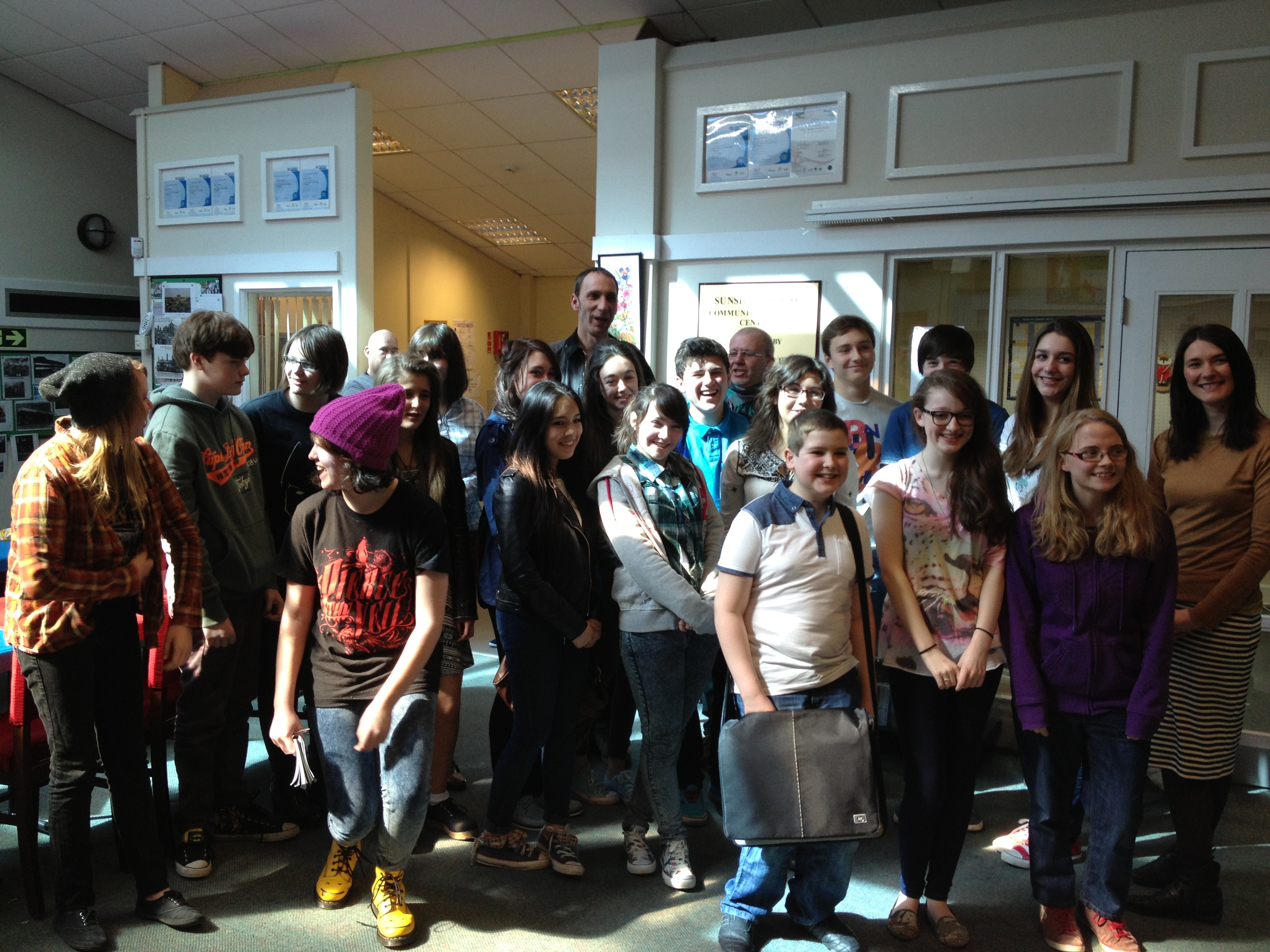
The Orwell Prize, Britain’s most prestigious prize for political writing, is supported by the Media Standards Trust, Political Quarterly, AM Heath and Richard Blair (Orwell’s son). We’re thrilled to announce a full line up of writers for the Autumn Sessions of the Wigan Pier Workshops. These writers workshops based in Wigan were pioneered by Stephen Armstrong, author of The Road to Wigan Pier Revisited, who formed a bond with Sunshine House Community Centre based just yards from where Orwell stayed in 1936. Joining forces with Barbara Nettleton of Sunshine House Community Centre in March 2012 the pair invited writers including Will Self and Ed McCardie to host a series of writing workshops for young local people. The event proved so successful that they asked The Orwell Prize and English PEN to partner in organising the next. This October will be our third series. Eleven writers will deliver sessions inspired by Orwell’s values and their own inspiration like ‘Poetry against the cuts’, ‘How digital changed journalism’ and ‘How many sides to a story?’ The journalists attending are; winner of a 2013 prize for journalism Andrew Norfolk, former Tribune Editor Paul Anderson, Orwell Prize shortlistee Anna Chen and 2011 Orwell Prize judge Sean Dodson and Stuart Maconie of BBC Radio 6 Music.The fiction writers will be; Stuart Evers who wrote Ten stories about smoking and Dickens 2012 Young Writer in Residence Femi Martin. The featured poets are; The Wolf editor James Byrne and My dog is a carrot writer John Hegley. And the playrights are; Bhopal writer Avaes Mohammad and spoken word artist Joelle Taylor. We’ll try to bring back as much of these wonderful workshops as we can to share with you.

Events for Autumn

Here at The Orwell Prize, we’re gearing up to the launch of our 21st year on the evening of 21st of October. This year the subject of debate will be ‘Internet and the modern self: manners and abuse online’. We will announce our judges at the event and open for entries. Places are scarce so make sure you book here soon to avoid disappointment. The full set of speakers will be announced shortly. Before we launch, don’t forget the ‘Tramping Today’ event with Foyles and Quartet Books featuring Brian Sewell and John Bird and chaired by The Orwell Prize’s Dr Michael Sayeau. This will take place at Foyles flagship store in Charing Cross on the evening of 9th October. And before 2013 is over we also have the annual Orwell Lecture, now hosted at UCL, to look forward to. This year Professor Tariq Ramadan will speak on ‘Democratising the Middle East: A New Role for the West?’, Tuesday 12th November. Full details to follow.

Our offices have moved

Last week, The Orwell Prize moved with the Media Standards Trust to a new premises within Kings College London. You can now call us on 020 7 and our new address is The Orwell Prize, Kings College London, Strand Bridge House, 138-142 The Strand, London WC2R 2LS.

We’re recruiting

The Orwell Prize is recruiting a new full time Administrator. See full details on how to apply here.

From elsewhere

Brian Sewell at Foyles with The Orwell Prize and Quartet Books

The Orwell Prize, Britain’s most prestigious prize for political writing, is supported by the Media Standards Trust, Political Quarterly, AM Heath and Richard Blair (Orwell’s son). We are delighted to announce that this autumn we will team with Foyles and Quartet Books to present Brian Sewell in conversation with John Bird. Frequently – to the point of cliché in fact – described as Britain’s most famous and controversial art critic, Brian Sewell is so much more; a fearlessly opinionated journalist, scandalously honest memoirist, reluctant TV presenter and self-described gypsy scholar. His waspish wit and uncompromising views have made him something of an icon (though he would surely reject the term), and have been shared with the public via his Orwell Prize-winning essays, his Evening Standard columns and, most recently, his two-volume memoirs, Outsider. He will be joined by Big Issue founder and author of The Necessity of Poverty John Bird to discuss tramping and to reflect on homelessness and attitudes to it since Orwell’s seminal Down and Out in Paris and London, in an event that marks the 110th anniversary of his birth. The event will take place on the evening of Wednesday 9th October at Foyles flagship store in Charing Cross, full details here. Brian Sewell’s collection of Orwell Prize winning essays are on offer for the month of August, on sale here.

Christopher Andrew’s Secrets of the 1962 Missile Crisis Lecture

As we’re revving up to another year of prize activities you might want to watch Christopher Andrew’s 2012 Orwell Lecture – The Most Dangerous Moment in British History, Secrets of the 1962 Missile Crisis. The seven part film is newly available on our YouTube channel here.

Another birthday for Animal Farm

Saturday will mark the publication anniversary of Animal Farm which was first released in 1945. The book still carries worldwide resonance, particularly for those who have lived through a dictatorship. You can watch The Orwell Prize film on our visit to Burma here. On our website we have a an Animal Farm section where you can find links to Orwell’s preface to the Ukranian edition as well as the first chapter courtesy of Penguin and much more.

Great journalism from elsewhere

  • Revealed: What the West has given Syria’s rebels, Kim Sengupta for the Independent
  • In Muslim lands the dream of democracy has died, Yasmin Alibhai-Brown for Ya Libnan
  • The tycoon, the dictator’s wife and the $2.5bn Guinea mining deal, Ian Cobain for The Guardian

  • The diaries

    Don’t forget our other Orwell Diary blogs: his Wartime Diary, Hop-Picking Diary and The Road to Wigan Pier Diary. You can sign up to our newsletter If you’ve got any suggestions about our website(s), we’d love to hear from you – email us on katriona.lewis@mediastandardstrust.org. You can also follow us on Twitter and like us on Facebook.

    A century of Michael Foot

    The Orwell Prize, Britain’s most prestigious prize for political writing, is supported by the Media Standards Trust, Political Quarterly, AM Heath and Richard Blair (Orwell’s son). This week would have been the 100th birthday of Michael Foot, former MP and editor of the Tribune. In Foot’s 2010 obituary Mervyn Jones described him as “one of the most principled British politicians of his era.” Though just ten years younger, Foot had a long career that spanned many years alongside Orwell both during his lifetime as an editor and contemporary, and after his death when Orwell’s fame grew to worldwide prominence. Eighties editor of Tribune, Paul Anderson, said; “Orwell and Foot were two of the great left journalists of the 20th century, and Tribune was their paper. They weren’t close personal friends, but Foot was Orwell’s editor at Tribune for several years and there was a great deal of mutual respect.” Foot himself is on record describing the battles over Orwell at the Tribune: “The group of friends Orwell gathered around himself before and during the war fortified his spirit just when he most needed it: Tosco Fyvel, George Woodcock, Paul Potts, Jack Common, Julian Symons, Arthur Koestler. I would gladly lend my own name to this list of honour, if I could, but it would be shamefully misleading. Aneurin Bevan was my mentor and when I argued with him about Orwell, I was more than probably joining with other Tribune readers protesting about Orwell’s increasingly bitter attacks on the Soviet Union. But in the end I was convinced by Orwell’s case, less by Orwell himself than by Arthur Koestler, who was more and more becoming a second mentor, sweeping aside all opposition with his unmatched polemical power.”

    Dates for the Orwell Prize 2014

    Get your diaries out for planning submissions to next year’s prize. This week we have announced our dates for The Orwell Prize 2014. Standby for further details of our three annual events and make sure you’re kept up to date with all the news by liking us on Facebook, following us on Twitter and subscribing to our newsletter.

  • 23rd October 2013 Open for entries with launch debate
  • 15th January 2014 Close of submissions
  • 26th March 2014 Longlist announcement
  • 23rd April 2014 Shortlist announcement and debate
  • 14th May 2014 Awards Ceremony

  • From elsewhere

  • Britain must do more to prevent these soldiers’ suicides, on Toby Harnden’s BBC Panorama documentary in The Week
  • This year’s Orwell Prize shortlistee Pankaj Mishra joins judging panel for Folio Prize, BBC News
  • George Orwell: really not all that, The Telegraph

  • The diaries

    Don’t forget our other Orwell Diary blogs: his Wartime Diary, Hop-Picking Diary and The Road to Wigan Pier Diary. You can sign up to our newsletter If you’ve got any suggestions about our website(s), we’d love to hear from you – email us on katriona.lewis@mediastandardstrust.org. You can also follow us on Twitter and like us on Facebook.

    Orwell adaptations

    The Orwell Prize, Britain’s most prestigious prize for political writing, is supported by the Media Standards Trust, Political Quarterly, AM Heath and Richard Blair (Orwell’s son). Earlier this year, BBC Radio 4 broadcast a season on the life and works of George Orwell. The dramatisation’s included biographical material as well as scripted adaptations of works like Animal Farm, Nineteen Eighty-Four and Homage to Catalonia (you can still listen to various bits here). This was not the first attempt to reimagine Orwell through the mode of 21st century technology. Countless productions of Animal Farm have been made for screen, most memorably the 1954 animation, and Sir Elton John is reported to be working presently on a broadway musical version. Now a young film maker in Los Angeles is hoping to create an adaptation of Orwell’s essay ‘Shooting an Elephant’. The essay, which was published in 1936, is one of two biographical pieces from Orwell’s time in Burma as an police officer. Screenwriter for the film, Alex Sokolow, describes the essay as; “Orwell becoming Orwell on the page.” With the support of the estate and Orwell’s son, Richard Blair, the film of ‘Shooting an Elephant’ is asking for donations through the project sponsorship website, Kickstarter. You can watch an appeal video and pledge support, as well as being the first to know about this this Orwell adaptation here.

    Norman MacKenzie dies

    One of the last living writers to appear on Orwell’s blacklist of “crypto-communists and fellow-travellers… who should not be trusted as propagandists” has died. In a moving obituary by the Telegraph they say; “It is not hard to understand why Orwell might have included MacKenzie on his list — which he prepared in 1949 for a clandestine anti-communist propaganda unit in the Foreign Office (the list was made public in 2003). MacKenzie had been, first, a member of the Marxist Independent Labour Party, and then of the Communist Party before he joined the Labour Party in 1943. In addition to the New Statesman he sometimes wrote for Telepress, a Soviet-backed news agency. Leonard Woolf had once described him as ‘the most dangerous man in the New Statesman.'” You can read the full piece here.

    From elsewhere: winners special

  • Clive James – a life in writing, The Guardian
  • Things I Don’t Want to Know: a powerful feminist response to Orwell’s Why I Write, New Statesman
  • Never mind Orwell, all’s well in our land of renewed hope and glory, Evening Standard
  • Why we are hunger-striking in solidarity with Guantánamo’s detainees, The Guardian

    The diaries

    Don’t forget our other Orwell Diary blogs: his Wartime Diary, Hop-Picking Diary and The Road to Wigan Pier Diary. You can sign up to our newsletter If you’ve got any suggestions about our website(s), we’d love to hear from you – email us on katriona.lewis@mediastandardstrust.org. You can also follow us on Twitter and like us on Facebook.

  • Happy Birthday George Orwell

    The Orwell Prize, Britain’s most prestigious prize for political writing, is supported by the Media Standards Trust, Political Quarterly, AM Heath and Richard Blair (Orwell’s son). To mark the occasion of George Orwell’s 110th birthday, the literary great was trending on Twitter. Following the recent explosion of enthusiasm for Nineteen Eighty-Four many took to the micro blogging site to celebrate with the hashtag ‘always relevant’, sharing favourite quotes like, “If liberty means anything at all, it means the right to tell people what they don’t want to hear.” To keep up with us between newsletters make sure you’re following the prize on Twitter and like us on Facebook.

    Brian Sewell’s prize winning essays released today

    To celebrate George Orwell’s 110th birthday Quartet Books have published the series of Brian Sewell’s essays that won him the Journalism Prize in 2003. Originally published in the Evening Standard – where the author has worked since 1984 – ‘The Orwell Essays’ were picked for their prescience more than ten years on, testament to the Spectator’s view that ‘Brian Sewell is surely the funniest art critic of our time’, and proof that he is so much more… The Independent on Sunday said of the collection; ‘There is constant pleasure in Sewell’s prose: the elegance of phrase, the wry humour and the clarity of insight.’ You can get your own digital copy here.

    One Georgie Orwell

    Tonight the successful musical, ‘One Georgie Orwell’ will return to the Greenwich Theatre. Following last year’s great run the show will reprise a unique cabaret-style evening bringing together a collection of Orwell’s own words from books and essays, a spiky narration and a line-up of original songs. Last chance to get tickets here.

    Dystopian visions of the future

    On Thursday The Orwell Prize will travel to Manchester for our first event hosted by The International Anthony Burgess Foundation for a discussion on Dystopian Visions of the Future. George Orwell’s Nineteen Eighty-Four and Anthony Burgess’s dystopias (including 1985 and A Clockwork Orange) provide the starting point for the conversation. The Orwell Prize’s own Dr Michael Sayeau will be joined by Dr Eleanor Byrne (MMU) and Dr Kaye Mitchell (University of Manchester) to examine literary dystopias, and to consider the significance of dystopian ideas for contemporary readers. The event will take place this Thursday evening, 27th June. Places are free, full details here. In the meantime, you might like to have a listen to this brilliant podcast on Burgess and dystopias.

    From elsewhere: winners special

  • Girls in care to get more protection from abusers by Andrew Norfolk for The Times
  • The gathering storm by Toby Harnden (and Mark Hookham) for The Sunday Times
  • Living for two years in a room in a homeless hotel by Amelia Gentleman for The Guardian
  • Analysis: Scrap corporate tax and benefit long term, some conservatives say by Tom Bergin for Reuters
  • The diaries

    Don’t forget our other Orwell Diary blogs: his Wartime Diary, Hop-Picking Diary and The Road to Wigan Pier Diary. You can sign up to our newsletter If you’ve got any suggestions about our website(s), we’d love to hear from you – email us on katriona.lewis@mediastandardstrust.org. You can also follow us on Twitter and like us on Facebook.

    A week for Nineteen Eighty-Four

    The Orwell Prize, Britain’s most prestigious prize for political writing, is supported by the Media Standards Trust, Political Quarterly, AM Heath and Richard Blair (Orwell’s son). Following its 64th publication anniversary on Sunday sales of Nineteen Eighty-Four spiked amid the surveillance disclosures. Amazon.com reported that the sales increased by 7,000% taking the book from a ranking of 13,074 to the top 200 in the bestseller lists. News outlets across the globe have taken this opportunity to ask questions like, “Is Obama Big Brother, at once omnipresent and opaque? And are we doomed to either submit to the safety of unthinking orthodoxy or endure re-education and face what horrors lie within the dreaded Room 101?” For a selection of the coverage on this see our ‘From elsewhere’ section below. For lots more on Nineteen Eighty-Four you can see the dedicated page on our website.

    Dystopian visions of the future

    Don’t forget our forthcoming event with The International Anthony Burgess Foundation, hosted by our new friends at their headquarters in Manchester. The Orwell Prize is taking Dr Michael Sayeau for a discussion on Dystopian Visions of the Future. George Orwell’s Nineteen Eighty-Four and Anthony Burgess’s dystopias (including 1985 and A Clockwork Orange) provide the starting point for the conversation in which Sayeau will be joined by Dr Eleanor Byrne (MMU) and Dr Kaye Mitchell (University of Manchester) to examine literary dystopias, and to consider the significance of dystopian ideas for contemporary readers. The event will take place on the evening of Thursday 27th June. Places are free, full details here. In the meantime, you might like to have a listen to this brilliant podcast on Burgess and dystopias.

    Things I Don’t Want to Know

    Man Booker shortlisted author Deborah Levy has written a response to Orwell’s essay ‘Why I Write’. “Perhaps when Orwell described sheer egoism as a necessary quality for a writer, he was not thinking about the sheer egoism of a female writer. Even the most arrogant female writer has to work over time to build an ego that is robust enough to get her through January, never mind all the way to December,” says Levy of her new work entitled Things I don’t want to know. On Wednesday night we joined Notting Hill Editions to celebrate the launch of the essay at Daunt Books, Marylebone. You can get your copy here now.

    From elsewhere

  • Sales of the George Orwell Classic Nineteen Eighty-Four Soar in the TIME
  • ‘Nineteen Eighty-Four’ Sales Spike Amid Surveillance Disclosures in Wall Street Journal
  • So are we living in 1984 in The New Yorker
  • George Orwell back in fashion as Prism stokes paranoia about Big Brother in The Guardian
  • China: turn to Orwell too, post-Snowden in The Financial Times
  • The diaries

    Don’t forget our other Orwell Diary blogs: his Wartime Diary, Hop-Picking Diary and The Road to Wigan Pier Diary. You can sign up to our newsletter If you’ve got any suggestions about our website(s), we’d love to hear from you – email us on katriona.lewis@mediastandardstrust.org. You can also follow us on Twitter and like us on Facebook.

    The Orwell Prize in Manchester

    The Orwell Prize, Britain’s most prestigious prize for political writing, is supported by the Media Standards Trust, Political Quarterly, AM Heath and Richard Blair (Orwell’s son). We’re thrilled to announce our first event with The International Anthony Burgess Foundation, hosted by our new friends at their headquarters in Manchester. The Orwell Prize is taking Dr Michael Sayeau for a discussion on Dystopian Visions of the Future. George Orwell’s Nineteen Eighty-Four and Anthony Burgess’s dystopias (including 1985 and A Clockwork Orange) provide the starting point for the conversation in which Sayeau will be joined by Dr Eleanor Byrne (MMU) and Dr Kaye Mitchell (University of Manchester) to examine literary dystopias, and to consider the significance of dystopian ideas for contemporary readers. The event will take place on the evening of Thursday 27th June. Places are free, full details here. In the meantime, you might like to have a listen to this brilliant podcast on Burgess and dystopias.

    Our 2013 Winners

    The winners of our 20th Orwell Prize were announced on the evening of Wednesday 15th May at a ceremony held at Church House, Westminster. The Journalism Prize was split between Andrew Norfolk for his scoop for The Times on child grooming and Tom Bergin who broke the tax scandal for Reuters. The 2013 Book Prize went to A. T. Williams for A Very British Killing: The Death of Baha Mousa and a Special Prize was awarded to another shortlisted book, On the Front Line: The Collected Journalism of Marie Colvin. You can see photographs of the event on our Facebook page here and we’ll upload a video of the event shortly. Thank you to those who attended, it was a wonderful evening.

    Deborah Levy’s response to ‘Why I Write’

    Man Booker shortlisted author Deborah Levy has written a response to Orwell’s essay ‘Why I Write’. “Perhaps when Orwell described sheer egoism as a necessary quality for a writer, he was not thinking about the sheer egoism of a female writer. Even the most arrogant female writer has to work over time to build an ego that is robust enough to get her through January, never mind all the way to December,” says Levy of her new work entitled Things I don’t want to know. Notting Hill Editions welcome supporters of the Orwell Prize to join Levy at her launch which will take place at Daunt Books Marylebone on Wednesday 12th June, 6.30-8pm. If you’d like to join us there please RSVP to Rosamund Hutchison at rosamundpr@gmail.com

    From elsewhere: a round up of winners coverage

  • No doublespeak in the Hindustan Times
  • Abuse of women and children – even nice guys are guilty of looking away in The Guardian
  • Baha Mouse Book wins Orwell Prize in The Bookseller
  • Baha Mousa book and Marie Colvin honoured by Orwell Prize on BBC News
  • Orwell Prize winners announced: A.T. Williams takes top honor for ‘A Very British Killing’ in NY Daily News
  • From the archive

    The 8th June will mark the 64th anniversary of Orwell’s Nineteen Eighty-Four. Arguably Orwell’s most famous and abidingly relevant work the anniversary is often met with celebration even in lieu of a particularly distinctive year. In the lead up to this you might like to look at the content we have on our website like D.J. Taylor on ‘Orwell and the rats’ or even revisit this year’s BBC series on ‘The Real George Orwell’ with The Road to Nineteen Eighty-Four narrated by Orwell Prize winner David Aaronovitch. For full details on all of our material on this consumate classic see our Nineteen Eighty-Four page on the website.

    The diaries

    Don’t forget our other Orwell Diary blogs: his Wartime Diary, Hop-Picking Diary and The Road to Wigan Pier Diary. You can sign up to our newsletter If you’ve got any suggestions about our website(s), we’d love to hear from you – email us on katriona.lewis@mediastandardstrust.org. You can also follow us on Twitter and like us on Facebook.

    Orwell and Society

    The Orwell Prize, Britain’s most prestigious prize for political writing, is supported by the Media Standards Trust, Political Quarterly, AM Heath and Richard Blair (Orwell’s son). Last week The Orwell Prize went to Leeds Metropolitan University where our Operations Manager, Katriona Lewis, gave a lecture on ‘Orwell and Society’ to third year Journalism students. We talked through the life of George Orwell, the experiences that shaped his writing, views and values. We talked about terms he coined like newspeak, room 101 and big brother, as well as where Orwell can still be seen in society today from Wigan pier to his cautions against a world like Nineteen Eighty-Four. We looked at what makes his writing distinctive; the rules of ‘Politics and the English Language’.

    The Orwell Prize ceremony is next week

    The winners of the 2013 Orwell Prize – our 20th prize – will be announced next Wednesday evening 15th May at Church House. We would love to see as many of our friends and supporters there possible. The event is free but booking is essential, get your place here. You can see the full list of six journalists here and seven books here. Each of the shortlisted journalist’s submitted articles are available on our website and extracts from each of the books are now available too. This year’s judging meetings were very lively and full of intelligence. Shortlisted for journalism is Christina Patterson on the state of the NHS, Tom Bergin on corporation tax, Andrew Norfolk on grooming in the North of England, Ian Cobain on British complicity in torture, Jamil Anderlini on corruption in China and Kim Sengupta on conflict. The shortlisted books are Burying the Typewriter, a personal story on childhood in the Romanian surveillance regime, From the Ruins of the Empire on the recent history and evolution of Asia, Occupation Diaries on daily life in Palestine, A Very British Killing a painstakingly detailed account of the death of Baha Mousa, Injustice on the death row trial of Kris Maharaj, Richard Holloway’s memoir Leaving Alexandria and the collection of Marie Colvin’s journalism, On the Front Line.

    From elsewhere

  • Nikita Lalwani on judging The Orwell Prize, The Guardian
  • Rory MacLean’s top 10 books on Burma, The Guardian
  • The sun is at last setting on Britain’s imperial myth by shortlisted Pankaj Mishra, The Guardian
  • The diaries

    Don’t forget our other Orwell Diary blogs: his Wartime Diary, Hop-Picking Diary and The Road to Wigan Pier Diary. You can sign up to our newsletter If you’ve got any suggestions about our website(s), we’d love to hear from you – email us on katriona.lewis@mediastandardstrust.org. You can also follow us on Twitter and like us on Facebook.

    Less than three weeks to go

    The Orwell Prize, Britain’s most prestigious prize for political writing, is supported by the Media Standards Trust, Political Quarterly, AM Heath and Richard Blair (Orwell’s son). The winners of the 2013 Orwell Prize – our 20th prize – will be announced on the evening of Wednesday 15th May at Church House. We would love to see as many of our friends and supporters there possible. The event is free but booking is essential, get your place here. You can see the full list of six journalists here and seven books here. Each of the shortlisted journalist’s submitted articles are available on our website and extracts from each of the books are now available too. This year’s judging meetings were very lively and full of intelligence. Shortlisted for journalism is Christina Patterson on the state of the NHS, Tom Bergin on corporation tax, Andrew Norfolk on grooming in the North of England, Ian Cobain on British complicity in torture, Jamil Anderlini on corruption in China and Kim Sengupta on conflict. The shortlisted books are Burying the Typewriter, a personal story on childhood in the Romanian surveillance regime, From the Ruins of the Empire on the recent history and evolution of Asia, Occupation Diaries on daily life in Palestine, A Very British Killing a painstakingly detailed account of the death of Baha Mousa, Injustice on the death row trial of Kris Maharaj, Richard Holloway’s memoir Leaving Alexandria and the collection of Marie Colvin’s journalism, On the Front Line.

    The shortlist pictures

    Photographs of our shortlist debate were uploaded to the Facebook page this week. Make sure you ‘like’ us to get regular updates. We will upload footage of the thought provoking panel soon but in the meantime, make sure you watch this little film we made in Yangon.

    Wigan Pier Workshops in TES

    Over the summer we’re looking forward to telling you more about the Wigan Pier Workshops that we run with Stephen Armstrong and Sunshine House Community Centre but in the meantime make sure you read our TES write up of Avaes Mohammad and John Hegley’s day there. Read the colourful piece here.

    From elsewhere

  • George Orwell’s Barcelona, The Telegraph
  • My hero: Marie Colvin by Lindsey Hilsum, The Guardian
  • After Orwell, Financial Times
  • From the archive

    Yesterday was the 75th publication anniversary of Homage to Catalonia. If you haven’t read it yet or would like to read it again, why not start with the first chapter from our website courtesy of Penguin Books.

    The diaries

    Don’t forget our other Orwell Diary blogs: his Wartime Diary, Hop-Picking Diary and The Road to Wigan Pier Diary. You can sign up to our newsletter If you’ve got any suggestions about our website(s), we’d love to hear from you – email us on katriona.lewis@mediastandardstrust.org. You can also follow us on Twitter and like us on Facebook.

    Shortlists announced

    The Orwell Prize, Britain’s most prestigious prize for political writing, is supported by the Media Standards Trust, Political Quarterly, AM Heath and Richard Blair (Orwell’s son). The shortlists for the 2013 Orwell Prize were announced on Wednesday evening at The University of Westminster. You can see the full list of six journalists here and seven books here. Each of the shortlisted journalist’s submitted articles are available on our website and extracts from each of the books are now available too. This year’s judging meetings were very lively and full of intelligence. Shortlisted for journalism is Christina Patterson on the state of the NHS, Tom Bergin on corporation tax, Andrew Norfolk on grooming in the North of England, Ian Cobain on British complicity in torture, Jamil Anderlini on corruption in China and Kim Sengupta on conflict. The shortlisted books are Burying the Typewriter, a personal story on childhood in the Romanian surveillance regime, From the Ruins of the Empire on the recent history and evolution of Asia, Occupation Diaries on daily life in Palestine, A Very British Killing a painstakingly detailed account of the death of Baha Mousa, Injustice on the death row trial of Kris Maharaj, Richard Holloway’s memoir Leaving Alexandria and the collection of Marie Colvin’s journalism, On the Front Line. Following the announcement of the shortlist our Director Jean Seaton was joined by Nita May OBE, Julia Farringdon and Tayzar Moe Myint for a rousing discussion on how the changes to censorship laws will impact on freedom of expression in Burma. We will upload footage of the panel soon.

    A film on Burma

    In February this year the Orwell Prize was fortunate enough to join the Irrawaddy Lit Fest, Burma’s first international literary festival, with panels and Orwell books. There we spoke to many of the delegates about the significance of George Orwell and the situation in Burma now. We’d like to say thank you to those who donated to our ‘Buy a Book for Burma’ campaign with this little film we made in Yangon.

    Nineteen Eighty Four in North Korea?

    In this week’s Panorama John Sweeney requests a copy of Orwell’s classic at a North Korean library to no avail. You can watch the full eight day undercover investigation on iPlayer now.

    Book your place for The Orwell Prize 2013 ceremony

    We’d love to see as many supporters and friends possible for our 20th anniversary prize ceremony. The event will take place on the evening of Wednesday 15th May at Church House by Parliament. Places are limited but you can register free here to join us for the announcement and some celebratory drinks.

    From elsewhere: shortlist coverage

  • Late journalist Marie Colvin makes Orwell Prize shortlist, BBC
  • 2013 Orwell prize for books shortlist revealed, The Independent
  • Marie Colvin nominated for Orwell prize, Marie Claire
  • Late war reporter Marie Colvin listed for top UK writing prize, Reuters
  • Marie Colvin Nominated For Posthumous George Orwell Prize For Political Writing, contact music.com
  • Marie Colvin heads shortlist for Orwell Book Prize, Telegraph
  • Shehadeh in contention for second Orwell Prize, Bookseller
  • Book buzz, US Today
  • From the archive

    Tomorrow is the 77th anniversary of Keep the Aspidistra Flying. If you haven’t read it yet, why not start with the first chapter from our website courtesy of Penguin Books.

    The diaries

    Don’t forget our other Orwell Diary blogs: his Wartime Diary, Hop-Picking Diary and The Road to Wigan Pier Diary. You can sign up to our newsletter If you’ve got any suggestions about our website(s), we’d love to hear from you – email us on katriona.lewis@mediastandardstrust.org. You can also follow us on Twitter and like us on Facebook.

    Will Self in Wigan

    The Orwell Prize, Britain’s most prestigious prize for political writing, is supported by the Media Standards Trust, Political Quarterly, AM Heath and Richard Blair (Orwell’s son). Yesterday the Prize joined Will Self for a Wigan Pier Workshop at Sunshine Community Centre. “Allow your imagination to take flight,” Self said to the teenagers on his second visit to the project. The Wigan Pier workshops were set up early last year by Stephen Armstrong, journalist and writer of The Road to Wigan Pier Revisited, and Barbara Nettleton, director of Sunshine House. The Orwell Prize partnered with the project shortly after the pilot. We have since worked together to take the expertise of writers like Rosie Boycott to young people wanting to write in Wigan. Our next series of workshops will take place in the autumn and we look forward to telling you more about it over the summer. On Self’s talk yesterday, Stephen Armstrong said, “I’d like to see how many Booker prize shortlisted authors could entertain, inspire and enthuse 22 teenagers in a Wigan community centre who started the day restless about being inside on the first sunny day of the year in their Easter holidays. Watching Will Self shatter preconceptions and open young minds was a prize winning piece of work in its own right.”

    Shortlist announcement and debate

    Next week our judges will begin discussions to pick the six journalists and six books for our 2013 shortlists. On the evening of 17th April we will name these writers live at the University of Westminster. Following the announcement there’ll be a debate focused on the changing situation in Burma. A panel including Julia Farringdon of Index on Censorship, human rights activist Tayzar Moe Myint, Nita May OBE of the BBC Burmese world service and our Director Jean Seaton will discuss the question; “When censorship declines does freedom emerge?” We’d love to see lots of you there for our 20th anniversary year. Places are limited but you can register free here to join us for the announcement, debate and some drinks.

    From elsewhere

  • Two Orwell Prize winners – Matthew Parris and Peter Hitchens – will be joining the new BBC Great Lives series
  • Journalism Prize winner Timothy Garton Ash on The euro survives, but where are the Europeans? for The Guardian
  • Kim Jong-Un, George Orwell and a Big Rocket for the Huffington Post by Olly Lennard
  • The diaries

    Don’t forget our other Orwell Diary blogs: his Wartime Diary, Hop-Picking Diary and The Road to Wigan Pier Diary. You can sign up to our newsletter If you’ve got any suggestions about our website(s), we’d love to hear from you – email us on katriona.lewis@mediastandardstrust.org. You can also follow us on Twitter and like us on Facebook.

    2013 Longlists Announced

    The Orwell Prize, Britain’s most prestigious prize for political writing, is supported by the Media Standards Trust, Political Quarterly, AM Heath and Richard Blair (Orwell’s son). The longlists for the 2013 Orwell Prize were announced online at midday yesterday. You can see the full list of 14 journalists here and 12 books here. Each of the longlisted journalist’s submitted articles are available on our website and extracts from each of the books will be uploaded soon. We’re delighted with our judges choices and really look forward to the shortlisting. Book judge, Arifa Akbar wrote a wonderful piece for The Independent on her judging process with details of what made each of the books stand out for her. We received plenty of coverage yesterday from the New Statesman to the LA Times and our Operations Manager, Katriona Lewis, was invited to speak on Monocle radio last night about trends in political writing reflected in our longlists.

    Book your place for the Shortlist debate

    For this year’s annual shortlist debate we will be focusing on Burma and reflecting on our trip to the Irrawaddy Lit Fest in February. Following the announcement of this year’s six journalists and six books to make the shortlist, a panel will discuss the question; “When censorship declines does freedom emerge?” We’d love to see as many familiar faces as possible there for our 20th anniversary year. The event will take place on the evening of Wednesday 17th April at the University of Westminster on Regents Street. Places are limited but you can register free here to join us for the announcement, debate and some drinks.

    From elsewhere: longlist coverage

  • New Statesman’s Daniel Trilling longlisted for the Orwell Prize, New Statesman
  • Orwell Book Prize 2013: Marie Colvin heads longlist, Telegraph
  • Marie Colvin’s On The Front Line longlisted for Orwell prize, The Independent
  • George Orwell’s legacy: Orwell Prize longlist announced, LA Times
  • Monocle radio show featuring Katriona Lewis
  • From the archive

    This is a good week to have another look at Orwell’s essay ‘In front of your nose’, first published in the Tribune on 22nd March 1946.

    The diaries

    Don’t forget our other Orwell Diary blogs: his Wartime Diary, Hop-Picking Diary and The Road to Wigan Pier Diary. You can sign up to our newsletter If you’ve got any suggestions about our website(s), we’d love to hear from you – email us on katriona.lewis@mediastandardstrust.org. You can also follow us on Twitter and like us on Facebook.

    Another record breaking year for the Journalism Prize

    Here’s your reading list for the next few months: we’ve published a full list of entries for the Orwell Prize 2013. Yet again, we’ve received a record number of submissions for the Journalism Prize, with 210 books and 155 journalists put forward. More details – and links – can be found on the Book Prize 2013 and Journalism Prize 2013 entry pages. The longlists will be announced at midday on Wednesday 20th March online. You can reserve your place to this year’s annual shortlist announcement and debate here.

    The Wigan Pier Workshops

    Last week The Orwell Prize and Stephen Armstrong (author of The Road to Wigan Pier Revisited) went to Wigan to run a series of workshops for local teens at Sunshine House Community Centre. The writers who taught included Rosie Boycott, Avaes Mohammad, John Hegley and Paul Anderson. English PEN are supported us to cheers by bringing Mohammad and Hegley. We’re very grateful to Sunshine House for hosting us and feeding everyone as well as organising the involvement of more than nine schools. We all had a fantastic time with the young people and they produced some wonderful writing we hope to share with you soon. See here for a full press release on the event.

    Anthony Burgess Foundation

    While in Manchester we visited the Anthony Burgess Foundation at their brilliant venue where there is a library of Burgess’ books. We were able to see Burgess’ own copies of Orwell classics. The Orwell Prize hopes to join The Anthony Burgess Foundation for an event very soon and we will update you with details as soon as we have them. In the meantime, we recommend a visit to check them out.

    From elsewhere

  • In case you missed 2013 Orwell Book Prize winner’s thoughtful piece about Chris Kyle here it is; He Shot 160… and Died Because He Cared
  • Our lovely friends at Church House are looking forward to hosting the 2013 Prize Ceremony. You can book your ticket here.
  • Orwell’s Nineteen Eighty-Four was listed in the Telegraph‘s Top 20 books they tried to ban
  • The diaries

    Don’t forget our other Orwell Diary blogs: his Wartime Diary, Hop-Picking Diary and The Road to Wigan Pier Diary. You can sign up to our newsletter If you’ve got any suggestions about our website(s), we’d love to hear from you – email us on katriona.lewis@mediastandardstrust.org. You can also follow us on Twitter and like us on Facebook.

    We’re going to Wigan

    Next week The Orwell Prize and Stephen Armstrong (author of The Road to Wigan Pier Revisited) will go to Wigan to run a series of workshops for local teens at Sunshine House Community Centre. The writers going to teach include Rosie Boycott, Meg Rusoff, John Hegley and Paul Anderson. English PEN are supporting us by bring Hegley and running their own freedom of expression workshop. We can’t wait to meet the participants and we’re very grateful to Sunshine House for hosting us and feeding everyone as well as organising the involvement of more than nine schools. The workshops will cover topics from Orwellian writing for 2013 to writing for a living. Our Operations Manager, Katriona Lewis, will run a workshop called, Journalists write the first draft of history. We’ll tell you all about it in the next newsletter and share as much as possible.

    New videos

    This week we uploaded two sets of videos from Burma to our YouTube channel; Timothy Garton Ash’s Orwell lecture and Aung San Suu Kyi’s conversation with Dr U Thaw Kaung. We’re delighted to be able to share these talks with you and hope you enjoy them. If you want to hear more from us between the newsletters do make sure you’re following us on Twitter and you like us on Facebook where we regularly share finer details of what we’re doing which could be particularly exciting for the upcoming week in Wigan.

    The Real George Orwell

    The BBC Radio 4 season on Orwell has had us rapt for nearly a month now and it’s still going. If you’ve missed anything or want to listen all over again they’ve been kind enough to leave all the programs live here until the very end of the season.

    From the archive

    For a taste of Orwell’s Wigan why not read the first chapter of his The Road to Wigan Pier, supplied by our friends at Penguin. And to contextualise this you could also read Stephen Armstrong’s exclusive piece, ‘Treading Orwell’s road to Wigan’. We also ran a panel for the Letchworth festival last year called ‘Poverty then and now: Orwell and his successors’ which you can watch here.

    From elsewhere

  • 1984: George Orwell’s road to dystopia by David Aaronovitch
  • The Real George Orwell, rescued from endless parody and tiresome idiom for a new generation by Tom Goulding
  • Truth, lies & storytelling – but can propaganda ever do good? by Arifa Akbar
  • The diaries

    Don’t forget our other Orwell Diary blogs: his Wartime Diary, Hop-Picking Diary and The Road to Wigan Pier Diary. You can sign up to our newsletter If you’ve got any suggestions about our website(s), we’d love to hear from you – email us on katriona.lewis@mediastandardstrust.org. You can also follow us on Twitter and like us on Facebook.

    The Orwell Prize in Burma

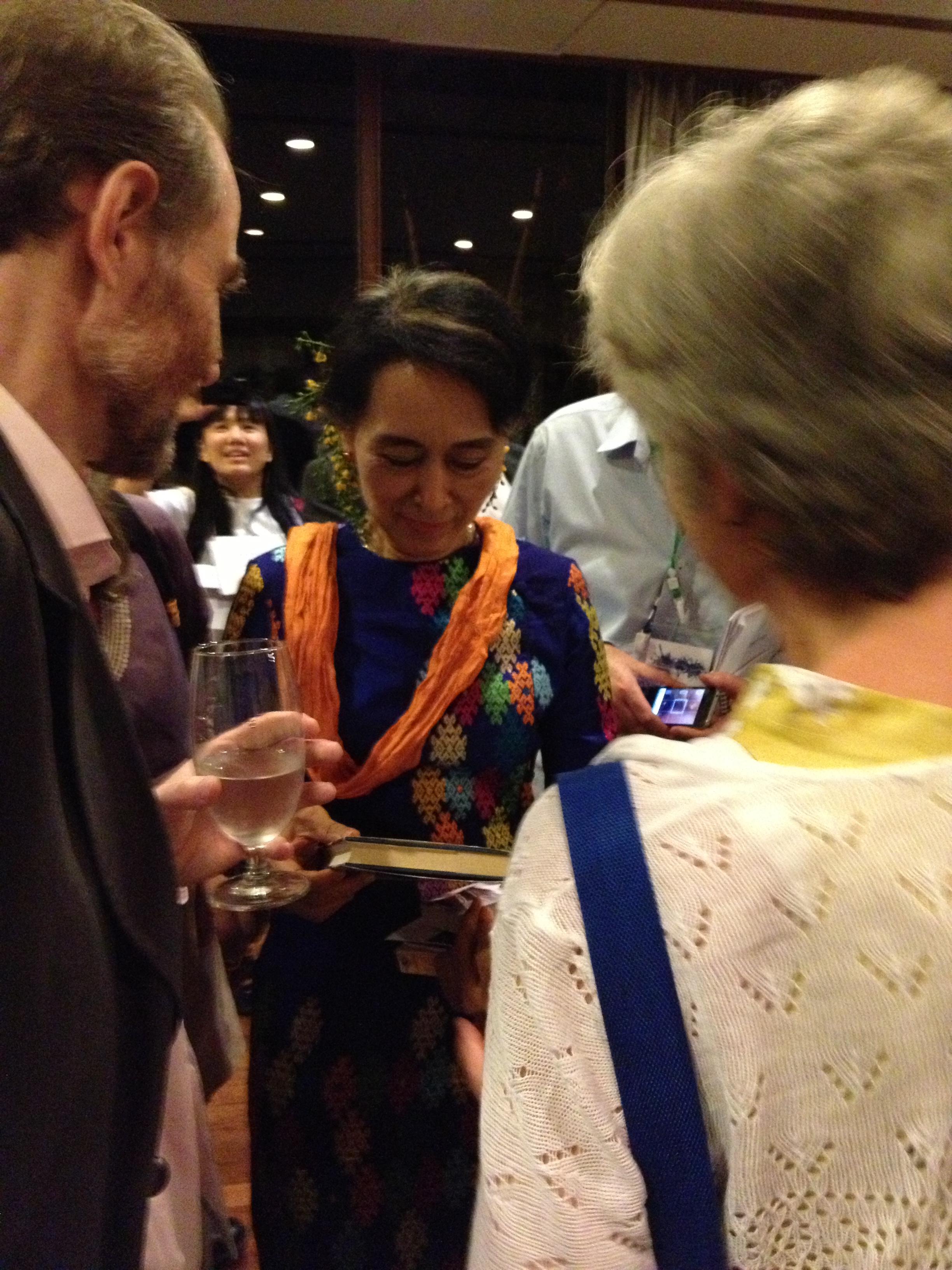
    Last week The Orwell Prize returned from Burma where we hosted panels and took books to the Irrawaddy Literary Festival, the first international event of its kind in the country. The festival attracted crowds of around 10,000 over three days who came to listen to the work and thoughts of more than 120 local writers as well as a host of international participants including Jung Chang and the festival’s patron Aung San Suu Kyi. The Prize led three panels with past winner Timothy Garton Ash; Writing under Censorship and the Future of Free Speech, The Orwell Lecture and Witness of Violence. Two other prize winners – Fergal Keane and Robert Cooper – were also present throughout the event to participate and take in the occasion. The Orwell Lecture proved to be a huge a success, sandwiched between two talks from Aung San Suu Kyi, the ballroom was full of keen listeners to hear Timothy Garton Ash’s three lessons Burma should take from Orwell; “Remember room 101, look closely at the language politicians use and keep the crystal spirit.” Video footage of all the Orwell Prize events as well as Aung San Suu Kyi’s session with Dr U Thaw Kaung will be uploaded to our YouTube channel soon. The Orwell Prize Director, Professor Jean Seaton, chaired Garton Ash’s Orwell Lecture and gave Aung San Suu Kyi signed copies of Penelope Lively novels which the Lady particularly likes.

    Timothy Garton Ash and Jean Seaton with Aung San Suu Kyi

    Buy a Book for Burma

    The Orwell Prize’s Buy a Book for Burma campaign successfully delivered hundreds of copies of Animal Farm, Nineteen Eighty-Four and Burmese Days to the festival. Local bookseller Monument, were kind enough to manage a free raffle of the books bought by donors. Burmese nationals put their details into a pot and the names of up to thirty locals were called as winners hourly throughout the three day festival. Young people mostly picked Burmese Days whereas Animal Farm and Nineteen Eighty-Four were more popular with older participants. It was wonderful to see so many copies of Orwell all over the festival and we’re hugely grateful to all our enthusiastic donors as well as Penguin Books for providing the support that enabled us to do this. In addition to taking the Orwell titles to the festival several copies were delivered to Yangon libraries along with Orwell Prize winning Rule of Law by Tom Bingham.

    Forthcoming ‘Orwell in Burma’ film

    During our time in Burma the Orwell Prize hired a local cameraman and shot a forthcoming ‘Orwell in Burma’ short film which will be screened at our annual shortlist event in April. Interviewees include James Byrne who edited the first collection of translated Burmese poetry, Bones will crow and poets from the anthology like Zeyer Lin and Pandora as well as Pascal Khoo Thwe and Jung Chang. We look forward to sharing this soon.

    Unbound for Nick Danziger and Rory Maclean

    In Yangon we met the award-winning photojournalist Nick Danziger and best-selling author Rory Maclean who together led workshops with locals to help them develop their story-making skills through journalism, photography, filming and writing (where they found us our fantastic camera man). Their next exciting project is a joint book Back in the USSR – Heroic Adventures in Transnistria, a journey into a soviet time warp, which you can be part of by pledging support. Have a look at their video and maybe you’ll be tempted to join them for Transnistrian BBQ.

    From elsewhere: on Burma

  • Authors tackle new vocabulary of freedom as Myanmar turns from censoring to regulating speech (The Washington Post)
  • Myanmar writes new page in history (Financial Times £)
  • The lady, the writers and the ex-prisoners(Free Speech Debate)
  • Before Aung San Suu Kyi is crowned there are vital battles to be won (The Guardian)
  • Burmese delight in books after censorship relaxed(BBC News)
  • International Literary Festival Opens in Burma(TIME)
  • The diaries

    Don’t forget our other Orwell Diary blogs: his Wartime Diary, Hop-Picking Diary and The Road to Wigan Pier Diary. You can sign up to our newsletter If you’ve got any suggestions about our website(s), we’d love to hear from you – email us on katriona.lewis@mediastandardstrust.org. You can also follow us on Twitter and like us on Facebook.

    The Real George Orwell and the BBC

    It’s been a phenomenal week for the Prize and Orwell fans everywhere. The inaugural launch of George Orwell Day on Monday 21st spawned a mass celebration of his works. The Orwell Prize ran a read-in of ‘Politics and the English Language’ by offering the consummate essay to read on our website. While Penguin launched their new covers designed by David Pearson which included a special release of the essay in pamphlet form for just 99p. Lots of newspapers got into the spirit of the event; Shami Chakrabarti told us what she thinks Orwell would have written about today, Prospect Magazine celebrated with their best articles on Orwell, the New Statesman looked back on their encounters with Orwell and Stuart Jeffries of the Guardian asked What would Orwell have made of the world in 2013? The Prize also made friends with a few new fans including BBC 6 Music DJ Lauren Laverne who pointed out to us that her twitter biography quotes Orwell. The excitement continues with the BBC Radio 4 season of ‘The Real George Orwell’ which will run on into February with programmes on Animal Farm, Homage to Catalonia, Down and Out in London and Paris and Nineteen Eighty-Four as well as some very special biographical dramatisations of his life. There’s lots of information as well as very interesting blog posts and interviews on the BBC website for the season. The next play is aptly on his time in Burma and will broadcast at 2.15pm today.

    The Irrawaddy Literary Festival

    We’ll be listening to the BBC’s Burma from Burma as the Orwell Prize has now arrived in Rangoon to set up for the first international literary festival here. From Friday we will be disseminating books raised from the ‘Buy a Book for Burma’ campaign, with generous support from our good friends at Penguin Books. We’re bringing along past Prize winner Timothy Garton Ash as well as our Director Jean Seaton to speak on panels at the festival which will include an Orwell lecture as well as talks on censorship and witnessing violence. We’ll be collecting interviews from writers here as well as capturing the essence of Burma and it’s feel for Orwell all these year’s on, to bring back to you soon.

    From the archive

    To join in with the festival why not have a read of one of the three novels we will be giving out. The first chapters of Animal Farm, Burmese Days and Nineteen Eighty-Four are all available on our website. You can also find Orwell’s two big essays on his time in Burma as a police officer; ‘A Hanging’ and ‘Shooting an Elephant‘.

    From elsewhere BBC Special

  • Who was the Real George Orwell? Biographer DJ Taylor speculates on the man himself
  • George Orwell and the BBC by Mark Lawson
  • Animal Farm narrated by Tamsin Greig
  • Homage to Catalonia Part 1 starring Joseph Milne as Eric Blair
  • Burma: a biographical play by Mike Walker
  • George Orwell’s resignation letter to the BBC
  • Aung Sun Suu Kyi on BBC Radio 4 desert island discs
  • The diaries

    Don’t forget our other Orwell Diary blogs: his Wartime Diary, Hop-Picking Diary and The Road to Wigan Pier Diary. You can sign up to our newsletter If you’ve got any suggestions about our website(s), we’d love to hear from you – email us on katriona.lewis@mediastandardstrust.org. You can also follow us on Twitter and like us on Facebook.