Search Results for: george-orwell/by-orwell/essays-and-other-works/hop-picking

Orwell Day

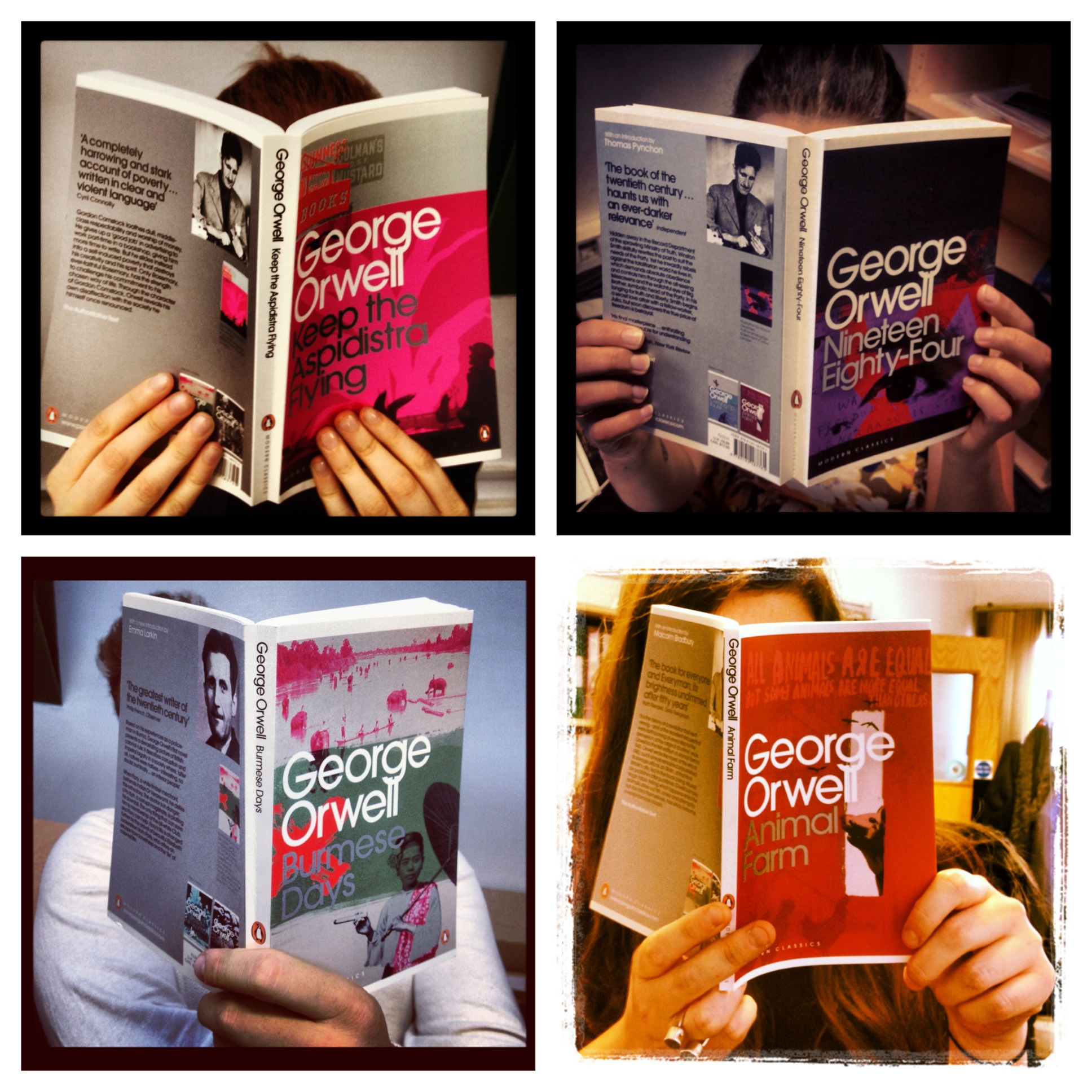
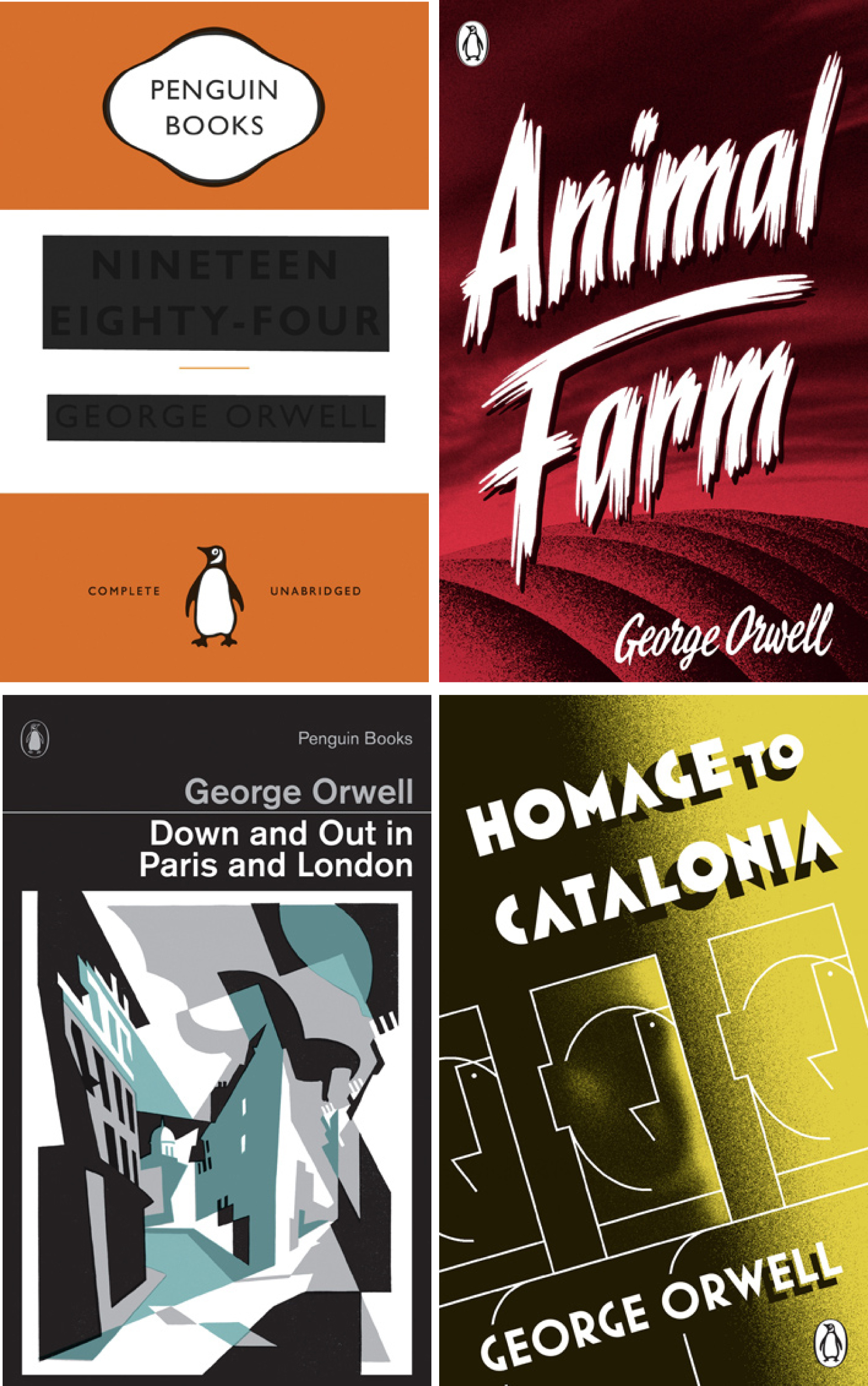
We’re thrilled to tell you about the inaugural launch of ‘Orwell Day’ on Monday 21st January. Working with Penguin Books and the Orwell Estate we will be celebrating the entire works of Orwell on the anniversary of his death and in the lead up to the BBC Radio 4 season. To mark the occasion Penguin have released new editions of some of his classic novels and the pamphlet form of his consummate essay ‘Politics and the English Language’. The fantastic new covers were designed by David Pearson. Here at the prize we’re having a read in and we’d like to absolutely everyone reading the essay. So tell your friends, family and colleagues and read for free on our site or pick up a special copy for yourself for just 99p from Penguin. You can stay updated on all Penguins work on this by subscribing to their newsletter here.

The Irrawaddy Lit Fest

We leave for Burma next Friday and cannot wait to get there and capture the event to share with you. You can see a full list of writers in attendance and their bios as well as more information about the festival, on the festival website. You can also still ‘Buy a book’ for Burma with the Orwell Prize here.

Entries are closed

Entries for the 2013 prize closed on Wednesday 9th January. We look forward to sharing the full list of entrants soon followed closely by the longlists, shortlists and this year’s winners. Key dates for the cycle can be found here.

From elsewhere

  • The Guardian are running a competition to win the collection of new Penguin covers here
  • The Creative Review examines David Pearson’s interpretation of Nineteen Eighty-Four
  • Ullapool Festival announced Orwell Prize winning Raja Shehadeh as a special guest

  • The diaries

    Don’t forget our other Orwell Diary blogs: his Wartime Diary, Hop-Picking Diary and The Road to Wigan Pier Diary. You can sign up to our newsletter If you’ve got any suggestions about our website(s), we’d love to hear from you – email us on katriona.lewis@mediastandardstrust.org. You can also follow us on Twitter and like us on Facebook.
    Entries for 2013 prize close on Wednesday

    Since October we have been accepting journalism and books from some of the very best writers of 2012 but we could certainly squeeze a few more books onto our shelves. This is the 20th year of the Orwell Prize and we are excited to add another book to the pile of very deserving winners as well as commend the work of another enquiring and accomplished journalistic mind. Over the years we have celebrated a vast array of writing that aspires to Orwell’s ambition ‘to make political writing into an art’; from Peter Hitchens asking ‘What if the Berlin wall didn’t fall?’ to Raja Shehadeh’s walks through his troubled Palestinian homeland; the anonymous investigation of a police officer and Brian Cathcart’s examination of a murder that created a media storm; Patrick Cockburn bought us the story from the frontline and Tom Bingham gave us the definitive testament on what law means for society. What will win in our 20th anniversary year? Entry forms for the journalism and book prizes, and basic details of the entry process, are available on our ‘How to Enter’ page. You can also check out the full rules and the values of the Prize, or learn more about the judges. Entries close on 9 January 2013, for all work first published in 2012. The Prize is self-nominating, but if you think there’s someone who should enter, either encourage them to do so or get in touch. If you haven’t already seen it you can watch our launch ad for some inspiration: Good luck!

    BBC Orwell season

    For 2013 BBC Radio 4 have commissioned an Orwell season full of compelling programmes that explore ‘The Real George Orwell’ through his life and works. The series begins at the end of the month and here at the prize we’ll be keeping you informed with all the details but you can also have a look at the website. More soon.

    The Irrawaddy Lit Fest

    We’re getting so excited about Irrawaddy lit fest, Burma’s first English language international literary festival, which will hold a press launch with Aung San Suu Kyi on Sunday. Writers who have confirmed that they will attend and speak include Orwell Prize winning Timothy Garton Ash, Pandora a poet who contributed to Bones will crow an anthology of Burmese poetry published with English PEN and the prisoner of war performer Zaganar. You can see a full list of writers and their bios as well as more information about the festival, on their website. You can also still ‘Buy a book’ for Burma with the Orwell Prize here.

    From elsewhere

  • At the end of the year The Independent asked its journalists to look back on their memorable moments of 2012. In this two-part piece you can read tales from winners Robert Fisk and Patrick Cockburn as well as last year longlistee David Usborne. Here and here
  • Last’s year’s journalism winner, Amelia Gentleman, examines the British tabloids pressure over page 3 in The New York Times

  • The diaries

    Don’t forget our other Orwell Diary blogs: his Wartime Diary, Hop-Picking Diary and The Road to Wigan Pier Diary. You can sign up to our newsletter If you’ve got any suggestions about our website(s), we’d love to hear from you – email us on katriona.lewis@mediastandardstrust.org. You can also follow us on Twitter and like us on Facebook.

    Merry Christmas

    Merry Christmas from The Orwell Prize. As a Christmas treat in celebration of the anniversary of In Defence of English Cooking, which was published in December 1945, we are thrilled to share the Orwell House Project’s video on Orwell and food. You can watch the video here and we look forward to sharing more about Orwell House in the New Year. 2012 has been a fantastic year for the prize with events at the Sunday Times Oxford Literary Festival, the Buxton Festival and Letchworth Festival, as well as our shortlist debate and awards ceremony, the 2013 Prize’s launch debate and this year’s Orwell Lecture. This year we were delighted to name three new Orwell Prize winners from three very strong longlists and a great field of entries: Toby Harnden for Dead Men Risen, Amelia Gentleman for her journalism in The Guardian, and the blog Rangers Tax-Case. Best wishes for Christmas, and for 2013, from all at the Prize.

    We are OPEN for 2013 entries

    Since October we have been accepting journalism and books from some of the very best writers of 2012 but there’s still room for much more. Entry forms for the journalism and book prizes, and basic details of the entry process, are available on our ‘How to Enter’ page. You can also check out the full rules and the values of the Prize, or learn more about the judges. Entries close on 9 January 2013, for all work first published in 2012. The Prize is self-nominating, but if you think there’s someone who should enter, either encourage them to do so or get in touch. If you haven’t already seen it you can watch our launch ad for some inspiration; Good luck!

    The Irrawaddy Lit Fest

    For early next year we’re very much looking forward to attending the Irrawaddy lit fest, Burma’s first English language international literary festival. Writers who have confirmed that they will attend and speak include Orwell Prize winning Timothy Garton Ash, Pandora a poet who contributed to Bones will crow an anthology of Burmese poetry published with English PEN and the prisoner of war performer Zaganar. You can see a full list of writers and their bios as well as more information about the festival, on their website. You can also still ‘Buy a book’ for Burma with the Orwell Prize here.

    The diaries

    Don’t forget our other Orwell Diary blogs: his Wartime Diary, Hop-Picking Diary and The Road to Wigan Pier Diary. You can sign up to our newsletter If you’ve got any suggestions about our website(s), we’d love to hear from you – email us on katriona.lewis@mediastandardstrust.org. You can also follow us on Twitter and like us on Facebook.

    Reaching for my Gnu

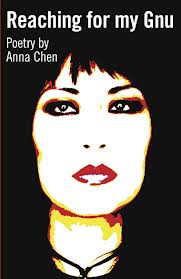
    Anna Chen, shortlisted in 2010 and longlisted in 2012 with her blog Madam Miaow Says, has released the paperback edition of her debut poetry collection today. Reaching for my Gnu has already been praised as “brilliant and dangerous”. The Orwell Prize are thrilled to be able to exclusively share with you two poems from the collection.

    POE I’d like to blow Edgar Alan Poe On bended knee Like Annabel Lee. I’d like to snort snow With Edgar A. Poe Swing into the pit Of his infernal wit. I’d like to sink low As Eddy A. Poe I’m eager to share His gloom and despair. Dear Ed can you please Give me a disease As cool as the red one Transmitted by fleas?

    COPPER COMES A CROPPER A little bit of sympathy at the back, there, Puh-leaze. Let’s be ‘avin’ yew. At the Leveson inquiry The cruellest moment is when Sir Paul Stephenson, The poor put-upon former chief Bill, Hobbles in on crutches and drops a pill, Cutting such a pathetic sight Under the assembled legal might. So small for a tall man, Bespectacled nerd, Pinched lips, he can barely cope. Only a thug like a lawyer Would punch well-honed words At a man on the ropes. He says: I may be public watchdog eyes and ears but I wasn’t there, never heard a thing, Couldn’t see, except for what the reptiles did to Lord Ian Blair, Stripped bare in the glare of the Sun And that wasn’t going to happen to me. A loose-lipped minority gossiped In a distracting dialogue of disharmony, Dysfunctional, too close for my liking, But I couldn’t do a thing, not a thing. Ever so humbly, I suggest you are Crediting me with a level of analysis I don’t have, I didn’t give it any particular thought, No conclusions can be wrought, It was just something that happened, Like the Sun coming up in the morning, Shedding light on the scum we turned over. I am not fawning but we don’t investigate someone We know socially and with whom we are friends. Except when we did the police officers. A big boy done it and ran away And stopped us realising there was anything wrong When he told us there was no new hack sore. We adopted a defensive mindset instead of a challenging stance, I can see that now. It was a cursory glance, Not wide, not deep, We were asleep. If only we had the wisdom of hindsight and weren’t caught out It would all be all right. I’m not throwing my colleague out of the back of the sleigh and I can’t answer for him but It would have been wiser presentationally For him to have done it different. However, he is away in Bahrain and you aren’t getting him back in Old Blighty Until the heat is off, Until you call off the dogs, Until the trail has chilled like the champagne we quaffed as we doffed. Defending and not challenging, That was the error of our ways. We are brave and did not back off, guv, Just because it was News International. We were logical and needed the polaroids ‘Cause the tapes and diaries in Glenn’s black bags were not enough. It was the Bahrain runaway who did not reopen the enquiry. He failed, it is regrettable. That’s tough. Fear of taking on a powerful enterprise is not the case. I did not put the frighteners on the Guardian editor, Or spray him with Mace, Or rough him up too much. Politics over substance, I merely turned up to understand. But there was no meeting of minds, My pulse did not race, You could not get off your face with him Unlike the real press, proper gents we could have a laugh with Over drinksand a nice dinner. Call it folly but Mr Wallis was generous with the Bolly And Yates of the Yard was fond of his jollies. I just did not get it and wasn’t keeping tally, The Met caught Chamy Media off Wallis by getting too pally But we gave him Cressida Dick. A lack of evidence beyond the lone rogue reporter Meant rationed resources and an underfunded force Would not be put on the job as a matter of course. Please give us more dosh if you wish us to wield the cosh. I was overworked with anti-terrorism, The Olympics, Not my decision, A junior did it and is sunning himself in sandy climes. I am an ill man, I need a week in a spa. Can you recommend one? And so they adjourn for another time. But spare a thought for the thin blue line. Poor Raisa, disappeared, turned to glue, Currently starring in a pet-food can near you To stop her singing like a canary, Squealing like a pig at an inquiry. Take the porkers she carried; She knew Cameron’s arse inside and out, Blue heart and stout, Fullsome about Coulson, He put it about, Withdrew when the thin blue sphincter tightened, Purged the toad and found his load lightened. Raisa rode bravely into the student throngs they harried, Righting a wrong for the right, Got the stomach for a fight when protesters say neigh And you weigh as much as ten of them With a bobby on your back. Truncheoned before luncheon Unfree by tea, Scuppered before supper. A hack for the hacks, The sack for the lax When they find out Her hooves are all over this and her head is in some mogul’s bed.

    We are OPEN for 2013 entries

    Since October we have been accepting journalism and books from some of the very best writers of 2012 but there’s still room for much more. Entry forms for the journalism and book prizes, and basic details of the entry process, are available on our ‘How to Enter’ page. You can also check out the full rules and the values of the Prize, or learn more about the judges. Entries close on 9 January 2013, for all work first published in 2012. The Prize is self-nominating, but if you think there’s someone who should enter, either encourage them to do so or get in touch. Good luck!

    The Irrawaddy Lit Fest

    This week the Irrawaddy lit fest, Burma’s first English language international literary festival, updated their website with several new names. Writers who have confirmed that they will attend and speak include Orwell Prize winning Timothy Garton Ash, Pandora a poet who contributed to Bones will crow an anthology of Burmese poetry published with English PEN and the prisoner of war performer Zaganar. You can see a full list of writers and their bios as well as more information about the festival, on their website. You can also still ‘Buy a book’ for Burma with the Orwell Prize here.

    From the archive

    Although not known for his poetry, Orwell biographer DJ Taylor says that in his youth Orwell demonstrated a great enthusiasm for poetry. You can read a selection of his poetry on our website here. In the last week we have celebrated the anniversaries of two Orwell essays; ‘Freedom of the Park’ was first published in the Tribune 1945 and ‘The Proletariat Writer’ was first broadcast by the BBC home service in December 1940.

    From elsewhere

  • Last week Timothy Garton Ash wrote about a a global battle for internet freedom that puts Leveson in perspective for the Guardian
  • 2012 judge of the Orwell Prize for Books, Samir Rahim, wrote a piece on ten great novels about newspapers for The Telegraph
  • Baroness Joan Bakewell, who will judge this year’s Orwell Prize for Books said that a spirit of culture always reigns in Manchester also in The Telegraph
  • The diaries

    Don’t forget our other Orwell Diary blogs: his Wartime Diary, Hop-Picking Diary and The Road to Wigan Pier Diary. You can sign up to our newsletter If you’ve got any suggestions about our website(s), we’d love to hear from you – email us on katriona.lewis@mediastandardstrust.org. You can also follow us on Twitter and like us on Facebook.

    A visit to Wigan

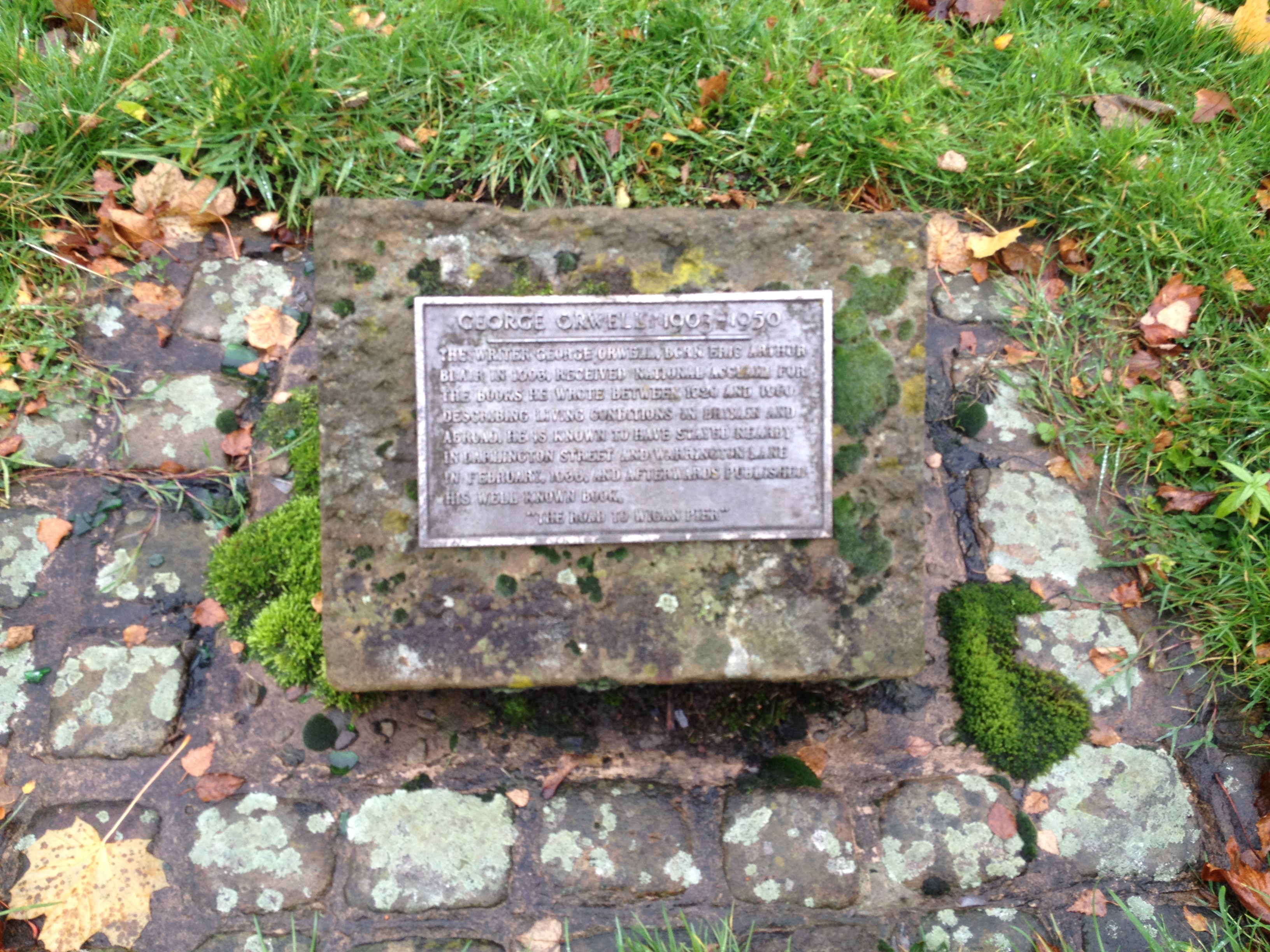
    In February the Orwell Prize will be running a series of writing workshops for young people with Stephen Armstrong (author of The Road to Wigan Pier Revisited) in Wigan. Stephen piloted the project with writers including Will Self last year and the Orwell Prize is delighted to be getting involved. On Wednesday The Orwell Prize went to Wigan with Stephen to talk about our plans. On arrival we were given a tour of the town. We saw the canal where the original Wigan Pier had been (and where the Orwell pub now sits). We saw the plaque on a stone commemorating Orwell’s time in Wigan. At Sunshine House, the community centre hosting and supporting us, we met a group of young writers who told us about their work. We look forward to telling you more about this as the project develops.

    An Orwell Prize chat with Raja Shehadeh

    It’s been a very busy week for us. Today we had the pleasure of meeting Raja Shehadeh who is in London for his new play. Raja told us about the power imagination has to evoke change, he talked about his new book Occupation Diaries and watching the play, Arab Nights, come together. Our full interview will be published as a newsletter special next week.

    From the archive

    If you missed Stephen’s recent guestpost on his time retracing Orwell’s steps you can read it here. You can also read the first chapter of Raja Shehadeh’s Orwell Prize winning Palestinian Walks as well as clips of Raja talking at events and a narrated slideshow of the book here.

    From elsewhere

  • Arab Nights, the play co-written by Orwell Prize winning Raja Shehadeh, opened at the Soho Theatre on Wednesday. Tonight he will be delivering a talk on Palestine and the Arab Spring. Tickets are still available here
  • Befriend a Family are hosting their very first Christmas concert with a reading from shortlister, Gavin Knight. The event will take place on the evening of Wednesday 5th December at Grosvenor Chapel in Mayfair. Proceeds will support families accross Westminster. Buy your ticket here
  • Last night the 2012 Orwell lecture took place at Birkbeck. We will upload footage of Christopher Andrew’s excellent talk soon.
  • The diaries

    Don’t forget our other Orwell Diary blogs: his Wartime Diary, Hop-Picking Diary and The Road to Wigan Pier Diary. You can sign up to our newsletter If you’ve got any suggestions about our website(s), we’d love to hear from you – email us on katriona.lewis@mediastandardstrust.org. You can also follow us on Twitter and like us on Facebook.

    The Most Dangerous Moment in British History, Secrets of the 1962 Missile Crisis

    This year’s Orwell lecture will take place at Birkbeck next Thursday. For 2012 Christopher Andrew will talk about the secrets of the 1962 missile crisis which he says is the most dangerous most in British history. You can book your free place to attend here. Last year Alan Rusbridger, editor of The Guardian, delivered a fantastic lecture on the hacking scandal. You can watch ‘Hacking away at the truth’ below.

    The Orwell Prize at City

    This week our operations manager visited City University to participate in an interview workshop for Journalism students. The bright aspiring journalists asked questions about Orwell’s relevance today and the future of the industry.

    Call for entries

    The Orwell Prize 2013 is now open for entries. For full details including the rules and values of the prize, see our website.

    From the archive

    Today we published the very last entry to the Wartime diaries, our real-time Webby Award nominated blog. Since 9th August 2008 we have been blogging Orwell’s diary entries in real time in three series. The diaries start as Orwell heads to Morocco (with his wife Eileen) to recuperate from injury and illness, and end in 1942 (or 2012) as the Second World War rages. We have since post-blogged Orwell’s diary from his journey to Wigan Pier, and his hop-picking diary from 1931. The entries may have come to an end but the blog remains as a virtual record of Orwell’s diary entries.

    From elsewhere

  • In this week’s The Telegraph Orwell and his second wife Sonia are referenced within Peter Stanford’s piece Keepers of the literary flame: T S Eliot’s widow Valerie was the last of her kind
  • Orwell Prize Director and official historian of the BBC, Jean Seaton says ‘We need a Newsnight’
  • The Hereford Times reports that their local council has been criticised for the confusing language in committee papers which have been compared to Nineteen Eighty-Four agenda booklets.
  • The wartime diaries

    The last and final entry was published on 15th November 1942. Don’t forget our other Orwell Diary blogs: his Hop-Picking Diary and The Road to Wigan Pier Diary. You can sign up to our newsletter If you’ve got any suggestions about our website(s), we’d love to hear from you – email us on katriona.lewis@mediastandardstrust.org. You can also follow us on Twitter and like us on Facebook.

    Entries are arriving for The Orwell Prize 2013

    The Orwell Prize 2013 is now open for entries and we’re so excited to be receiving books every day. If you’re thinking of entering, watch our new launch ad to hear the thoughts of Orwell Prize Director Jean Seaton, 2013 book judge Nikita Lalwani and 2013 journalism judge Jo Glanville on this forthcoming year. Entry forms for both prizes, as well as important dates for 2013, are available on our ‘How to Enter’ page. You can also see the full rules and the values of the Prize, or see more about our full panel of judges. Entries close on 9th January 2013, for all work first published in 2012. The Prize is self-nominating, but if you think there’s someone who should enter, either encourage them to do so or get in touch.

    Third judge for the 2013 journalism panel

    We are delighted to share with you that Chris Mullin has joined Jo Glanville and Nicholas Timmins to complete this year’s journalism judging panel. Chris Mullin is an author, a journalist and a politician. He was MP for Sunderland South for 23 years; a minister in three departments and chairman of the Home Affairs select committee. As a writer Chris’ books include three highly acclaimed volumes of diaries, the latest of which is A walk on part. He has also written three novels. As a journalist he has contributed to all major outlets and many more. Chris is chairman for the Heritage Lottery Fund North East and judged the Man Booker Prize in 2011.

    From the archive

    If you are thinking about entering it may also interest you to read the 2012 winning pieces from Amelia Gentleman, Rangers Tax-Case and the first chapter from Toby Harnden’s Dead Men Risen. These are all available on our website as well as much more from previous years.

    From elsewhere

  • If you missed out on the this year’s cabaret-style play ‘One Georgie Orwell’, you can catch it at the Idea Store Whitechapel on Friday 16th November at 7pm. Get you free ticket here
  • This week 2012 blogging longlistee Alex Massie turned to Orwell for inspiration to write this great piece; A lesson for Alex Salmond from George Orwell
  • Orwell Prize winning Matthew Parris and longlistee Juliet Jacques are among The Pink List’s most influential journalists of 2012
  • It has been confirmed that Andy Serkis, who starred in The Lord of the Rings franchise, is due to direct a new film production of Animal Farm
  • The wartime diaries

    The last entry was published on 15th October 1942. The next and final entry will be published on 15th November 1942. Don’t forget our other Orwell Diary blogs: his Hop-Picking Diary and The Road to Wigan Pier Diary. You can sign up to our newsletter If you’ve got any suggestions about our website(s), we’d love to hear from you – email us on katriona.lewis@mediastandardstrust.org. You can also follow us on Twitter and like us on Facebook.

    Our twentieth prize is open for entries

    Last week The Orwell Prize 2013 – our 20th anniversary prize – launched at The Frontline Club in Paddington. The first bundles of books arrived this week and we’re excited about sending them out to our judges. Remember entry is free and we welcome everyone who meets our rules and values. If you’re interested in submitting this year have a look at our website. This year’s launch debate ‘A crisis in policing?’ was a celebrated success. A range of views were put forward by our panel, consisting of Roger Graef (criminologist and film-maker), Denis MacShane (MP for Rotherham), Vivienne Hayes (CEO for Women’s Resource Centre) and Andrew Norfolk (Times journalist). In particular the case of the Rotherham grooming scandal and police attitudes to victims of sexual assault were highlighted as important arguments in favour of reform. A video of the night will be uploaded to our website soon.

    Buy a book for Burma

    At our launch debate we announced plans to participate in the Irrawaddy Literature Festival – Burma’s first English language festival – in February next year. The Orwell Prize is raising funds for the festival with a ‘Buy a book for Burma’ appeal. You can read more about this and donate here.

    Orwell Lecture 2012

    This year’s Orwell lecture will be delivered by Christopher Andrews on the subject: The Most Important Year in British History, Secrets of the 1962 Missile Crisis. The event will take place on the evening of 22nd November at Birkbeck. You can reserve your place here.

    From the archive

    Now is a great time to look at work from or on the subject of Burma. Emma Larkin, who was longlisted for her book Everything is broken, has written extensively on Orwell in Burma. You can read her introduction to Burmese Days on our website. Two years ago we launched on the subject ‘What next for Burma?’ and followed up with an event at the Oxford Literary Festival, ‘The future of Burma’ and followed up with a screening of the Oscar-nominated documentary Burma VJ.

    From elsewhere

  • In this week’s Guardian Comment is free, our Director Jean Seaton explains the decision to suspend the Blog Prize for 2013 here
  • Orwell Prize winning David Aaronovitch is named commentariat of the year at the Editorial Intelligence awards
  • The Times has apologised to Orwell Prize winning blogger NightJack after he was awarded compensation for having been hacked and outed
  • The wartime diaries

    The last entry entries was published on 15th October 1942. The next and final entry will be published on 15th November 1942. Don’t forget our other Orwell Diary blogs: his Hop-Picking Diary and The Road to Wigan Pier Diary. You can sign up to our newsletter If you’ve got any suggestions about our website(s), we’d love to hear from you – email us on katriona.lewis@mediastandardstrust.org. You can also follow us on Twitter and like us on Facebook.

    The Orwell Prize and the Green Dragon

    This newsletter was written by Dulcie Lee Last week the Orwell Prize visited The Green Dragon School in Brentford where our Operations Manager held a press conference for 60 nine-year-old delegates on the subject of A day in the life of a journalist. The room was packed with aspiring sports journalists, news reporters and foreign correspondents emerging with very interesting and thoughtful questions. Questions like; where does news come from, how do you start writing a feature, what kinds of different jobs are there for journalists to do and how do I become a journalist? Mr Veazey, the teacher who oversaw the morning, said “It was incredible to have The Orwell Prize visit, the children were so engaged and inspired. It made journalism real for them, explaining the ins and outs of the industry and they are desperate to find out more” After the press conference, the children were eager to discuss what they had learnt; one budding journalist said “I’m going to watch the news more often now!” and several decided they wanted to become a reporter. The nine-year-olds will be using the press conference to support a school project. Mr Veazey told us, “The children are now creating their own magazine, using some of the techniques that were discussed last week.” Only last month, during an episode of Radio 4’s Great Lives, Alan Johnson MP spoke to winner of the 2005 Orwell Prize for Journalism, Matthew Paris, saying “I wish I’d put Orwell on the national curriculum”. During the programme, Mr Johnson recalled purchasing Orwell’s Keep the Aspidistra Flying at age 14 and attributed it as the catalyst for his political awakening. During last year’s Orwell lecture, Alan Rusbridger, editor of The Guardian, also said “I’m pretty sure I wouldn’t have become a journalist were it not for George Orwell.”

    2013 launch

    The launch of the Orwell Prize 2013 – our 20th birthday year – will take place on the evening of Wednesday 24th October at the Frontline Club. There will be a launch debate as well as several exciting announcements about the Orwell Prize in 2013. To reserve your free place RSVP now to katriona.lewis@mediastandardstrust.org

    From the archive

    Yesterday was World Homeless Day. Much of Orwell’s work focused on the working class and homeless people in society and in 1928 and 1929 Orwell wrote three articles as part of ‘An Inquiry into “Civic Progress” in England’. Two of the three articles were ‘A Day in the Life of a Tramp’ and ‘Beggars in London’ in which he discuss the timeless issues surrounding homelessness. Orwell’s experiences of homelessness in London and Paris would lead him to write his book Down and Out in Paris and London four years later. You can read the first chapter of Down and Out in Paris and London here. ‘Shooting an Elephant’, the essay in which Orwell explores an experience from his time in Burma, was broadcast on the BBC Home Service on 12th October 1948. The essay, which is available on our website, became one of a collection of Orwell’s works on Burma. As well as ‘A Hanging’, Orwell wrote several preliminary sketches on Burma that would later be used to form his book Burmese Days. You can read the first chapter of the Burmese Days here.

    From elsewhere

  • Camilla Cavendish, 2012 Journalism Prize longlister, has written a fantastic piece for The Times discussing the modern influx of tribal career politicians and their unwillingness to tackle the bigger societal issues
  • 2011 Journalism Prize longlister, Dominic Lawson, wrote an insightful article on the politics surrounding abortion laws for The Independent
  • Yesterday Daniel Finkelstein, 2012 Journalism Prize shortlister, wrote a brilliant piece highlighting the importance of the economy in the next election for The Times
  • The Independent are running a competition to win the top 10 books in the Everyman’s Library, including Orwell’s Nineteen Eighty-Four
  • The wartime diaries

    This week’s entries was published on 10th and 11th October 1942. Next week’s entry will be published on 15th October 1942. Don’t forget our other Orwell Diary blogs: his Hop-Picking Diary and The Road to Wigan Pier Diary. You can sign up to our newsletter If you’ve got any suggestions about our website(s), we’d love to hear from you – email us on katriona.lewis@mediastandardstrust.org. You can also follow us on Twitter and like us on Facebook.

    On Jura

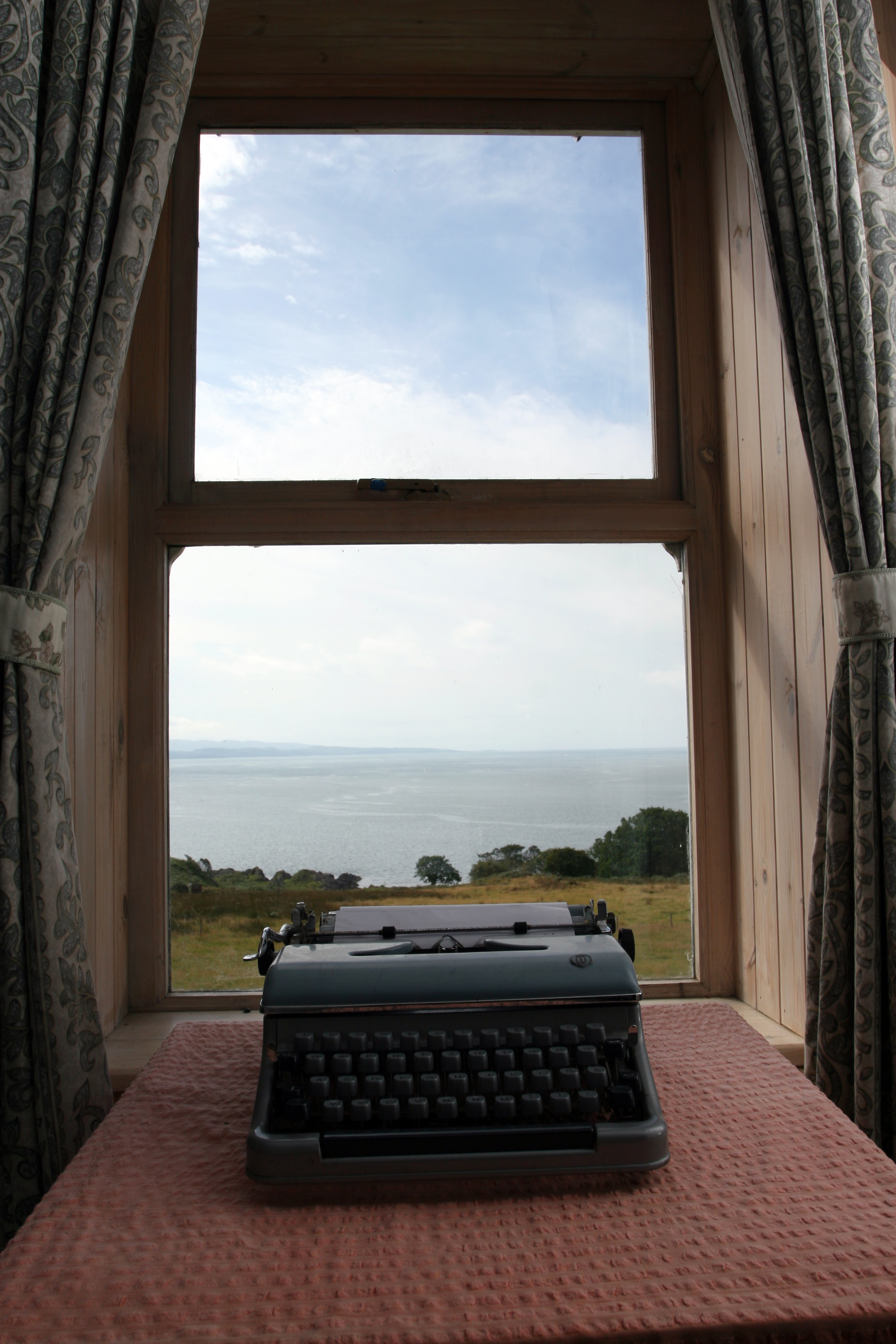
    This newsletter was written by Dulcie Lee This week we’re delighted to share two very special new pieces of writing on our website. Oliver Bullough, who was shortlisted for the Orwell Prize for Books last year, has given us an account of his summer at Orwell’s house on Jura and we asked Richard Blair, Orwell’s son, to share some memories of his time with his father there. To contextualise these new additions Orwell biographer D.J.Taylor reflects on the Jura days; “Orwell had spent much of the early 1940s yearning for his island in the Hebrides where he could work in isolation from a world he found increasingly unsympathetic. Barnhill Farmhouse, the bolt-hole on Jura in the Inner Hebrides fixed up for him by his friend David Astor, sustained him for much of the last five years of his life. Miles from civilisation – the nearest road stopped several miles away – and accessible to only the hardiest of friends, it offered an idyllic setting for his adopted son Richard’s early childhood and the solitude in which to write his last major work, Nineteen Eighty-Four. Although his time here coincided with increasing ill-health, the detail of his Jura diaries shows how intensely he responded to life on the island and how much – had his card not already been marked – he would have enjoyed continuing to live there.” We will release the story of Bullough’s summer on Orwell’s island followed by Blair’s touching commentary tomorrow morning and afternoon.

    Eric Hobsbawm

    This week the news was flooded with memorials and obituaries for the historian who died on Monday 1st October, at the age of 95. Our Director, Professor Jean Seaton, pays tribute to Hobsbawm – who was a member of the Orwell Trust – in a piece on our website.

    From the archive

    Today is National Poetry Day. Although not Orwell’s best known work, his poetry informed his writing style and, according to his biographer D. J. Taylor, his enthusiasm for poetry in his youth was “as least as strong as any desire to write fiction”. National Poetry Day is about getting everybody interested in poetry, including young children, and Orwell’s essay ‘Nonsense Poetry’ discusses poetry through referencing many famous children’s poems. We have a collection of Orwell’s poems which includes some original manuscripts. We also have the full essay by Orwell’s biographer D. J. Taylor where he discusses Orwell’s relationship with poetry. Orwell’s poem, ‘A dressed man and a naked man’ was published 79 years ago in October 1933.

    From elsewhere

  • This week, shortlister for the 2009 Orwell Prize for Journalism, Henry Porter, wrote a brilliant piece on the threat which hi-def CCTV brings to democracy for The Guardian
  • Zoe Williams, 2012 Orwell Prize for Journalism longlister, examined the effect that television has on political party conferences in ‘Tweaking it all for the telly is infantilising our party conferences’
  • Raja Shehadeh, winner of the Orwell Prize 2008 for Palestinian Walks wrote a provoking piece for the International Herald Tribune on the quality of care in Jerusalem
  • The wartime diaries

    This week’s entry was published on 5th October 1942. Next week’s entries will be published on 10th and 10th October 1942. Don’t forget our other Orwell Diary blogs: his Hop-Picking Diary and The Road to Wigan Pier Diary. You can sign up to our newsletter If you’ve got any suggestions about our website(s), we’d love to hear from you – email us on katriona.lewis@mediastandardstrust.org. You can also follow us on Twitter and like us on Facebook.

    Orwell’s England

    Last week the Orwell Prize took a panel to the George Orwell Festival at Letchworth near Wallington where Orwell lived for a time after his 1936 journey to Wigan. We were there to talk about The Road to Wigan Pier; the poverty Orwell saw there in comparison to what we see now. Orwell’s journeys around England and beyond have created many timeless pilgrimages for his readers. In Ben Pimlott’s introductory essay to an essay collection entitled Orwell’s England he looks at the connections Orwell forged with the places he wrote about and from.

    “On the one hand, Orwell is quintessentially an English writer, carrying into his work many English qualities (suspicion of theory, for example), and his work will always be cited for its representative Englishness. On the other hand – like Boswell’s Samuel Johnson, another firmly based Englishman, whom in some ways he resembles – Orwell is the reverse of parochial. Indeed, by one reading, Orwell’s England is not a place at all. It is a state of mind.”

    Pimlott says that The Road to Wigan Pier is about the English not industry or economy; “It is about contrasts, hypocrisy, and convenient amnesia.” And this book presents a great model for many of Orwell’s strongest beliefs. The England of Orwell’s Wigan Pier, rooted in London but based in Wigan, is an England that endures. Perhaps it was Orwell’s talent for participating with his reportage in literary form – tramping in London and fighting in Catalonia – that ensconced him in the places he wrote about, maybe it was more that he captured a particular moment in time and his Englishness was acutely identifiable. At our panel discussion we heard that Orwell’s name resonates still today across in England and in Pimlott’s words, “the writer became the property of everybody.” You can read Ben Pimlott’s essay ‘Ben Pimlott: Introduction to Orwell’s England’ on our website.

    Letchworth video

    If you weren’t able to make it to our debate at Letchworth last week, you can watch the discussion Poverty then and now: Orwell and his successors newly uploaded to our website and on our youtube channel today.

    From the archive

    When we think about Orwell’s England there are lots of essays the subject might inspire you to read. There’s ‘The Day in the Life of a Tramp’, ‘The Moon Under Water’ and ‘A Nice Cup of Tea’. From the novels and longer works of reportage as well as The Road to Wigan Pier you might also like to read Down and out in Paris and London or Keep the Aspidistra Flying.

    From elsewhere

  • Last week 2012 Orwell Prize judge for journalism Brian Cathcart launched his new book Everybody’s Hacked Off
  • Winner of the Orwell Prize for Journalism in 1997 Ian Bell’s new book Once Upon a Time: the Lives of Bob Dylan was reviewed in So much older then for The Financial Times
  • Our Letchworth debate had a write up by The Orwell Society in the piece The Orwell Society visits the Orwell Weekend at Letchworth
  • The wartime diaries

    This week’s entry was published on 28th September 1942. Next week’s entry will be published on 5th October 1942. Don’t forget our other Orwell Diary blogs: his Hop-Picking Diary and The Road to Wigan Pier Diary. You can sign up to our newsletter If you’ve got any suggestions about our website(s), we’d love to hear from you – email us on katriona.lewis@mediastandardstrust.org. You can also follow us on Twitter and like us on Facebook.

    Great Lives

    This week George Orwell was the subject of BBC Radio 4’s Great Lives. The show was presented by Matthew Parris who won the Orwell Prize for Journalism in 2005 and featured former MP Alan Johnson as well as our Orwell Prize Director, Professor Jean Seaton. “A tall thin man sits up in bed with a typewriter on his knees chain smoking,” the program opens on the scene of Orwell’s last months and traces his great life through Eton to Burma, Paris to Wigan, Spain to Jura. During the broadcast Alan Johnson says that Orwell was a crucial part of his political development and central to his education. Reflecting on production of the piece today Jean Seaton said; “People are made of the books they encounter. Alan Johnson is an autodidact; a wise and communicative man. One of the books that made him was Orwell’s.” You can listen to the programme here. George Orwell’s works have inspired many more by nurturing writers like Margaret Atwood. Many have turned their attention to the examination of Orwell’s life including DJ Taylor, Bernard Crick and Gordon Bowker. John Banville once said, ‘his must be the most picked-over illustrious literary corpse of the twentieth century’. On our website you can find a library of pieces on Orwell with words from Will Self, Salman Rushdie, Andrew Marr, Christopher Hitchens and many more.

    The Orwell Lecture

    We are delighted to announce that this year’s Orwell lecture will be delivered by Christopher Andrew on the subject of ‘The Most Important Year in British History, Secrets of the 1962 Missile Crisis’. You can see further details as well as a link on how to book tickets on our website.

    Orwell Art

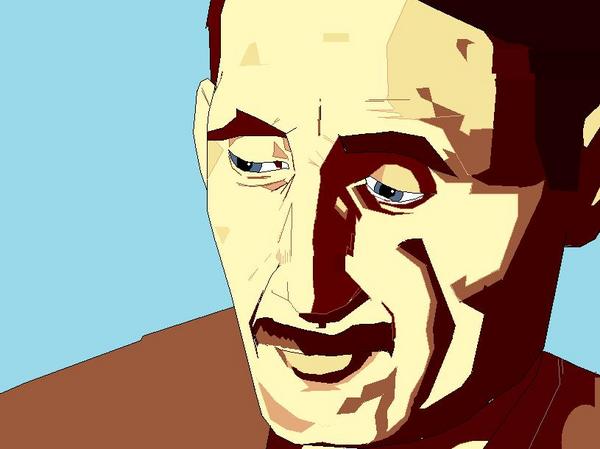
    This week it’s a pleasure to share with you some wonderful artistic portraits of Orwell by Dean Noble who sent the pictures into us via Twitter and said that his inspiration was reading Orwell’s novels.

    From the archive

    While thinking about Orwell’s life and great work, remember The Orwell Prize are able to bring you the first chapter of all of Orwell’s books as well as many essays, courtesy of Penguin Books and AM Heath. See a snapshot of sheer destitution in Down and Out in Paris and London, experience his fight against Spanish fascism in Homage to Catalonia, feel George Bowling’s nostalgic despair in Coming Up for Air, read the scathing critique of totalitarianism that is Animal Farm, remember his stark, dystopian vision of a tyrannical future in Nineteen Eighty-Four and more, all available on our website.

    From elsewhere

  • Sarah Burnside discussed Orwell’s legacy in a comment piece for Eureka Street, and spoke about the continuing ‘intellectual tug-of-war’ induced by the complexities of his political positions
  • Historian Simon Schama told the Financial Times that Orwell was the reason that he became a writer
  • Man Booker-shortlisted novelist Deborah Levy backed Orwell’s conclusions for why writers write during an interview with the Guardian; Deborah has been commissioned to write an essay in response to Orwell’s classic ‘Why I Write’
  • The Comet reported that the organisers of the Letchworth literary festival are ‘thrilled’ to be having The Orwell Prize tonight, where we will be hosting a panel on the topic of ‘Poverty Then and Now: Orwell and his Successors’.

  • The wartime diaries

    This week’s entries were published on 21st and 22nd August 1942. Next week’s entry will be published on 28th September 1942. This newsletter was written with contribution from Tom Webb Don’t forget our other Orwell Diary blogs: his Hop-Picking Diary and The Road to Wigan Pier Diary. You can sign up to our newsletter If you’ve got any suggestions about our website(s), we’d love to hear from you – email us on katriona.lewis@mediastandardstrust.org. You can also follow us on Twitter and like us on Facebook.

    Poverty then and now: Orwell and his successors

    The Orwell Prize will be returning to the Letchworth George Orwell Festival for a second year in just two weeks. This time we’re taking a discussion on poverty then and now with some of Orwell’s ‘successors’. Our exciting panel is made up of Dr Michael Sayeau who runs the Orwell archive at UCL, Director of Befriend a Family Jacqueline Crooks, Gwenton Sloley a real life character from Hood Rat and author of Road to Wigan Pier Revisited Stephen Armstrong. Stephen will be guestposting on his experiences after writing his book in next week’s newsletter. In the lead up to the event we’re busy re-reading the panelist’s books as well as Orwell’s The Road to Wigan Pier and our Road to Wigan Pier blog on Orwell’s diary entries. If you’d like to know more about the event and book tickets see our website.

    Orwell Plaque

    Next week a George Orwell plaque will be unveiled in Kilburn where he wrote Animal Farm. Orwell’s son, Richard Blair, will be at the ceremony on Tuesday 11th September at 3pm, Kington House.

    From the archive

    Orwell’s essay ‘Shooting an Elephant’ was first published in September 1936. The piece went on to be broadcast by the BBC home service and remains one of his most beloved. The possibly autobiographical story follows a police man in Burma reluctantly shooting an aggressive elephant. It is widely accepted as a metaphor for Orwell’s views on British Imperialism. Also out this month – in 1941 – is The Art of Donald McGill.

    From elsewhere

  • This week Toby Harnden, winner of the Orwell Prize for Books 2012 wrote ‘Haunted by Helmand’ for the BBC on their documentary Our War
  • DJ Taylor and Tony Wright discuss ‘Orwell: Left or Right’ on the Today program
  • Former Orwell Prize judge Gaby Hinsliff says ‘Fixing Britain’s work ethic is not the answer to this economic mess’in the Guardian
  • The wartime diaries

    This week’s entries were published on 27th and 29th August 1942. Next week’s entry will be published on 7th Septmber 1942. Don’t forget our other Orwell Diary blogs: his Hop-Picking Diary and The Road to Wigan Pier Diary. You can sign up to our newsletter If you’ve got any suggestions about our website(s), we’d love to hear from you – email us on katriona.lewis@mediastandardstrust.org. You can also follow us on Twitter and like us on Facebook.

    Animal Farm

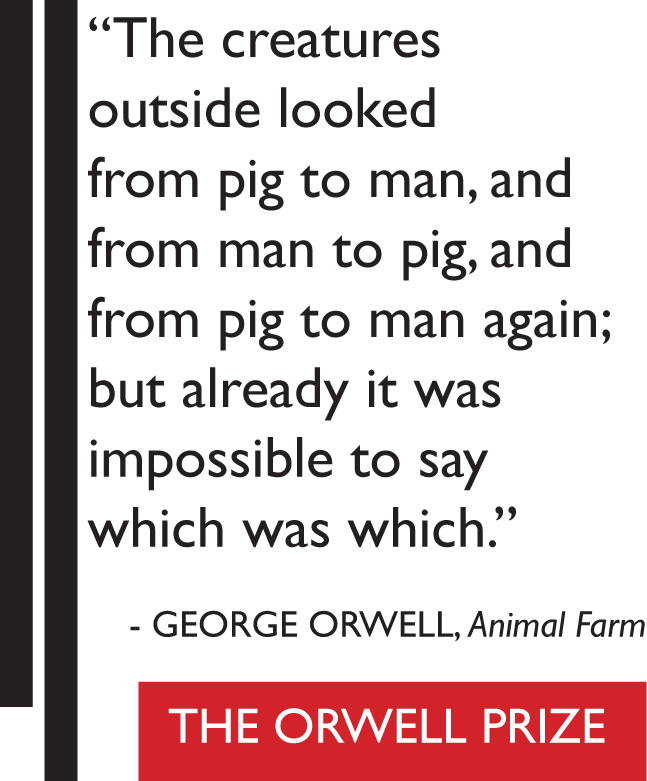
    Today we celebrate the anniversary of the publication of Animal Farm which was first available in 1945. In the same month Orwell began work as the Literary Editor of The Tribune, he also began writing one of the works his name would be most remembered for. The satirical novel chronicles the revolution of animals against Mr Jones at Manor Farm; an allegory on the Soviet regime. This year we added the preface to the Ukranian edition of Animal Farm to our website. We also have a special Animal Farm page with links to much more including the first chapter, the original preface and writers pieces on how the book has influenced them. To celebrate today our online fans have been tweeting their first memory of reading the classic and we have been posting quotes from the work on our Facebook page. The most popular quote today was, “The creatures outside looked from pig to man,and from man to pig,and from pig to man again;but it was already impossible to say which was which”.

    The Orwell Project

    Next week The Orwell Project will be hosting an event at the Camden Arts Centre. The project is working with artists, writers and performers to create new work responding to or inspired by Orwell’s minor work, life and musings inspired by his essay ‘British Cookery’. In 1946, the British Council commissioned Orwell to write the essay in which he presented six of his own recipes, exploring class-distinctive eating, championing local produce and the home kitchen as the beating heart of British cuisine. A eulogy to sugar, fats and the three-course breakfast, the resulting essay was considered extravagant and anachronistic in the context of post-war rationing, and went unpublished, as it remains to this day. The Orwell Project say; “Distinct from Orwell’s familiar dystopian reputation, there is a wealth of idiosyncratic observation, epicureanism and cultural questioning across his non-fiction. His essays, letters and journalism explore pop culture, art criticism, entertainment, broadcast, class and society in a seminal period for state revision and the rise of media; Bevin published his bill on the NHS, the coal industry nationalised, new town centres opened and TV crept slowly into British homes.” From Autumn 2012 they will be presenting a brand new series of events and projects exploring fresh, unfamiliar perspectives on the influence of one of our most celebrated writers.

    From the archive

    This week we observe the anniversary of the death of the writer H.G. Wells who was a contemporary of Orwell’s he references in many of his essays. You can read ‘You and the atom bomb’, ‘Can socialists be happy?’ and ‘Notes on Nationalism’ as well as many more on our website.

    From elsewhere

  • This week Peter Beaumont, winner of the 2007 Orwell Prize for Journalism, had a piece in the Guardian about the implications of the Julian Assange asylum row
  • We spotted a wonderful feature in the Telegraph on a writer’s journey to trace her ancestory in Burma with the aid of her Mother’s diaries
  • ABC’s Lateline posted a video of Anatol Leiven, the first winner of The Orwell Prize for books and also longlisted for this year’s prize, speaking about the developments of Syria’s civil war
  • Today Publishers Weekly posted The Troubled History Behind George Orwell’s Complete Works by Peter Davison
  • The New York Times have published a review of the American edition of ‘Diaries’ with a forward from Christopher Hitchens
  • The wartime diaries

    This week’s entries were published on 14th, 18th and 19th August 1942. Next week’s entries will be published on 22nd and 25th August 1942. Don’t forget our other Orwell Diary blogs: his Hop-Picking Diary and The Road to Wigan Pier Diary. You can sign up to our newsletter If you’ve got any suggestions about our website(s), we’d love to hear from you – email us on katriona.lewis@mediastandardstrust.org. You can also follow us on Twitter and like us on Facebook.

    The Sporting Spirit

    The London 2012 Olympic games has dominated all UK media outlets for the last fortnight. At the time of writing a Journalisted search reveals that since the opening ceremony there have been 6,427 articles published in the national press. We know from letters home to his Mother that the young George Orwell enjoyed sport at school. In fact, Orwell expert Peter Davison says that at that point it is difficult to guage whether he would become internationally famous as a goalkeeper or a writer. In Bernard Crick’s biography George Orwell: A Life he points out that at Orwell’s Prep school, St Cyprians, the academic scores were mixed with success in team sports as if they were seemingly equal importance. He said that ‘this weird synthesis of team spirit and individual competitiveness could truly be said to epitomize the blending of a capitalist and an aristocratic ethic’. Over time Orwell developed his own perspective of parallels between sport and politics. In 1945, three years before the last time London hosted the Olympic games, The Tribune published ‘The Sporting Spirit’ which revealed his repugnance for the evolution of competitive sport; “Serious sport has nothing to do with fair play. It is bound up with hatred, jealousy, boastfulness, disregard of all rules and sadistic pleasure in witnessing violence: in other words it is war minus the shooting.” Peter Davison explores this further in his essay ‘Orwell and Sport’.

    Letchworth 2012

    It gives us great pleasure to announce that we will be returning to the Letchworth Orwell Festival in September for a debate celebrating the 75th anniversary of The Road to Wigan Pier. The subject for discussion is ‘Poverty then and now: Orwell and his successors’ and we are very fortunate to have a wonderful set of speakers. The panel is made up of author of Road to Wigan Pier Revisited, Stephen Armstrong; Dr Michael Sayeau a member of the Board of trustees for the Orwell Archive at UCL; Director of Befriend a Family, Jacqueline Crooks; 2012 Orwell Prize for Books shortlistee Gavin Knight. They will be chaired by Katriona Lewis, Operations Manager of The Orwell Prize. You can see more information about the event and how to book tickets here.

    From the archive

    Orwell’s essay, ‘A hanging’ was first published in The Adelphi in August 1931. The piece is set in Burma where Orwell was stationed as an officer from 1922 and describes the execution of a criminal. Orwell’s experiences in Burma after Eton formed the basis for his 1934 novel Burmese Days. On our website you can find Emma Larkin’s introduction to Burmese Days, Douglas Kerr on Orwell, Kipling and the Empire as well as a video of our own What next for Burma? 2010 launch debate and much much more.

    From elsewhere

  • We had a fantastic response to last week’s guest post by Rangers Tax-Case on ‘writing politics’. Standby for many more guestposts by friends of The Orwell Prize including Stephen Armstrong and Toby Harnden
  • Earlier this week Scottish writer Gerry Hassan wrote a piece in praise of investigative journalism on the football scandal for The Scotsman
  • .

  • This week Orwell Prize for Books longlistee wrote a comment piece for The Guardian on London Mayor Boris Johnson’s mishap with a zip line
  • 2008 winner of The Orwell Prize for Books, Raja Shehadeh celebrated the release of his latest book Occupation Diaries which tells tales of life on the West Bank. You can read a review here
  • Yesterday it was National Book Lovers Day and we received dozens of wonderful tweets from followers telling us their favourite Orwell novel. We were particularly pleased that the usually less noticed Keep the Aspidistra Flying was well sited with a ‘#Comstock!’ tag. Below you can see some of our Media Standards Trust favourites.
  • The wartime diaries

    This week’s entries were published on 7th, 9th, 10th and 12th August 1942. Next week’s entry will be published on 14th, 18th and 19th August 1942. Don’t forget our other Orwell Diary blogs: his Hop-Picking Diary and The Road to Wigan Pier Diary. If you’ve got any suggestions about our website(s), we’d love to hear from you – email us on katriona.lewis@mediastandardstrust.org. You can also follow us on Twitter and like us on Facebook.

    Buxton video

    You can now watch a video (filmed on the Media Standard Trust’s brand new camera) of our fantastic debate at Buxton Festival, ‘Orwell vs. Kipling; who was the greater writer’, on our website and YouTube channel. We were lucky enough to have the wonderful former MP Tony Wright to chair. Stuart Evers, author of Ten Stories about Smoking and If This is Home and Paul Anderson, editor of Orwell in Tribune: ‘As I Please and other writings 1943-7′ spoke for Orwell. Charles Allen, author of Kipling Sahib and Jan Montifiore, author of Kipling and editor of Kipling’s forthcoming The Man Who Would be King and other stories took Kipling’s side. Video of our previous events at Buxton – Is politics corrupted by language?, Andrea Gillies in conversation with her publisher Rebecca Nicolson, Andrew Brown in conversation with David Blunkett MP, a debate on Orwell vs Dickens, and a discussion on ‘what makes a good political novel?’ – can be found in our events archive.

    From the archive

    New to our website today is Orwell’s piece ‘Spilling the Spanish Beans’, an article in two parts that was first printed in the New English Weekly of 29 July and 2 September 1937. In this work Orwell examines the Spanish civil war and discusses the newspapers’ portrayal of both sides of the conflict. This year we have been celebrating the 75th publication anniversary of Homage to Catalonia. If you’re interested in Orwell’s writings on Spain you can read ‘Three parties that mattered’: an extract from Homage to Catalonia and Orwell’s poem ‘The Italian Soldier Shook My Hand’. Also new to our website recently is a poem from the young Orwell ‘Kitchener’.

    From elsewhere

  • This week Simon Kuper, shortlisted for this year’s Orwell Prize for Journalism, wrote a fantastic article on the spirit of London, perfectly timed for the Olympic Games.
  • In the Guardian, Fintan O’Toole 2012 Journalism Prize longlistee, explores the inherent ethics of banking in a fresh and thoughtful piece.
  • There was another great piece from our 2012 Journalism shortlisters this week. Edward Docx drew from his own experience in a brilliantly observed and witty piece on surviving book tours.
  • The wartime diaries

    This week’s entries were published on 23rd, 26th, 27th and 28th July 1942. Next week’s entries will be published on 1st, 3rd, 4th and 5th August 1942. Don’t forget our other Orwell Diary blogs: his Hop-Picking Diary and The Road to Wigan Pier Diary. If you’ve got any suggestions about our website(s), we’d love to hear from you – email us on katriona.lewis@mediastandardstrust.org. You can also follow us on Twitter and like us on Facebook.

    Orwell’s Kitchener poem

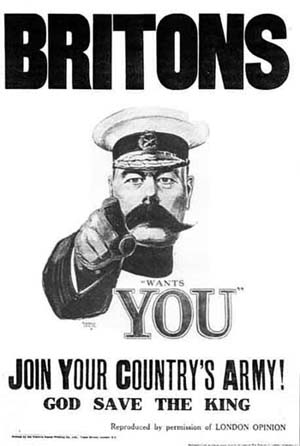
    This week we have added a piece written by Eric Blair to our website. The poem was published by the Henley and South Oxfordshire Standard on 21st July 1916 by a thirteen-year-old who was one day to become George Orwell. Entitled Kitchener the piece is a tribute to Horatio Herbert Kitchener who played a pivotal role in the British Army recruitment campaign of World War I. The Lord, who was the British Secretary of State for War, is most widely recognised by the ‘Lord Kitchener Wants You’ posters. Orwell biographer D. J. Taylor says the young Orwell displayed ‘an enthusiasm for poetry that in [his] formative years seems to have been as least as strong as any desire to write fiction’. You can read Kitchener in our By Orwell Poetry section.

    From the archive

    Last week, Vanity Fair published Christopher Hitchens’ introduction to The Orwell Diaries which is due to be published in the United States for the first time next month. On Monday The Guardian reported on this with reference to Christopher’s admiration of Orwell. Christopher wrote many things on Orwell including Why Orwell Matters as well as why his advise on tea making doesn’t. He < a href=http://www.npr.org/templates/story/story.php?storyId=105126571>spoke on why Orwell’s novel 1984 retained significance 60 years after it was published and to celebrate what would have been Orwell’s 100th birthday. Christopher’s consummate piece on Fleet Street illuminates his passion for Orwell. He has been both longlisted and shortlisted for the Orwell Prize for Books, < a href=https://orwellfoundation.com/winners/filter/type-Special%20Prize/year-2012/>he was awarded this year’s Special Prize.

    From elsewhere

  • This week Paul Anderson wrote a wonderful blogpost on his experience speaking at an Orwell Prize debate at Buxton Festival that took place on Monday. A video of this event will be uploaded to our website soon
  • Orwell Prize for books 2012 shortlister Richard Lloyd Parry writes for The New York Times on the effectiveness of the Japanese police service
  • Journalism Prize winner Amelia Gentleman investigates Channel 4’s forthcoming Mad season
  • The wartime diaries

    This week’s entry was published on 22nd July 1942. Next week’s entry will be published on 23rd, 26th, 27th and 28th July 1942. Don’t forget our other Orwell Diary blogs: his Hop-Picking Diary and The Road to Wigan Pier Diary. If you’ve got any suggestions about our website(s), we’d love to hear from you – email us on katriona.lewis@mediastandardstrust.org. You can also follow us on Twitter and like us on Facebook.

    Orwell the book reviewer

    A guest post by Paul Anderson One of the funniest of George Orwell’s many columns for the left-wing weekly Tribune is ‘Confessions of a book reviewer’, published on 3 May 1946, with its dismal depiction of the procrastinating writer struggling to churn out the words on the latest books: “He is a man of thirty-five, but looks fifty. He is bald, has varicose veins and wears spectacles, or would wear them if his only pair were not chronically lost. If things are normal with him he will be suffering from malnutrition, but if he has recently had a lucky streak he will be suffering from a hangover. At present it is half-past eleven in the morning, and according to his schedule he should have started work two hours ago; but even if he had made any serious effort to start he would have been frustrated by the almost continuous ringing of the telephone bell, the yells of the baby, the rattle of an electric drill out in the street, and the heavy boots of his creditors clumping up and down the stairs…” It is, of course, satire. The package of books the reviewer has to review in a single article comprises five ludicrously incompatible titles – “Palestine at the Crossroads, Scientific Dairy Farming, A Short History of European Democracy (this one is 680 pages and weighs four pounds), Tribal Customs in Portuguese East Africa, and a novel, It’s Nicer Lying Down, probably included by mistake”. And the reviewer is an utterly shameless hack. When he finally gets down to writing, “All the stale old phrases – ‘a book that no one should miss’, ‘something memorable on every page’, ‘of special value are the chapters dealing with, etc, etc’ – will jump into their place like iron filings obeying the magnet, and the review will end up at exactly the right length and with just about three minutes to go.” All the same, ‘Confessions of a book reviewer’ is a self-portrait of sorts – though not of the Orwell of 1946. By then, he had long left behind the years of turning out freelance reviews to pay the rent while he worked on bigger projects. Four years of steady employment followed by the success of Animal Farm had given him a security he had not enjoyed since leaving the Indian police service in 1927. He still wrote reviews, but they were mainly for big newspapers that paid properly, the Observer and the Manchester Evening News, and he had the status that allowed him to choose what he reviewed. Most of his writing about books was in essay-length literary criticism rather than reviewing. From 1930 until 1941, however, book reviewing had been Orwell’s main means of subsistence. He turned out pieces week-in, week-out – particularly for the Adelphi, New English Weekly and Time and Tide but also for others, including, latterly, the New Statesman and Tribune – while working on his own books of fiction and reportage, none of which, with the exception of The Road to Wigan Pier, was a commercial success at the time. The editor of Orwell’s Complete Works, Peter Davison, estimates that Orwell reviewed some 800 books in the last 20 years of his life. And for the first 10 of those 20 years, he was as poor and as put-upon as the hapless writer in ‘Confessions of a book reviewer’, if never quite so cynical (and never bald). Few of Orwell’s book reviews can be counted among his best work: they are jobbing journalism produced to order for money. But they are well-constructed and clearly written models of the reviewer’s craft that anyone reviewing books today should read – though the chances in 2012 of making even the meagre living from book reviewing enjoyed by Orwell in the 1930s are close to nil. Paul Anderson is the editor of Orwell in Tribune: ‘As I Please’ and other writings 1943-47

    Buxton

    We will be hearing more from Paul on Monday at the Buxton Festival where he and Stuart Evers will be supporting Orwell in our Orwell vs Kipling debate over who was the greater writer. There for Kipling will be Jan Montifiore and Charles Allen. The great Tony Wright will chair. Last chance to buy tickets here or standby for a forthcoming coverage on our website.

    From the archive

    In the days leading up to our Orwell vs Kipling debate we have thought of Orwell’s own view of his contemporaries. He writes about many greats of the 19th century including Dickens and Tolstoy as well as those of his own era like Miller and Kipling. Orwell’s piece ‘In Defence of P.G. Wodehouse’ addresses the controversy stirred when Wodehouse broadcast from Nazi Germany. Of course Orwell wrote about very many books too like ‘Benefit of Clergy: Some Notes on Salvador Dali’. Then there’s also the aforementioned ‘Confessions of a book reviewer’ where Orwell writes about writing about books.

    From elsewhere

  • This week Vanity Fair published ‘The Importance of being Orwell’, a modified introduction by Christopher Hitchens to the forthcoming Diaries, by George Orwell
  • If you’ve been following the developing story on Rangers FC with interest you should have a look at the Orwell Prize winning blog Rangers Tax-Case
  • This week Zoe Williams, who was longlisted for this year’s Orwell Prize for Journalism, wrote an impressive piece for The Guardian on how family planning is affecting Nepalese society
  • On Wednesday Orwell appeared in an Evening Standard piece reflecting on seven decades at Bush House. He worked at Bush House as a talks producer for the Eastern Service from 1941 to 1943
  • The wartime diaries

    This week’s entry was published on 10th July 1942. Next week’s entry will be published on 22nd July 1942. Don’t forget our other Orwell Diary blogs: his Hop-Picking Diary and The Road to Wigan Pier Diary. If you’ve got any suggestions about our website(s), we’d love to hear from you – email us on katriona.lewis@mediastandardstrust.org. You can also follow us on Twitter and like us on Facebook.