Search Results for: george-orwell/by-orwell/poetry

For teachers

Whatever your subject  – politics, English, history, citizenship, drama to name but a few – whatever the age group you teach – the Orwell Foundation website has a wealth of resources. These are available free to everyone, regardless of whether you or your school are currently involved with the Youth Prize. If you are interested in learning more about our workshops in schools, please get in contact with the administrator at admin@orwellyouthprize.co.uk.

Our resources include works by George Orwell, works about George Orwell and video of events run by the Orwell Prize on politics and literature. Below we provide a useful guide to material that might be of particular interest in the classroom; much more is available through the publishers of Orwell, Penguin and Harvill Secker, and the works below are reproduced under copyright of them and the Orwell Estate and with their kind permission.

Works by Orwell

There is a dedicated webpage for each of Orwell’s six novels – Burmese Days, A Clergyman’s Daughter, Keep the Aspidistra Flying, Coming Up for Air and of course Animal Farm and Nineteen Eighty-Four – and three major non-fiction works – Down and Out in Paris and London, The Road to Wigan Pier and Homage to Catalonia.

Additionally, a selection of other essays and short works (including poetry) by Orwell is available.

There are also three blogs of diaries written by Orwell:

  • 1938-42, includes eyewitness accounts of the Blitz and the run up to WWII (as well as Orwell’s time in Morocco and his experiences of keeping animals and growing vegetables…)
  • Hop-picking (1931), follows some of Orwell’s tramping exploits and his experience of picking hops in Kent, which many urban workers and their families would do in the summer
  • The Road to Wigan Pier (1936), includes Orwell’s research for the book of the same name

Works about Orwell

We have links to analysis, reviews and other material based on Orwell’s life and work; the most relevant to individual novels and diaries should already be linked to from the relevant novel and diary pages.

Orwell Prize events

Many of our Orwell Prize events based on Orwell’s life and work and might be useful. These include:

The Orwell Youth Prize also filmed our own exclusive interview with Richard Blair, which you can see here. Additionally, there are events based on themes Orwell wrote about (such as 2012’s ‘Poverty then and now, Orwell and his successors’), events about political writing more generally (such as ‘Autopsy of a Story’ with three shortlisted journalists dissecting their work and debates like ‘What makes a good political novel?’ with a critic and political novelists), and many events discussing different aspects of politics and society.

Below are a few examples of works, or combinations of works, which could work particularly well in the classroom or workshops. They have been selected based on the depth of what we have available, but also the sorts of exercises that they could be used for (e.g. comparing source material with the finished product) and curriculum relevance.

The Diaries

For historical source analysis – especially World War II – we have Orwell’s 1938-42 diaries. These also include other interesting contemporary sources, or links to them, such as a public information leaflet on masking windows in July 1939. Most striking are the newspaper articles Orwell references (and which the Diaries blog includes) in the approach to war, summer 1939, e.g. the surprise as the Nazi Soviet Pact is signed in August 1939.

Thesecould help pupils improve their reading of historical sources, contribute to their historical understanding and be used to stimulate wider discussion. Orwell’s diaries can also be read as preparatory work for his longer essays and work, which could be an engaging way of comparing rough drafts with finished products.

For instance, The Road to Wigan Pier diary and Orwell’s other notes (e.g. Barnsley) were obviously kept with The Road to Wigan Pier in mind. Orwell’s Morocco diary (September 1938 to March 1939, part of the 1938-42 diaries) provides the basis for the essay ‘Marrakech’, while the Hop-Picking diaries are used for Down and Out in Paris and London, A Clergyman’s Daughter and essays including ‘Hop-picking’, ‘A Day in the Life of a Tramp’ and ‘The Spike’ (and the links from the Hop-Picking blog include newsreel and other materials).

A simple question would be: how does Orwell turn this material into essays and books? More complex questions might touch on the motivations, ethics and effects of this editing is. This extract from chapter one of Wigan Pier could be a starting point, as is this Observer article, which considers Orwell’s fact and fiction, and articles by Orwell winners, Timothy Garton Ash and Neal Ascherson on journalist Ryszard Kapuściński.

Individual essays that could prompt discussion – a few suggestions

Orwell wrote a number of compelling, accessible essays about language and literature: what do we think of Orwell’s rules? What should the role of literature be?

Eyewitness/descriptive essays: how does Orwell use imagery and other techniques?

Orwell’s essays about politics and ideas (these could be particularly useful in 20th century history – WWII; The Cold War; decolonization etc):

He was also a master at writing about the particular to make a more general point:

Other:

Reviews of authors on the curriculum

Orwell’s best-known pieces of criticism include his essays  on Charles Dickens and Rudyard Kipling; lesser-known reviews include an essay on W. B. Yeats.

Works about particular novels

We have a wealth of background material on all of Orwell’s works, many of which are curriculum stalwarts.

  • for Nineteen Eighty-Four we have Orwell’s essays about language, politics and culture, works by others adapting it, reviews and analysis which could all give a fresh perspective
  • for Animal Farm we have essays concerned with similar themes, Orwell’s proposed prefaces, reviews, analysis and the stories behind the rejections and adaptations

Related works by others

We have pieces about other works contemporary to Orwell. For example, how does Orwell’s reportage in Down and Out (e.g.) compare to other similar works? How was it received by similar authors? And how do Orwell’s dystopias/representations of politics compare to others? (Not least those, like Zamyatin and Koestler, whose works he reviewed.)

We have some material on adaptations. How have others adapted Orwell and his work? For example, Mike Radford and the BBC on Nineteen Eighty Four, Chris Durlacher on adapting Orwell’s life, the story about the cartoon film of Animal Farm. How would you adapt Orwell?

And we have pieces by those inspired by Orwell. How have others followed in Orwell’s footsteps? For example, Emma Larkin in Burma, Stephen Armstrong and others to Wigan. How would you approach a similar project?

English Language Practice Papers

We have prepared these GCSE AQA-style exam practice papers to give you a helping hand – and to promote the Orwell Youth Prize (registered charity 1156494).

Scripts – which would allow performance

Many radio scripts by Orwell exist, such as adaptations of Animal Farm and various fairy tales. These can be found in the Orwell Archive and in editions of the Complete Works.

However, online we have a Christmas edition of his radio poetry programme, Voice as well as his own poetry. We also have a short one scene piece by a young Orwell called ‘Free Will’. There is also one chapter of A Clergyman’s Daughter, set in Trafalgar Square, which is written entirely in dramatic form.
Subscribe to our mailing list

* indicates required


Reaching for my Gnu

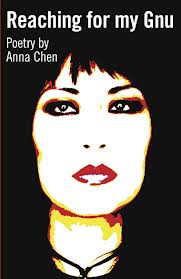
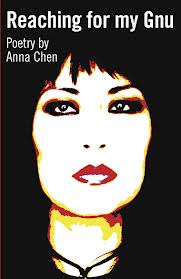
Anna Chen, shortlisted in 2010 and longlisted in 2012 with her blog Madam Miaow Says, has released the paperback edition of her debut poetry collection today. Reaching for my Gnu has already been praised as “brilliant and dangerous”. The Orwell Prize are thrilled to be able to exclusively share with you two poems from the collection.

POE I’d like to blow Edgar Alan Poe On bended knee Like Annabel Lee. I’d like to snort snow With Edgar A. Poe Swing into the pit Of his infernal wit. I’d like to sink low As Eddy A. Poe I’m eager to share His gloom and despair. Dear Ed can you please Give me a disease As cool as the red one Transmitted by fleas?

COPPER COMES A CROPPER A little bit of sympathy at the back, there, Puh-leaze. Let’s be ‘avin’ yew. At the Leveson inquiry The cruellest moment is when Sir Paul Stephenson, The poor put-upon former chief Bill, Hobbles in on crutches and drops a pill, Cutting such a pathetic sight Under the assembled legal might. So small for a tall man, Bespectacled nerd, Pinched lips, he can barely cope. Only a thug like a lawyer Would punch well-honed words At a man on the ropes. He says: I may be public watchdog eyes and ears but I wasn’t there, never heard a thing, Couldn’t see, except for what the reptiles did to Lord Ian Blair, Stripped bare in the glare of the Sun And that wasn’t going to happen to me. A loose-lipped minority gossiped In a distracting dialogue of disharmony, Dysfunctional, too close for my liking, But I couldn’t do a thing, not a thing. Ever so humbly, I suggest you are Crediting me with a level of analysis I don’t have, I didn’t give it any particular thought, No conclusions can be wrought, It was just something that happened, Like the Sun coming up in the morning, Shedding light on the scum we turned over. I am not fawning but we don’t investigate someone We know socially and with whom we are friends. Except when we did the police officers. A big boy done it and ran away And stopped us realising there was anything wrong When he told us there was no new hack sore. We adopted a defensive mindset instead of a challenging stance, I can see that now. It was a cursory glance, Not wide, not deep, We were asleep. If only we had the wisdom of hindsight and weren’t caught out It would all be all right. I’m not throwing my colleague out of the back of the sleigh and I can’t answer for him but It would have been wiser presentationally For him to have done it different. However, he is away in Bahrain and you aren’t getting him back in Old Blighty Until the heat is off, Until you call off the dogs, Until the trail has chilled like the champagne we quaffed as we doffed. Defending and not challenging, That was the error of our ways. We are brave and did not back off, guv, Just because it was News International. We were logical and needed the polaroids ‘Cause the tapes and diaries in Glenn’s black bags were not enough. It was the Bahrain runaway who did not reopen the enquiry. He failed, it is regrettable. That’s tough. Fear of taking on a powerful enterprise is not the case. I did not put the frighteners on the Guardian editor, Or spray him with Mace, Or rough him up too much. Politics over substance, I merely turned up to understand. But there was no meeting of minds, My pulse did not race, You could not get off your face with him Unlike the real press, proper gents we could have a laugh with Over drinksand a nice dinner. Call it folly but Mr Wallis was generous with the Bolly And Yates of the Yard was fond of his jollies. I just did not get it and wasn’t keeping tally, The Met caught Chamy Media off Wallis by getting too pally But we gave him Cressida Dick. A lack of evidence beyond the lone rogue reporter Meant rationed resources and an underfunded force Would not be put on the job as a matter of course. Please give us more dosh if you wish us to wield the cosh. I was overworked with anti-terrorism, The Olympics, Not my decision, A junior did it and is sunning himself in sandy climes. I am an ill man, I need a week in a spa. Can you recommend one? And so they adjourn for another time. But spare a thought for the thin blue line. Poor Raisa, disappeared, turned to glue, Currently starring in a pet-food can near you To stop her singing like a canary, Squealing like a pig at an inquiry. Take the porkers she carried; She knew Cameron’s arse inside and out, Blue heart and stout, Fullsome about Coulson, He put it about, Withdrew when the thin blue sphincter tightened, Purged the toad and found his load lightened. Raisa rode bravely into the student throngs they harried, Righting a wrong for the right, Got the stomach for a fight when protesters say neigh And you weigh as much as ten of them With a bobby on your back. Truncheoned before luncheon Unfree by tea, Scuppered before supper. A hack for the hacks, The sack for the lax When they find out Her hooves are all over this and her head is in some mogul’s bed.

We are OPEN for 2013 entries

Since October we have been accepting journalism and books from some of the very best writers of 2012 but there’s still room for much more. Entry forms for the journalism and book prizes, and basic details of the entry process, are available on our ‘How to Enter’ page. You can also check out the full rules and the values of the Prize, or learn more about the judges. Entries close on 9 January 2013, for all work first published in 2012. The Prize is self-nominating, but if you think there’s someone who should enter, either encourage them to do so or get in touch. Good luck!

The Irrawaddy Lit Fest

This week the Irrawaddy lit fest, Burma’s first English language international literary festival, updated their website with several new names. Writers who have confirmed that they will attend and speak include Orwell Prize winning Timothy Garton Ash, Pandora a poet who contributed to Bones will crow an anthology of Burmese poetry published with English PEN and the prisoner of war performer Zaganar. You can see a full list of writers and their bios as well as more information about the festival, on their website. You can also still ‘Buy a book’ for Burma with the Orwell Prize here.

From the archive

Although not known for his poetry, Orwell biographer DJ Taylor says that in his youth Orwell demonstrated a great enthusiasm for poetry. You can read a selection of his poetry on our website here. In the last week we have celebrated the anniversaries of two Orwell essays; ‘Freedom of the Park’ was first published in the Tribune 1945 and ‘The Proletariat Writer’ was first broadcast by the BBC home service in December 1940.

From elsewhere

  • Last week Timothy Garton Ash wrote about a a global battle for internet freedom that puts Leveson in perspective for the Guardian
  • 2012 judge of the Orwell Prize for Books, Samir Rahim, wrote a piece on ten great novels about newspapers for The Telegraph
  • Baroness Joan Bakewell, who will judge this year’s Orwell Prize for Books said that a spirit of culture always reigns in Manchester also in The Telegraph
  • The diaries

    Don’t forget our other Orwell Diary blogs: his Wartime Diary, Hop-Picking Diary and The Road to Wigan Pier Diary. You can sign up to our newsletter If you’ve got any suggestions about our website(s), we’d love to hear from you – email us on katriona.lewis@mediastandardstrust.org. You can also follow us on Twitter and like us on Facebook.

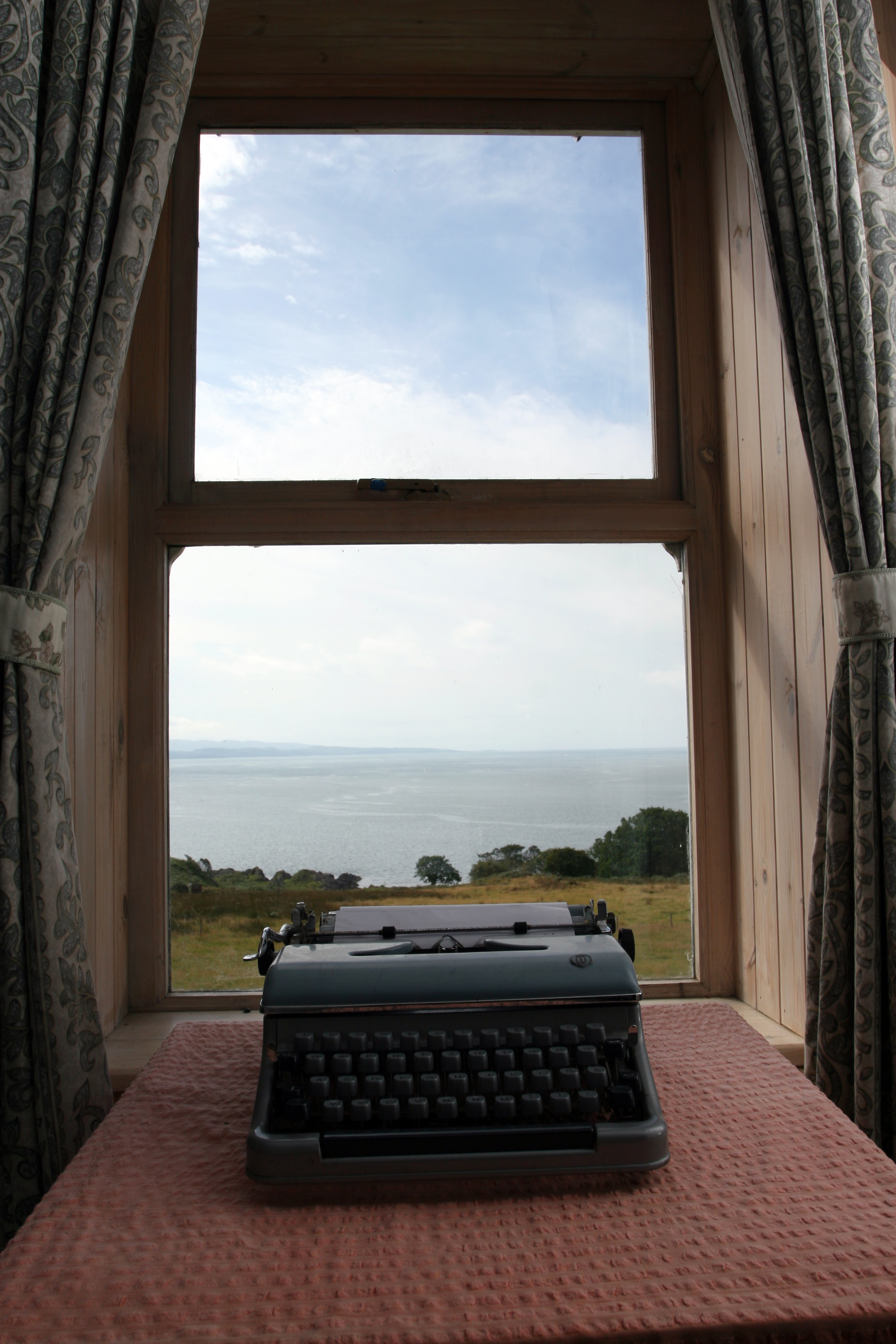
    On Jura

    This newsletter was written by Dulcie Lee This week we’re delighted to share two very special new pieces of writing on our website. Oliver Bullough, who was shortlisted for the Orwell Prize for Books last year, has given us an account of his summer at Orwell’s house on Jura and we asked Richard Blair, Orwell’s son, to share some memories of his time with his father there. To contextualise these new additions Orwell biographer D.J.Taylor reflects on the Jura days; “Orwell had spent much of the early 1940s yearning for his island in the Hebrides where he could work in isolation from a world he found increasingly unsympathetic. Barnhill Farmhouse, the bolt-hole on Jura in the Inner Hebrides fixed up for him by his friend David Astor, sustained him for much of the last five years of his life. Miles from civilisation – the nearest road stopped several miles away – and accessible to only the hardiest of friends, it offered an idyllic setting for his adopted son Richard’s early childhood and the solitude in which to write his last major work, Nineteen Eighty-Four. Although his time here coincided with increasing ill-health, the detail of his Jura diaries shows how intensely he responded to life on the island and how much – had his card not already been marked – he would have enjoyed continuing to live there.” We will release the story of Bullough’s summer on Orwell’s island followed by Blair’s touching commentary tomorrow morning and afternoon.

    Eric Hobsbawm

    This week the news was flooded with memorials and obituaries for the historian who died on Monday 1st October, at the age of 95. Our Director, Professor Jean Seaton, pays tribute to Hobsbawm – who was a member of the Orwell Trust – in a piece on our website.

    From the archive

    Today is National Poetry Day. Although not Orwell’s best known work, his poetry informed his writing style and, according to his biographer D. J. Taylor, his enthusiasm for poetry in his youth was “as least as strong as any desire to write fiction”. National Poetry Day is about getting everybody interested in poetry, including young children, and Orwell’s essay ‘Nonsense Poetry’ discusses poetry through referencing many famous children’s poems. We have a collection of Orwell’s poems which includes some original manuscripts. We also have the full essay by Orwell’s biographer D. J. Taylor where he discusses Orwell’s relationship with poetry. Orwell’s poem, ‘A dressed man and a naked man’ was published 79 years ago in October 1933.

    From elsewhere

  • This week, shortlister for the 2009 Orwell Prize for Journalism, Henry Porter, wrote a brilliant piece on the threat which hi-def CCTV brings to democracy for The Guardian
  • Zoe Williams, 2012 Orwell Prize for Journalism longlister, examined the effect that television has on political party conferences in ‘Tweaking it all for the telly is infantilising our party conferences’
  • Raja Shehadeh, winner of the Orwell Prize 2008 for Palestinian Walks wrote a provoking piece for the International Herald Tribune on the quality of care in Jerusalem
  • The wartime diaries

    This week’s entry was published on 5th October 1942. Next week’s entries will be published on 10th and 10th October 1942. Don’t forget our other Orwell Diary blogs: his Hop-Picking Diary and The Road to Wigan Pier Diary. You can sign up to our newsletter If you’ve got any suggestions about our website(s), we’d love to hear from you – email us on katriona.lewis@mediastandardstrust.org. You can also follow us on Twitter and like us on Facebook.

    Buxton video

    You can now watch a video (filmed on the Media Standard Trust’s brand new camera) of our fantastic debate at Buxton Festival, ‘Orwell vs. Kipling; who was the greater writer’, on our website and YouTube channel. We were lucky enough to have the wonderful former MP Tony Wright to chair. Stuart Evers, author of Ten Stories about Smoking and If This is Home and Paul Anderson, editor of Orwell in Tribune: ‘As I Please and other writings 1943-7′ spoke for Orwell. Charles Allen, author of Kipling Sahib and Jan Montifiore, author of Kipling and editor of Kipling’s forthcoming The Man Who Would be King and other stories took Kipling’s side. Video of our previous events at Buxton – Is politics corrupted by language?, Andrea Gillies in conversation with her publisher Rebecca Nicolson, Andrew Brown in conversation with David Blunkett MP, a debate on Orwell vs Dickens, and a discussion on ‘what makes a good political novel?’ – can be found in our events archive.

    From the archive

    New to our website today is Orwell’s piece ‘Spilling the Spanish Beans’, an article in two parts that was first printed in the New English Weekly of 29 July and 2 September 1937. In this work Orwell examines the Spanish civil war and discusses the newspapers’ portrayal of both sides of the conflict. This year we have been celebrating the 75th publication anniversary of Homage to Catalonia. If you’re interested in Orwell’s writings on Spain you can read ‘Three parties that mattered’: an extract from Homage to Catalonia and Orwell’s poem ‘The Italian Soldier Shook My Hand’. Also new to our website recently is a poem from the young Orwell ‘Kitchener’.

    From elsewhere

  • This week Simon Kuper, shortlisted for this year’s Orwell Prize for Journalism, wrote a fantastic article on the spirit of London, perfectly timed for the Olympic Games.
  • In the Guardian, Fintan O’Toole 2012 Journalism Prize longlistee, explores the inherent ethics of banking in a fresh and thoughtful piece.
  • There was another great piece from our 2012 Journalism shortlisters this week. Edward Docx drew from his own experience in a brilliantly observed and witty piece on surviving book tours.
  • The wartime diaries

    This week’s entries were published on 23rd, 26th, 27th and 28th July 1942. Next week’s entries will be published on 1st, 3rd, 4th and 5th August 1942. Don’t forget our other Orwell Diary blogs: his Hop-Picking Diary and The Road to Wigan Pier Diary. If you’ve got any suggestions about our website(s), we’d love to hear from you – email us on katriona.lewis@mediastandardstrust.org. You can also follow us on Twitter and like us on Facebook.

    Orwell’s Kitchener poem

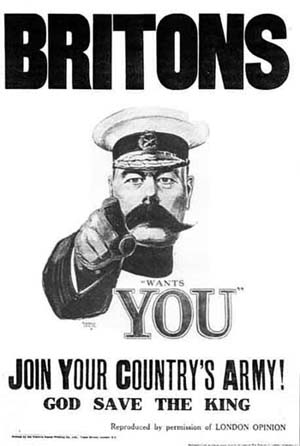
    This week we have added a piece written by Eric Blair to our website. The poem was published by the Henley and South Oxfordshire Standard on 21st July 1916 by a thirteen-year-old who was one day to become George Orwell. Entitled Kitchener the piece is a tribute to Horatio Herbert Kitchener who played a pivotal role in the British Army recruitment campaign of World War I. The Lord, who was the British Secretary of State for War, is most widely recognised by the ‘Lord Kitchener Wants You’ posters. Orwell biographer D. J. Taylor says the young Orwell displayed ‘an enthusiasm for poetry that in [his] formative years seems to have been as least as strong as any desire to write fiction’. You can read Kitchener in our By Orwell Poetry section.

    From the archive

    Last week, Vanity Fair published Christopher Hitchens’ introduction to The Orwell Diaries which is due to be published in the United States for the first time next month. On Monday The Guardian reported on this with reference to Christopher’s admiration of Orwell. Christopher wrote many things on Orwell including Why Orwell Matters as well as why his advise on tea making doesn’t. He < a href=http://www.npr.org/templates/story/story.php?storyId=105126571>spoke on why Orwell’s novel 1984 retained significance 60 years after it was published and to celebrate what would have been Orwell’s 100th birthday. Christopher’s consummate piece on Fleet Street illuminates his passion for Orwell. He has been both longlisted and shortlisted for the Orwell Prize for Books, < a href=https://orwellfoundation.com/winners/filter/type-Special%20Prize/year-2012/>he was awarded this year’s Special Prize.

    From elsewhere

  • This week Paul Anderson wrote a wonderful blogpost on his experience speaking at an Orwell Prize debate at Buxton Festival that took place on Monday. A video of this event will be uploaded to our website soon
  • Orwell Prize for books 2012 shortlister Richard Lloyd Parry writes for The New York Times on the effectiveness of the Japanese police service
  • Journalism Prize winner Amelia Gentleman investigates Channel 4’s forthcoming Mad season
  • The wartime diaries

    This week’s entry was published on 22nd July 1942. Next week’s entry will be published on 23rd, 26th, 27th and 28th July 1942. Don’t forget our other Orwell Diary blogs: his Hop-Picking Diary and The Road to Wigan Pier Diary. If you’ve got any suggestions about our website(s), we’d love to hear from you – email us on katriona.lewis@mediastandardstrust.org. You can also follow us on Twitter and like us on Facebook.

    Orwell and poetry

    With next Wednesday, 21st March, designated World Poetry Day by UNESCO – why not take a look at Orwell’s poems in our poetry section? Orwell’s poetry may not be among his best known work, but according to biographer D.J. Taylor, the young Orwell displayed ‘an enthusiasm for poetry that in [his] formative years seems to have been as least as strong as any desire to write fiction’. As well as a selection of Orwell poems, including ‘A Happy Vicar I Might Have Been’, ‘The Lesser Evil’ and ‘Summer-like for an instant’, you can also read an essay by Orwell on ‘Poetry and the Microphone’ and D.J. Taylor’s take on Orwell and poetry.

    Orwell Prize Entries 2012

    A reminder that this year’s longlists will be announced on Wednesday 28th March. The full list of entries, for the Book PrizeJournalism Prize and Blog Prize can be found on our website.At the Sunday Times Oxford Literary Festival 2012

    We’ll be at the Sunday Times Oxford Literary Festival for a fifth year, with three events. Click on the event titles for full details, to book and to read some relevant Orwell essays:

    • Homage to Catalonia: the Spanish Civil War, 2pm, Friday 30 March: Helen Graham, Paul Preston, Francisco Romero Salvado, chaired by Jean Seaton
    • The Road to Wigan Pier: 75 years on, 6.30pm, Saturday 31 March: Stephen Armstrong, Beatrix Campbell, Paul Mason, chaired by D. J. Taylor
    • Politics and the Press, 4pm, Sunday 1 April: Gaby Hinsliff, Martin Moore, Lance Price, chaired by Jean Seaton

    From the archive

    Inside the Whale, a collection of essays by Orwell was first published on 11th March 1940. The selection consisted of some of Orwell’s most famous essays: ‘Charles Dickens’, ‘Boys’ Weeklies’, and ‘Inside the Whale’. Also published on the same day in 1935, was Orwell’s novel A Clergyman’s Daughter. You can find the first chapter on our website, along with the essay ‘Hop-picking’, an activity which features in the book.

      From elsewhere

      Allan Massie blogs for The Telegraph on ‘The genius of George Orwell’. Suggesting his ‘As I Please’ columns for The Tribune, “remain remarkably fresh and interesting”. Orwell scholar Anthony Lock, reflects on the 75th anniversary of the publication of The Road to Wigan Pier for openDemocracy. He speculates on what a ‘cyber-Orwell, 109 years old’, might remark on if he could travel on his journey again in 2012. Simon Lancaster suggests in the Guardian, that today’s politicians are unable to live by Orwell’s creed outlined in ‘Politics and the English Language’. Instead of ‘constantly seeking to coin new, inspiration phrases’, leaders should, Lancaster says, ‘echo what they hear on the streets’.

    This year’s entries

    Here’s your reading list for the next few months: we’ve published a full list of entries for the Orwell Prize 2012. Yet again, we’ve received a record number of submissions for each Prize, with 263 264 books140 journalists and 226 bloggers put forward. More details – and links – can be found on the Book Prize 2012Journalism Prize 2012 and Blog Prize 2012 entry pages.

    Job advert: Orwell Prize administrator

    We’re advertising for a new Orwell Prize administrator. The current deputy director, Gavin Freeguard, will be leaving the Prize and the Media Standards Trust (which administers the Prize on behalf of the Council of the Orwell Prize) at the beginning of March. He has been responsible for running the Prize since November 2007. You can find the advert on the w4mp website, on the Orwell Prize website, and on the Media Standards Trust website.

    Christopher Hitchens on Animal Farm

    The Prize is privileged to be able to give you an exclusive extract of an introduction to Animal Farm by the late Christopher Hitchens. Thanks to publishers Harvill Secker, you can – for a limited time – read Christopher’s thoughts on the publication, and the afterlife, of Orwell’s classic, on our website.

    Nineteen Eighty-Four at Foyles

    The Foyles Café at Foyles Bookshop, Charing Cross Road is currently exhibiting some of Aleks Krotoski’s photographs inspired by Nineteen Eighty-Four. Aleks spent just over a year telling the first 369 words of the novel, one word at a time, in photographs. You can see the full set of images on her Flickr stream, and you can buy some of the images via her online storeMore on the novel on our site.

    Nightjack

    Nightjack (or properly, Jack Night, blogging at ‘Nightjack: An English Detective’) was the winner of the first Orwell Prize for Blogs, in 2009. A few weeks later, he was revealed by The Times to be Richard Horton, after Lord Justice Eady refused an injunction to protect Nightjack’s identity. The case has been revisited during the course of the Leveson Inquiry on press ethics, with evidence suggesting that Nightjack’s identity was exposed as a result of email hacking by a Times reporter. The police are now investigating, and this Wednesday’s Times carried ‘Times Editor James Harding apologises for email hacking’ (£)Times carried ‘Times Editor James Harding apologises for email hacking’ (£) on its front page. Former Orwell Prize judge, David Allen Green (shortlisted by Richard when he judged the Blog Prize 2010, and who discussed political blogging with him at our 2011 longlist debate) has written about the case here and here (Jack of Kent), and herehereherehere and here (New Statesman).

    At the Sunday Times Oxford Literary Festival 2012

    We’ll be at the Sunday Times Oxford Literary Festival for a fifth year, with three events. Click on the event titles for full details, to book and to read some relevant Orwell essays:

    • Homage to Catalonia: the Spanish Civil War, 2pm, Friday 30 March: Helen Graham, Paul Preston, Francisco Romero Salvado, chaired by Jean Seaton
    • The Road to Wigan Pier: 75 years on, 6.30pm, Saturday 31 March: Stephen Armstrong, Beatrix Campbell, Juliet Gardiner, Paul Mason, chaired by D. J. Taylor
    • Politics and the Press, 4pm, Sunday 1 April: Gaby Hinsliff, Martin Moore, Lance Price, chaired by Jean Seaton

    From the archive

    Fans around the world celebrated the 200th anniversary of Charles Dickens’ birth on 7 February. On our website, we have Orwell’s famous essay, ‘Charles Dickens’ (originally published in 1940, along with ‘Inside the Whale’ and ‘Boys’ Weeklies’). We’ve also used the essay as a happy excuse for a couple of debates  on Orwell vs Dickens, both of which you can watch video of: Francine Stock, Jenny Hartley, Philip Hensher, Hardeep Singh Kohli and Jean Seaton in Oxford, 2009; and Dame Janet Smith, David Aaronovitch, Lucinda Hawksley, Michael Slater and DJ Taylor in Buxton, 2010. There have been a number of Orwell publication anniversaries over the last few weeks, too. ‘Books vs. Cigarettes’ was first published on 8 February 1946. ‘The Moon Under Water’, on Orwell’s perfect pub, was first published on 9 February 1946 (the late Keith Waterhouse and BBC Radio 4’s Today programme have both considered the essay in the past, while Orwell also wrote a review of Mass Observation’s ‘The Pub and the People’ in 1943). There are a couple of new Orwell essays on poetry on our site. W. B. Yeats died on 28 January 1939 – Orwell wrote an essay on him in 1943 – and you can also read ‘Nonsense Poetry’ from 1945, all about Edward Lear (who died on 29 January 1888). Our section on Orwell’s poetry has poems by Orwell, and some essays by and about him on the subject. Also new to our site recently: Orwell’s ‘Antisemitism in Britain’ (1945) and ‘Reflections on Gandhi’ (1949).

    From elsewhere

    The Wartime Diaries

    The next entry will be published on 14th March. Don’t forget our other Orwell Diary blogs: his Hop-Picking Diary and The Road to Wigan Pier Diary. If you’ve got any suggestions about our website(s), we’d love to hear from you – email us on gavin.freeguard@mediastandardstrust.org or follow us on Twitter. And you can subscribe to this newsletter via email.

    Nonsense Poetry

    This material remains under copyright in some jurisdictions, including the US, and is reproduced here with the kind permission of the Orwell Estate. The Orwell Foundation is an independent charity – please consider making a donation or becoming a Friend of the Foundation to help us maintain these resources for readers everywhere. 

    In many languages, it is said, there is no nonsense poetry, and there is not a great deal of it even in English. The bulk of it is in nursery rhymes and scraps of folk poetry, some of which may not have been strictly nonsensical at the start, but have become so because their original application has been forgotten. For example, the rhyme about Margery Daw:

    See-saw, Margery Daw,
    Dobbin shall have a new master.
    He shall have but a penny a day
    Because he can’t go any faster.

    Or the other version that I learned in Oxfordshire as a little boy:

    See-saw, Margery Daw,
    Sold her bed and lay upon straw.
    Wasn’t she a silly slut
    To sell her bed and lie upon dirt?

    It may be that there was once a real person called Margery Daw, and perhaps there was even a Dobbin who somehow came into the story. When Shakespeare makes Edgar in King Lear quote ‘Pillicock sat on Pillicock hill’, and similar fragments, he is uttering nonsense, but no doubt these fragments come from forgotten ballads in which they once had a meaning. The typical scrap of folk poetry which one quotes almost unconsciously is not exactly nonsense but a sort of musical comment on some recurring event, such as ‘One a penny, two a penny, Hot-Cross buns’, or ‘Polly, put the kettle on, we’ll all have tea’. Some of these seemingly frivolous rhymes actually express a deeply pessimistic view of life, the churchyard wisdom of the peasant. For instance:

    Solomon Grundy,
    Born on Monday,
    Christened on Tuesday,
    Married on Wednesday,
    Took ill on Thursday,
    Worse on Friday,
    Died on Saturday,
    Buried on Sunday,
    And that was the end of Solomon Grundy.

    which is a gloomy story, but remarkably similar to yours or mine.

    Until Surrealism made a deliberate raid on the unconscious, poetry that aimed at being nonsense, apart from the meaningless refrains of songs, does not seem to have been common. This gives a special position to Edward Lear, whose nonsense rhymes have just been edited by Mr R. L. Megroz[1], who was also responsible for the Penguin edition a year or two before the war. Lear was one of the first writers to deal in pure fantasy, with imaginary countries and made-up words, without any satirical purposes. His poems are not all of them equally nonsensical; some of them get their effect by a perversion of logic, but they are all alike in that their underlying feeling is sad and not bitter. They express a kind of amiable lunacy, a natural sympathy with whatever is weak and absurd. Lear could fairly be called the originator of the limerick, though verses in almost the same metrical form are to be found in earlier writers, and what is sometimes considered a weakness in his limericks — that is, the fact that the rhyme is the same in the first and last lines — is part of their charm. The very slight change increases the impression of ineffectuality, which might be spoiled if there were some striking surprise. For example:

    There was a young lady of Portugal
    Whose ideas were excessively nautical;
    She climbed up a tree
    To examine the sea,
    But declared she would never leave Portugal.

    It is significant that almost no limericks since Lear’s have been both printable and funny enough to seem worth quoting. But he is really seen at his best in certain longer poems, such as ‘The Owl and the Pussy-Cat’ or ‘The Courtship of the Yonghy-Bonghy-Bò’:

    On the Coast of Coromandel,
    Where the early pumpkins blow,
    In the middle of the woods
    Lived the Yonghy-Bonghy-Bò.
    Two old chairs, and half a candle
    One old jug without a handle
    These were all his worldly goods:
    In the middle of the woods,
    These were all the worldly goods
    Of the Yonghy-Bonghy-Bò,
    Of the Yonghy-Bonghy-Bò.

    Later there appears a lady with some white Dorking hens, and an inconclusive love affair follows. Mr Megroz thinks, plausibly enough, that this may refer to some incident in Lear’s own life. He never married, and it is easy to guess that there was something seriously wrong in his sex life. A psychiatrist could no doubt find all kinds of significance in his drawings and in the recurrence of certain made-up words such as “runcible”. His health was bad, and as he was the youngest of twenty-one children in a poor family, he must have known anxiety and hardship in very early life. It is clear that he was unhappy and by nature solitary, in spite of having good friends.

    Aldous Huxley, in praising Lear’s fantasies as a sort of assertion of freedom, has pointed out that the ‘They’ of the limericks represent common sense, legality and the duller virtues generally. ‘They’ are the realists, the practical men, the sober citizens in bowler hats who are always anxious to stop you doing anything worth doing. For instance:

    There was an Old Man of Whitehaven,
    Who danced a quadrille with a raven;
    But they said, ‘It’s absurd
    To encourage this bird!’
    So they smashed that Old Man of Whitehaven.

    To smash somebody just for dancing a quadrille with a raven is exactly the kind of thing that ‘They’ would do. Herbert Read has also praised Lear, and is inclined to prefer his verse to that of Lewis Carroll, as being purer fantasy. For myself, I must say that I find Lear funniest when he is least arbitrary and when a touch of burlesque or perverted logic makes its appearance. When he gives his fancy free play, as in his imaginary names, or in things like ‘Three Receipts for Domestic Cookery’, he can be silly and tiresome. ‘The Pobble Who Has No Toes’ is haunted by the ghost of logic, and I think it is the element of sense in it that makes it funny. The Pobble, it may be remembered, went fishing in the Bristol Channel:

    And all the Sailors and Admirals cried,
    When they saw him nearing the further side —
    ‘He has gone to fish, for his Aunt Jobiska’s
    Runcible Cat with crimson whiskers!’

    The thing that is funny here is the burlesque touch, the Admirals. What is arbitrary — the word ‘runcible’, and the cat’s crimson whiskers — is merely rather embarrassing. While the Pobble was in the water some unidentified creatures came and ate his toes off, and when he got home his aunt remarked:

    ‘It’s a fact the whole world knows,
    That Pobbles are happier without their toes,’

    which once again is funny because it has a meaning, and one might even say a political significance. For the whole theory of authoritarian governments is summed up in the statement that Pobbles were happier without their toes. So also with the well-known limerick:

    There was an Old Person of Basing,
    Whose presence of mind was amazing;
    He purchased a steed,
    Which he rode at full speed,
    And escaped from the people of Basing.

    It is not quite arbitrary. The funniness is in the gentle implied criticism of the people of Basing, who once again are ‘They’, the respectable ones, the right-thinking, art-hating majority.

    The writer closest to Lear among his contemporaries was Lewis Carroll, who, however, was less essentially fantastic — and, in my opinion, funnier. Since then, as Mr Megroz points out in his Introduction, Lear’s influence has been considerable, but it is hard to believe that it has been altogether good. The silly whimsiness of present-day children’s books could perhaps be partly traced back to him. At any rate, the idea of deliberately setting out to write nonsense, though it came off in Lear’s case, is a doubtful one. Probably the best nonsense poetry is produced gradually and accidentally, by communities rather than by individuals. As a comic draughtsman, on the other hand, Lear’s influence must have been beneficial. James Thurber, for instance, must surely owe something to Lear, directly or indirectly.

    Tribune, 21 December 1945

    Notes

    The Lear Omnibus edited by R. L. Megroz

    Further reading:

    Poverty and Political Blogging – Videos from Cheltenham

    We thoroughly enjoyed holding events at The Times Cheltenham Literature Festival for the first time – and we hope that, via video, you enjoy them too.

    You can watch our ‘Victorian Values’ debate, with social historian Jose Harris, author of Chavs Owen Jones and co-author of Jilted Generation Shiv Malik, chaired by Julia Wheeler, on our website and on our YouTube Channel. Our panellists look at the concepts of the deserving and undeserving poor, social mobility, and poverty through the ages – and much more besides – in an excellent hour of discussion.
    We also have video of this year’s Orwell Prize for Blogs winner, Graeme Archer, and previously longlisted Oliver Kamm of The Times, in another great conversation about political blogging. Is the left or right better at group blogging? Has blogging’s style ‘infected’ national newspapers? And would preventing anonymous commenting lead to higher quality, polite discussion? Watch Graeme and Oliver to see what they thought.

    Orwell Prize 2012 Launch

    It’s that time of year again – almost. We’ll be announcing full details of this year’s Orwell Prize launch next week. But you might want to keep 9 November free…

    George Orwell Memorial Lecture 2011

    Alan Rusbridger, editor-in-chief of Guardian News and Media, will be speaking on ‘Hacking away at the truth: an investigation and its consequences’ on 10th November at 6pm. Email events@bbk.ac.uk to book a free place, or visit our website for more information.
    The Orwell Lecture is organised by the Orwell Trust with Birkbeck College, University of London.

    From the archive

    Orwell’s ‘You and the Atom Bomb’ was first published this week in 1945, and is new to our website. The essay imagines a world carved up into three superstates with the threat of nuclear annihilation keeping them in perpetual war – not unlike Orwell’s Nineteen Eighty-Four. Other notable dates this week include the birth of Samuel Taylor Coleridge – whose Xanadu Orwell considers in his essay, ‘Pleasure Spots’ – and Trafalgar Day, Orwell writing of Trafalgar and patriotism in ‘The Lion and the Unicorn’.

    From elsewhere

    The Wartime Diaries

    The next entry will be published on 14th March.

    The Hop-Picking Diaries

    The final entry was published on 8th October.

    The Wigan Pier Diaries

    The final entry was published on 25th March.
    If you’ve got any suggestions about our website(s), we’d love to hear from you – email us on gavin.freeguard@mediastandardstrust.org or follow us on Twitter.

    And you can subscribe to this newsletter via email.

    Gordon Bowker: George Orwell and the Church of England

    George Orwell (Eric Blair) is not generally thought of as a religious man. His final novel, Nineteen Eighty-Four, is a tale of grim despair, hardly a message to cheer the true believer. It is both sadistic and nihilistic. And even in his famous fairy tale, Animal Farm, religion is represented cynically as ‘lies put about by Moses the tame Raven’ about a supposed animal paradise. In another novel (A Clergyman’s Daughter) he has a Satanic unfrocked priest reciting The Lord’s Prayer backwards while holding an inverted crucifix.

    Yet he retained a strong religious streak and a strange affection for the Anglican Church into which he was born, an affection that persisted to the end of his life.

    Blair’s paternal grandfather was Vicar of Milborne St. Andrew in Dorset.  He himself was born in Bengal in 1903 and baptised at the Anglican Church of St John in the Wilderness in Motihari. Aged four months he was brought to England, settling with his mother and elder sister at Henley-on-Thames.  Most biographers have him being first taught by Anglican nuns there, but diocesan and local records reveal that the only convent in Henley at that time was run by French Ursulines, forbidden to teach in France.

    Having been educated by Catholic nuns in an all-girls school probably explains Orwell’s lifelong antipathy to the Catholic Church and perhaps also his acknowledged misogyny.  Two fleeting and sardonic references seem to evoke the shadowy Ursulines, one (in A Clergyman’s Daughter) to ‘nuns in convents, scrubbing floors and singing Ave Marias, secretly unbelieving’, the other (in a letter to a girlfriend, Brenda Salkeld) rather more subversive:

    When we were children we had a story that after Robin Hood was done to death in the Priory, his men raped & murdered the nuns, & burned the priory to the ground. It seems this has no foundation in the ballads —  we must have made it up.  An instance of the human instinct for a happy ending.

    As he saw it, the Catholic Inquisition provided the model for both fascist and communist totalitarianism, and gauleiters and commissars were just the priests and emissaries of a new and cruel religion of power.  In Coming Up For Air he wrote, ‘You never read about a Spanish Inquisitor or one of these higher‑ups in the Russian Ogpu without being told that in private life he was such a good kind man, best of husbands and fathers, devoted to his tame canary and so forth.’ The parallel is more fully and closely drawn by O’Brien, Big Brother’s inquisitor, in Nineteen Eighty-Four.

    After an unhappy prep school education in Eastbourne, he won a scholarship to Eton, where he was finally prepared for confirmation by the headmaster, King George’s chaplain, Cyril Alington.  In the chapel at Eton in November 1918, he was confirmed by Charles Gore, Bishop of Oxford.  However, by this time, according to his friend Cyril Connolly, he had renounced not just God, but Empire, Kipling, Sussex, and Character, reading Butler and Shaw and embracing atheistic socialism in true Shavian style.  At Eton he became known as ‘the College Cynic’, a type denounced from the Chapel pulpit as ‘a real stinker’.

    In true ‘Orwellian’ fashion he satirized his tutors, claiming, ‘There are at least six masters on the staff who are making a very good living out of the Crucifixion.’ And, telling a green young Colleger that he was collecting the religions of new boys, he asked, ‘Are you Cyrenaic, Sceptic, Epicurean, Cynic, Neoplatonist, Confucian or Zoroastrian?’  ‘I’m a Christian,’ came the reply. ‘Oh,’ said Blair, ‘We haven’t had that before.’

    His Aunt Nellie, a Suffragette friend of Emmeline Pankhurst, ran a literary salon in Notting Hill, and there he met such left-wing luminaries as G.K. Chesterton and the children’s author, E. Nesbitt.  One friend made through Aunt Nellie was Conrad Noel, then a curate in Paddington, but famous later as the ‘Red’ Vicar of Thaxted who flew the Red Flag from his church tower.  Interestingly enough, Noel spent his spare time visiting the ‘spikes’ and lodging-houses used by London’s down-and-outs, a practise for which ‘George Orwell’ was to become famous in the 30s.

    From 1922 to 1927 he worked as an Imperial Policeman in Burma, finally resigning, sickened by the violence he was required to use to keep the native population in its place.  In search of expiation, he descended into the Lower Depths, and joined the tramps and down-and-outs who congregated around London.

    Gradually he got started as a writer, supplementing his income by teaching and afterwards by working in a bookshop.  Interestingly enough, wherever he was — with his family in Suffolk, teaching at a school in Middlesex, or running a village store in Hertfordshire — he invariably made friends with the local clergy.  They, after all, were often the most educated members of the community, and, according to Orwell, vicarages had some of the best libraries in England.

    In 1932, while teaching in Hayes and researching A Clergyman’s Daughter, his second novel, he became friendly with the curate of St Mary’s (Ernest Parker — ‘High Anglican but not a creeping Jesus,’ he told Eleanor Jaques). He organized a school play at the Church Hall and helped refurbish some church statuary, all of which found its way into his novel.

    In October that year, he told Brenda Salkeld, ‘I take in the Church Times regularly now & like it more every week.  I do so like to see that there is life in the old dog yet — I mean in the poor old C. of E.  I shall have to go to Holy Communion soon, hypocritical tho’ it is, because my curate friend is bound to think it funny if I always go to Church but never communicate. What is the procedure? I have almost forgotten it…You have to go fasting, do you not? And what about being in mortal sin? I wish you would prompt me. It seems rather mean to go to H.C. when one doesn’t believe, but I have passed myself off for pious & there is nothing for it but to keep up the deception.’

    In those pre-war years religion exercised him a great deal, and he especially enjoyed taunting Catholic apologists.  Reviewing Karl Adam’s The Spirit of Catholicism in June 1932, he wrote, ‘The contrast between the Catholic who simply believes, and the convert who must for ever be justifying his conversion, is like the contrast between a Buddha and a performing fakir.’  Afterwards, he told a girlfriend, ‘It was the first time I had been able to lay the bastinado on a professional R.C. at any length.’  By comparison with what he considered a cruelly-repressive and unforgiving Catholicism, he saw Anglicanism as a kinder, gentler more liberating faith.  He spoke of ‘the poor old inoffensive Church of England’, identified himself strongly with the sixteenth century Anglican martyrs and attributed the emergence of the novel (the highest manifestation of the liberated imagination, he thought) to the Protestant Reformation.

    He equated the extremes of Catholicism with those of Communism, and the bold attacks on Catholicism in which he took so much pleasure, demonstrated how focussed and intense this antipathy had become.  Jon Kimche, who worked with him at the Booklover’s Corner bookshop in 1935, recalled that Orwell’s conversation at that time were little more than diatribes against Roman Catholicism.  This antipathy at time bordered on paranoia, and he told his flatmate, Rayner Heppenstall, that ‘Vatican spies are everywhere’.  This fear of being spied upon was later transferred to the Communists — with good cause, it transpired.

    Later, he complained about the Times’s attacks on Bertrand Russell over birth control and its eulogizing of a certain Anglo-Catholic poet.  In 1936 he wrote mockingly in a book review: ‘The editorial staff of the “Church Times” gnash their false teeth and quake in their galoshes at the mention of “modern” (i.e., post-Tennysonian) poetry, but strange to say they make an exception of T. S. Eliot’ — its ‘spoiled darling’.  By 1943, however, he was applauding the paper, which had, he said, ‘for some years past been a mildly leftwing paper and politically quite intelligent’ — a plaudit indeed from one of the twentieth century’s shrewdest political commentators.

    In June 1936, he married Eileen O’Shaughnessy at St Mary’s Church at Wallington in Hertfordshire.  Eileen, an Oxford graduate who had been taught by J.R.R. Tolkien and had been Head Girl at the Sunderland Church High School for Girls, arranged for the clergyman she had known as a child in South Shields (John Woods, then Vicar of St Mark’s) to conduct the marriage ceremony.  To Orwell’s surprise, she had also arranged for the ceremony to be doctored so that she was not required to ‘obey’ her new husband. After marrying, they settled down to run the Wallington village store.

    He found the Church a continual source of amusement.  In August 1937 just after returning wounded from fighting with the anti-clerical Republicans in the Spanish Civil War, he wrote to an old comrade, ‘This afternoon Eileen and I had a visit from the vicar [Vernon Rossborough], who doesn’t at all approve of our having been on the Government side.  Of course we had to own up that it was true about the burning of the churches, but he cheered up a lot on hearing they were only Roman Catholic churches.’

    Orwell’s main argument against religion was that it turned individuals into pawns, hampered progress towards socialism, and opened the way to dictatorship.  ‘As long as supernatural beliefs persist, men can be exploited by cunning priests and oligarchs, and the technical progress which is the prerequisite of a just society cannot be achieved.’ Belief in God, he thought, was all too easily replaced by belief in a Stalin, a Hitler or Mussolini. Once the belief in an afterlife was lost, the alternative hope for an earthly Utopia played directly into the hands of cruel dictators. The omnipresent, omniscient, omnipotent Big Brother is the very symbolic of such a manufactured Deity.  He targeted other false gods, of course, including nationalism and racism, imperialism and, inevitably, capitalism.  Keep the Aspidistra Flying is a full-frontal assault on what he calls ‘the money-god and all its swinish priesthood’.

    Possessed of an acute social conscience, Orwell agonized over the proper basis for a modern morality.  He stressed what he thought was the highest moral value, human decency, sympathizing with Swift — ‘His attitude is in effect the Christian attitude, minus the bribe of a “next world”‘ — and citing Marx, who did not simply say that ‘Religion is the opium of the people’, but also that it was ‘the sigh of the soul in a soulless world’.  The idea of a soulless, meaningless, entirely materialist world, he found unacceptable.  ‘We have got to be the children of God,’ he concluded, ‘even though the God of the Prayer Book no longer exists.’

    His second marriage to Sonia Brownell was sadly a deathbed marriage. It was conducted three months before his death, ‘according to the Rites and Ceremonies of the Established Church of England’ in his private ward at London’s University College Hospital by the hospital chaplain, William Braine.  The cynical Malcolm Muggeridge observed ‘George had developed TB in order to be married by a clergyman which otherwise he’d never have had the face to do.’

    Many were surprised that in his will, signed just before his death from tuberculosis in January 1950, he asked to be buried according to the rites of the Church of England.  However, as he approached the Great Unknown, he could have been closer to his Creator than anyone imagined.  In late 1949, in a letter from his hospital bed to Malcolm Muggeridge, he enclosed a newspaper advertisement which had, he said, upset him. It was for Wolsey socks, and read, ‘Wolsey socks — Fit for the gods.’  Wasn’t  that blasphemous? he asked.   It is just conceivable that for Orwell, the atheist and Old Etonian Cynic, his relationship with the Almighty had suddenly mellowed.  One of his last hospital visitors noticed that he was reading the first volume of Dante’s Divine Comedy.

    His friends Muggeridge and Anthony Powell arranged a public funeral service for him at Christ Church, Albany Street.  Most of his friends who attended were unbelievers and the service was somewhat ragged, by all accounts.  There were readings from Ecclesiastes and the hymns, ‘All people that on earth do dwell’, ‘Guide me, O thou great Jehovah’, and ‘Ten thousand times ten thousand’, Orwell’s favourites, were sung.  Powell found the occasion ‘very harrowing’, and, because Orwell was so tall and the coffin therefore very long, Muggeridge thought it extremely poignant.

    David Astor, the Observer editor and close friend of Orwell’s, tried to have him buried at a church at Clivedon, his family seat, but the vicar refused him as an unbeliever.  Astor had better luck at Sutton Courtenay where he was a regular worshipper.  The vicar, Gordon Dunstan, however, felt that he must first consult his church wardens.  Initially, one, a farmer, was a bit reluctant until Dunstan showed him a copy of Animal Farm, and he agreed immediately.

    Now came the funeral of Eric Blair, the mystery man behind the famous name.  Only a handful attended, and he was duly interred between Herbert Asquith, the great Liberal Prime Minister and a family of local gypsies — a fitting resting place for a man who mingled with the poor and despised and yet whose writing was to make such a great political impact.

    On his gravestone is written the simple inscription, ‘Eric Blair 1903-1950’, but he wrote his own epitaph in a poem which seems to say more about his relationship with the Anglican Church than anything else he wrote, and reflects the fact that during ‘the low dishonest decade’ of the 1930s it became difficult for a man of conscience like Orwell to remain detached from the political fray.

    A happy vicar I might have been

    Two hundred years ago,

    To preach upon eternal doom

    And watch my walnuts grow;

    But born, alas, in an evil time,

    I missed that pleasant haven,

    For the hair has grown on my upper lip

    And the clergy are all clean-shaven.

    © Gordon Bowker 2003. Revised 2011. This is a modified version of an article originally published by the Church Times, and is reproduced by kind permission of the author.

    Why I Write

    This material remains under copyright in some jurisdictions, including the US, and is reproduced here with the kind permission of the Orwell Estate. The Orwell Foundation is an independent charity – please consider making a donation or becoming a Friend of the Foundation to help us maintain these resources for readers everywhere. 

    From a very early age, perhaps the age of five or six, I knew that when I grew up I should be a writer. Between the ages of about seventeen and twenty-four I tried to abandon this idea, but I did so with the consciousness that I was outraging my true nature and that sooner or later I should have to settle down and write books.

    I was the middle child of three, but there was a gap of five years on either side, and I barely saw my father before I was eight. For this and other reasons I was somewhat lonely, and I soon developed disagreeable mannerisms which made me unpopular throughout my schooldays. I had the lonely child’s habit of making up stories and holding conversations with imaginary persons, and I think from the very start my literary ambitions were mixed up with the feeling of being isolated and undervalued. I knew that I had a facility with words and a power of facing unpleasant facts, and I felt that this created a sort of private world in which I could get my own back for my failure in everyday life. Nevertheless the volume of serious – i.e. seriously intended ­– writing which I produced all through my childhood and boyhood would not amount to half a dozen pages. I wrote my first poem at the age of four or five, my mother taking it down to dictation. I cannot remember anything about it except that it was about a tiger and the tiger had ‘chair-like teeth’ – a good enough phrase, but I fancy the poem was a plagiarism of Blake’s ‘Tiger, Tiger’. At eleven, when the war or 1914-18 broke out, I wrote a patriotic poem which was printed in the local newspaper, as was another, two years later, on the death of Kitchener. From time to time, when I was a bit older, I wrote bad and usually unfinished ‘nature poems’ in the Georgian style. I also, about twice, attempted a short story which was a ghastly failure. That was the total of the would-be serious work that I actually set down on paper during all those years.

    However, throughout this time I did in a sense engage in literary activities. To begin with there was the made-to-order stuff which I produced quickly, easily and without much pleasure to myself. Apart from school work, I wrote vers d’occasion, semi-comic poems which I could turn out at what now seems to me astonishing speed – at fourteen I wrote a whole rhyming play, in imitation of Aristophanes, in about a week – and helped to edit school magazines, both printed and in manuscript. These magazines were the most pitiful burlesque stuff that you could imagine, and I took far less trouble with them than I now would with the cheapest journalism. But side by side with all this, for fifteen years or more, I was carrying out a literary exercise of a quite different kind: this was the making up of a continuous “story” about myself, a sort of diary existing only in the mind. I believe this is a common habit of children and adolescents. As a very small child I used to imagine that I was, say, Robin Hood, and picture myself as the hero of thrilling adventures, but quite soon my “story” ceased to be narcissistic in a crude way and became more and more a mere description of what I was doing and the things I saw. For minutes at a time this kind of thing would be running through my head: ‘He pushed the door open and entered the room. A yellow beam of sunlight, filtering through the muslin curtains, slanted on to the table, where a matchbox, half-open, lay beside the inkpot. With his right hand in his pocket he moved across to the window. Down in the street a tortoiseshell cat was chasing a dead leaf,’ etc., etc. This habit continued until I was about twenty-five, right through my non-literary years. Although I had to search, and did search, for the right words, I seemed to be making this descriptive effort almost against my will, under a kind of compulsion from outside. The ‘story’ must, I suppose, have reflected the styles of the various writers I admired at different ages, but so far as I remember it always had the same meticulous descriptive quality.

    When I was about sixteen I suddenly discovered the joy of mere words, i.e. the sounds and associations of words. The lines from Paradise Lost

    So hee with difficulty and labour hard
    Moved on: with difficulty and labour hee,

    which do not now seem to me so very wonderful, sent shivers down my backbone; and the spelling ‘hee’ for ‘he’ was an added pleasure. As for the need to describe things, I knew all about it already. So it is clear what kind of books I wanted to write, in so far as I could be said to want to write books at that time. I wanted to write enormous naturalistic novels with unhappy endings, full of detailed descriptions and arresting similes, and also full of purple passages in which words were used partly for the sake of their sound. And in fact my first completed novel, Burmese Days, which I wrote when I was thirty but projected much earlier, is rather that kind of book.

    I give all this background information because I do not think one can assess a writer’s motives without knowing something of his early development. His subject-matter will be determined by the age he lives in ­– at least this is true in tumultuous, revolutionary ages like our own – but before he ever begins to write he will have acquired an emotional attitude from which he will never completely escape. It is his job, no doubt, to discipline his temperament and avoid getting stuck at some immature stage, or in some perverse mood: but if he escapes from his early influences altogether, he will have killed his impulse to write. Putting aside the need to earn a living, I think there are four great motives for writing, at any rate for writing prose. They exist in different degrees in every writer, and in any one writer the proportions will vary from time to time, according to the atmosphere in which he is living. They are:


    (i) Sheer egoism. Desire to seem clever, to be talked about, to be remembered after death, to get your own back on grown-ups who snubbed you in childhood, etc., etc. It is humbug to pretend this is not a motive, and a strong one. Writers share this characteristic with scientists, artists, politicians, lawyers, soldiers, successful business men – in short, with the whole top crust of humanity. The great mass of human beings are not acutely selfish. After the age of about thirty they abandon individual ambition – in many cases, indeed, they almost abandon the sense of being individuals at all – and live chiefly for others, or are simply smothered under drudgery. But there is also the minority of gifted, willful people who are determined to live their own lives to the end, and writers belong in this class. Serious writers, I should say, are on the whole more vain and self-centered than journalists, though less interested in money.

    (ii) Aesthetic enthusiasm. Perception of beauty in the external world, or, on the other hand, in words and their right arrangement. Pleasure in the impact of one sound on another, in the firmness of good prose or the rhythm of a good story. Desire to share an experience which one feels is valuable and ought not to be missed. The aesthetic motive is very feeble in a lot of writers, but even a pamphleteer or writer of textbooks will have pet words and phrases which appeal to him for non-utilitarian reasons; or he may feel strongly about typography, width of margins, etc. Above the level of a railway guide, no book is quite free from aesthetic considerations.

    (iii) Historical impulse. Desire to see things as they are, to find out true facts and store them up for the use of posterity.

    (iv) Political purpose – using the word ‘political’ in the widest possible sense. Desire to push the world in a certain direction, to alter other people’s idea of the kind of society that they should strive after. Once again, no book is genuinely free from political bias. The opinion that art should have nothing to do with politics is itself a political attitude.

    It can be seen how these various impulses must war against one another, and how they must fluctuate from person to person and from time to time. By nature – taking your ‘nature’ to be the state you have attained when you are first adult – I am a person in whom the first three motives would outweigh the fourth. In a peaceful age I might have written ornate or merely descriptive books, and might have remained almost unaware of my political loyalties. As it is I have been forced into becoming a sort of pamphleteer. First I spent five years in an unsuitable profession (the Indian Imperial Police, in Burma), and then I underwent poverty and the sense of failure. This increased my natural hatred of authority and made me for the first time fully aware of the existence of the working classes, and the job in Burma had given me some understanding of the nature of imperialism: but these experiences were not enough to give me an accurate political orientation. Then came Hitler, the Spanish Civil War, etc. By the end of 1935 I had still failed to reach a firm decision. I remember a little poem that I wrote at that date, expressing my dilemma:

    A happy vicar I might have been
    Two hundred years ago,
    To preach upon eternal doom
    And watch my walnuts grow

    But born, alas, in an evil time,
    I missed that pleasant haven,
    For the hair has grown on my upper lip
    And the clergy are all clean-shaven.

    And later still the times were good,
    We were so easy to please,
    We rocked our troubled thoughts to sleep
    On the bosoms of the trees.

    All ignorant we dared to own
    The joys we now dissemble;
    The greenfinch on the apple bough
    Could make my enemies tremble.

    But girls’ bellies and apricots,
    Roach in a shaded stream,
    Horses, ducks in flight at dawn,
    All these are a dream.

    It is forbidden to dream again;
    We maim our joys or hide them;
    Horses are made of chromium steel
    And little fat men shall ride them.

    I am the worm who never turned,
    The eunuch without a harem;
    Between the priest and the commissar
    I walk like Eugene Aram;

    And the commissar is telling my fortune
    While the radio plays,
    But the priest has promised an Austin Seven,
    For Duggie always pays.

    I dreamt I dwelt in marble halls,
    And woke to find it true;
    I wasn’t born for an age like this;
    Was Smith? Was Jones? Were you?

    The Spanish war and other events in 1936-37 turned the scale and thereafter I knew where I stood. Every line of serious work that I have written since 1936 has been written, directly or indirectly, against totalitarianism and for democratic socialism, as I understand it. It seems to me nonsense, in a period like our own, to think that one can avoid writing of such subjects. Everyone writes of them in one guise or another. It is simply a question of which side one takes and what approach one follows. And the more one is conscious of one’s political bias, the more chance one has of acting politically without sacrificing one’s aesthetic and intellectual integrity.

    What I have most wanted to do throughout the past ten years is to make political writing into an art. My starting point is always a feeling of partisanship, a sense of injustice. When I sit down to write a book, I do not say to myself, ‘I am going to produce a work of art’. I write it because there is some lie that I want to expose, some fact to which I want to draw attention, and my initial concern is to get a hearing. But I could not do the work of writing a book, or even a long magazine article, if it were not also an aesthetic experience. Anyone who cares to examine my work will see that even when it is downright propaganda it contains much that a full-time politician would consider irrelevant. I am not able, and do not want, completely to abandon the world view that I acquired in childhood. So long as I remain alive and well I shall continue to feel strongly about prose style, to love the surface of the earth, and to take a pleasure in solid objects and scraps of useless information. It is no use trying to suppress that side of myself. The job is to reconcile my ingrained likes and dislikes with the essentially public, non-individual activities that this age forces on all of us.

    It is not easy. It raises problems of construction and of language, and it raises in a new way the problem of truthfulness. Let me give just one example of the cruder kind of difficulty that arises. My book about the Spanish civil war, Homage to Catalonia, is of course a frankly political book, but in the main it is written with a certain detachment and regard for form. I did try very hard in it to tell the whole truth without violating my literary instincts. But among other things it contains a long chapter, full of newspaper quotations and the like, defending the Trotskyists who were accused of plotting with Franco. Clearly such a chapter, which after a year or two would lose its interest for any ordinary reader, must ruin the book. A critic whom I respect read me a lecture about it. ‘Why did you put in all that stuff?’ he said. ‘You’ve turned what might have been a good book into journalism.’ What he said was true, but I could not have done otherwise. I happened to know, what very few people in England had been allowed to know, that innocent men were being falsely accused. If I had not been angry about that I should never have written the book.

    In one form or another this problem comes up again. The problem of language is subtler and would take too long to discuss. I will only say that of late years I have tried to write less picturesquely and more exactly. In any case I find that by the time you have perfected any style of writing, you have always outgrown it. Animal Farm was the first book in which I tried, with full consciousness of what I was doing, to fuse political purpose and artistic purpose into one whole. I have not written a novel for seven years, but I hope to write another fairly soon. It is bound to be a failure, every book is a failure, but I do know with some clarity what kind of book I want to write.

    Looking back through the last page or two, I see that I have made it appear as though my motives in writing were wholly public-spirited. I don’t want to leave that as the final impression. All writers are vain, selfish, and lazy, and at the very bottom of their motives there lies a mystery. Writing a book is a horrible, exhausting struggle, like a long bout of some painful illness. One would never undertake such a thing if one were not driven on by some demon whom one can neither resist or understand. For all one knows that demon is simply the same instinct that makes a baby squall for attention. And yet it is also true that one can write nothing readable unless one constantly struggles to efface one’s own personality. Good prose is like a windowpane. I cannot say with certainty which of my motives are the strongest, but I know which of them deserve to be followed. And looking back through my work, I see that it is invariably where I lacked a political purpose that I wrote lifeless books and was betrayed into purple passages, sentences without meaning, decorative adjectives and humbug generally.

    Gangrel, No. 4, Summer 1946

    The Proletarian Writer

    This material remains under copyright in some jurisdictions, including the US, and is reproduced here with the kind permission of the Orwell Estate. The Orwell Foundation is an independent charity – please consider making a donation or becoming a Friend of the Foundation to help us maintain these resources for readers everywhere. 

    Hawkins I have always doubted if there is such a thing as proletarian literature — or ever could be.[1] The first question is what people mean by it. What do you mean by it? You would expect it to mean literature written specifically for the proletariat, and read by them, but does it?

    Orwell No, obviously not. In that case the most definitely proletarian literature would be some of our morning papers. But you can see by the existence of publications like New Writing, or the Unity Theatre, for instance, that the term has a sort of meaning, though unfortunately there are several different ideas mixed up in it. What people mean by it, roughly speaking, is a literature in which the viewpoint of the working class, which is supposed to be completely different from that of the richer classes, gets a hearing. And that, of course, has got mixed up with Socialist propaganda. I don’t think the people who throw this expression about mean literature written by proletarians. W. H. Davies was a proletarian, but he would not be called a proletarian writer. Paul Potts would be called a proletarian writer, but he is not a proletarian. The reason why I am doubtful of the whole conception is that I don’t believe the proletariat can create an independent literature while they are not the dominant class. I believe that their literature is and must be bourgeois literature with a slightly different slant. After all, so much that is supposed to be new is simply the old standing on its head. The poems that were written about the Spanish Civil War, for instance, were simply a deflated version of the stuff that Rupert Brooke and Co. were writing in 1914.

    Hawkins Still, I think one must admit that the cult of proletarian literature — whether the theory is right or not — has had some effect. Look at writers like James Hanley, for instance, or Jack Hilton, or Jack Common. They have something new to say — something at any rate that could not quite be said by anyone who had the ordinary middle-class upbringing. Of course there was a tremendous amount of cant about proletarian literature in the years after the Slump, when Bloomsbury went all Marxist, and Communism became fashionable. But the thing had really started earlier. I should say it started just before the last war, when Ford Madox Ford, the editor of the English Review, met D. H. Lawrence and saw in him the portent of a new class finding expression in literature. Lawrence’s Sons and Lovers really did break new ground. It recorded a kind of experience that simply had not got into print before. And yet it was an experience that had been shared by millions of people. The question is why it had never been recorded earlier. Why would you say there had been no books like Sons and Lovers before that time?

    Orwell I think it is simply a matter of education. After all, though Lawrence was the son of a coal miner he had had an education that was not very different from that of the middle class. He was a university graduate, remember. Before a certain date — roughly speaking, before the nineties, when the Education Act began to take effect — very few genuine proletarians could write: that is, write with enough facility to produce a book or a story. On the other hand the professional writers knew nothing about proletarian life. One feels this even with a really radical writer like Dickens. Dickens does not write about the working class; he does not know enough about them. He is for the working class, but he feels himself completely different from them — far more different than the average middle-class person would feel nowadays.

    Hawkins Then, after all, the appearance of the proletariat as a class capable of producing books means a fresh development of literature — completely new subject-matter, and a new slant on life?

    Orwell Yes, except in so far as the experience of all classes in society tends to become more and more alike. I maintain that the class distinctions in a country like England are now so unreal that they cannot last much longer. Fifty years ago or even twenty years ago a factory worker and a small professional man, for instance, were very different kinds of creature. Nowadays they are very much alike, though they may not realize it. They see the same films and listen to the same radio programmes, and they wear very similar clothes and live in very similar houses. What used to be called a proletarian — what Marx would have meant by a proletarian — only exists now in the heavy industries and on the land. All the same, there’s no doubt that it was a big step forward when the facts of working-class life were first got onto paper. I think it has done something to push fiction back towards realities and away from the over-civilized stuff that Galsworthy and so forth used to write. I think possibly the first book that did this was The Ragged-Trousered Philanthropists; which has always seemed to me a wonderful book, although it is very clumsily written. It recorded things that were everyday experience but which simply had not been noticed before — just as, so it is said, no one before AD 1800 ever noticed that the sea was blue. And Jack London was another pioneer in the same line.

    Hawkins And how about language and technique? Cyril Connolly, you may remember, said last week that the great innovations in literature have been made in technique rather than in content. As an example, he said that there is nothing new in Joyce except his technique. But surely these revolutionary proletarians have not shown much interest in technique? Some of them seem to be little different in manner from the pious moralizing lady novelists of the last century. Their revolt is entirely in content, in theme — is that so?

    Orwell I think in the main that’s true. It’s a fact that written English is much more colloquial now than it was twenty years ago, and that’s all to the good. But we’ve borrowed much more from America than from the speech of the English working class. As for technique, one of the things that strikes one about the proletarian writers, or the people who are called proletarian writers, is how conservative they are. We might make an exception of Lionel Britton’s [2] Hunger and Love. But if you look through a volume of New Writing or the Left Review you won’t find many experiments.

    Hawkins Then we come back to this: that what is called proletarian literature stands or falls by its subject-matter. The mystique behind these writers, I suppose, is the class war, the hope of a better future, the struggle of the working class against miserable living conditions.

    Orwell Yes, proletarian literature is mainly a literature of revolt. It can’t help being so.

    Hawkins And my quarrel with it has always been that it is too much dominated by political considerations. I believe politicians and artists do not go well together. The goal of a politician is always limited, partial, short-term, over-simplified. It has to be, to have any hope of realization. As a principle of action, it cannot afford to consider its own imperfections and the possible virtues of its opponents. It cannot afford to dwell on the pathos and the tragedy of all human endeavour. In short, it must exclude the very things that are valuable in art. Would you agree therefore that when proletarian literature becomes literature it ceases to be proletarian — in the political sense? Or that when it becomes propaganda it ceases to be literature?

    Orwell I think that’s putting it too crudely. I have always maintained that every artist is a propagandist. I don’t mean a political propagandist. If he has any honesty or talent at all he cannot be that. Most political propaganda is a matter of telling lies, not only about the facts but about your own feelings. But every artist is a propagandist in the sense that he is trying, directly or indirectly, to impose a vision of life that seems to him desirable. I think we are broadly agreed about the vision of life that proletarian literature is trying to impose. As you said just now, the mystique behind it is the class war. That is something real; at any rate, it is something that is believed in. People will die for it as well as write about it. Quite a lot of people died for it in Spain. My point about proletarian literature is that though it has been important and useful so far as it went, it isn’t likely to be permanent or to be the beginning of a new age in literature. It is founded on the revolt against capitalism, and capitalism is disappearing. In a Socialist state, a lot of our left-wing writers — people like Edward Upward, Christopher Caudwell, Alec Brown, Arthur Calder-Marshall and all the rest of them — who have specialized in attacking the society they live in, would have nothing to attack. Just to revert for a moment to a book I mentioned above, Lionel Brittain’s Hunger and Love. This was an outstanding book and I think in a way it is representative of proletarian literature. Well, what is it about? It is about a young proletarian who wishes he wasn’t a proletarian. It simply goes on and on about the intolerable conditions of working-class life, the fact that the roof leaks and the sink smells and all the rest of it. Now, you couldn’t found a literature on the fact that the sink smells. As a convention it isn’t likely to last so long as the siege of Troy. And behind this book, and lots of others like it, you can see what is really the history of a proletarian writer nowadays. Through some accident — very often it is simply due to having a long period on the dole — a young man of the working class gets a chance to educate himself. Then he starts writing books, and naturally he makes use of his early experiences, his sufferings under poverty, his revolt against the existing system, and so forth. But he isn’t really creating an independent literature. He writes in the bourgeois manner, in the middle-class dialect. He is simply the black sheep of the bourgeois family, using the old methods for slightly different purposes. Don’t mistake me. I’m not saying that he can’t be as good a writer as anyone else; but if he is, it won’t be because he is a working man but because he is a talented person who has learnt to write well. So long as the bourgeoisie are the dominant class, literature must be bourgeois. But I don’t believe that they will be dominant much longer, or any other class either. I believe we are passing into a classless period, and what we call proletarian literature is one of the signs of the change. But I don’t deny for an instant the good that it has done — the vitalizing effect of getting working-class experience and working-class values on to paper.

    Hawkins And, of course, as a positive gain, it has left behind quite a lot of good books.

    Orwell Oh yes, lots. Jack London’s book The Road, Jack Hilton’s Caliban Shrieks, Jim Phelan’s prison books, George Garrett’s sea stories, Private Richards’s Old Soldier Sahib, James Hanley’s Grey Children — to name just a few.

    Hawkins All this time we have said nothing about the literature that the proletariat does read — not so much the daily papers, but the weeklies, the twopennies.

    Orwell Yes, I should say that the small weekly press is much more representative. Papers like Home Chat or the Exchange and Mart, and Cage-Birds, for instance.

    Hawkins And the literature that really comes out of the people themselves — we have said nothing about that. Take, for instance, the camp-fire ballads of the men who built the Canadian Pacific Railway; the sea shanties; Negro poems like ‘Stagolee’; and the old street broadsheets — especially the ones about executions, the sort of thing that must have inspired Kipling’s ‘Danny Deever’. And epitaphs, limericks, advertisement jingles — sticking simply to poetry, those are the special literature of the proletariat, aren’t they?

    Orwell Yes, and don’t forget the jokes on the comic coloured postcards, especially Donald McGill’s. I’m particularly attached to those. And above all the songs that the soldiers made up and sang for themselves in the last war. And the army songs for bugle calls and military marches — those are the real popular poetry of our time, like the ballads in the Middle Ages. It’s a pity they are always unprintable.[3]

    Hawkins Yes, but I’m afraid now we are drifting into folk literature, and it seems to me that we must keep the two things distinct. From what you say I imagine that this word ‘proletarian’ is going to be quite meaningless if you detach it from revolutionary politics.

    Orwell Yes, the term ‘proletariat’ is a political term belonging solely to the industrial age.

    Hawkins Well, I think we are completely in agreement that the theory of a separate proletarian literature just doesn’t work. For all its apparent difference it comes within the framework of what you call bourgeois writing.

    Orwell By ‘bourgeois’ and ‘bourgeoisie’ I don’t mean merely the people who buy and sell things. I mean the whole dominant culture of our time.

    Hawkins If we agree about that, we have still got to assess the contribution that these so-called proletarian writers have made. Because it is a contribution and it would be absurd to pass that over in disposing of the theory.

    Orwell I think they have made two kinds of contribution. One is that they have to some extent provided new subject-matter, which has also led other writers who are not of the working class to look at things which were under their noses, but not noticed, before. The other is that they have introduced a note of what you might call crudeness and vitality. They have been a sort of voice in the gallery, preventing people from becoming too toney and too civilized.

    Hawkins And then there’s another contribution, which you yourself mentioned earlier, and that is language. T. S. Eliot stressed the importance of constantly drawing newly minted words into the language, and in recent years it is pre-eminently from the working class that new words and phrases have come. It may be from the film or the street or through any channel, but the proletarian writer deserves credit for giving modern English much of its raciness and colour.

    Orwell Well, of course, the question is whether it has got much colour! But the thing you can say for the typical prose of the last ten years is that it has not got many frills or unnecessary adjectives. It’s plain. It is rather questionable whether the sort of prose that has developed in this way is suitable for expressing very subtle thoughts, but it is excellent for describing action, and it is a good antidote to the over-refined type of prose which used to be fashionable — very good in its way, of course, but tending to emasculate the language altogether.

    Hawkins Well, to conclude — it looks as if the slogan of proletarian literature has made a nice rallying-point for some work that was well worth having and it has been a focus for working-class writers, whether they were revolutionary or not, either in technique or in politics or in subject. But the phrase itself as a critical term is virtually useless.

    Orwell It has had a certain use as a label for a rather heterogeneous literature belonging to a transition period, but I do agree with you that for there to be what could really be called a proletarian literature the proletariat would have to be the dominant class.

    Hawkins Yes, and in assuming that it would certainly have to change its character. And that still leaves open the question we have only just touched on — how far can politics be introduced into art without spoiling the art?

    Notes

    [1] For broadcasting convenience, parts of the discussion were spoken by a participant whether or not he had generated the ideas initially.

    [2] Britton’s name is spelt ‘Brittain’ in The Listener.

    [3] But see Songs and Slang of the British Soldier, 1914-1918, edited by John Brophy and Eric Partridge (1930; revised edition, also 1930). This includes words to bugle calls, chants and sayings (often with the ‘unprintable’ represented by dashes). Peter Davison

    ‘The Writer in the Witness-Box’, discussion between George Orwell and Desmond Hawkins. Broadcast on the BBC Home Service, 6 December 1940. Published in The Listener, 19 December 1940.

    Poetry

    According to biographer D. J. Taylor, the young Orwell displayed ‘an enthusiasm for poetry that in [his] formative years seems to have been as least as strong as any desire to write fiction’. Orwell’s poetry is not among his best known – or most highly praised – work, but nonetheless shares similar concerns to (and displays the dry sense of humour present in) his prose. Mere foothills in the range of Orwell’s work perhaps – but building up to the summits later scaled.

    Poems by Orwell

    Essays by Orwell

    Other works by Orwell

    More about Orwell and poetry