Search Results for: george-orwell/by-orwell/nineteen-eighty-four

George Orwell on Fairness

A FAIR SOCIETY? OYP THEME 2019

George Orwell is one of the world’s most influential writers, the visionary author of Animal Farm and Nineteen Eighty-four and his eyewitness, non-fiction classics Down and Out in Paris in LondonThe Road to Wigan Pier and Homage to Catalonia. During his life, and through his writing, Orwell was a fierce critic of totalitarianism and advocate for social justice.

“Every line of serious work that I have written since 1936 has been written, directly or indirectly, against totalitarianism and for democratic socialism, as I understand it.”

George Orwell, Why I Write (1946)

By the time of his death in 1950, he was world-renowned as a journalist and author: for his eyewitness reporting on war (shot in the neck in Spain) and poverty (tramping in London, washing dishes in Parisvisiting pits and the poor in Wigan); for his political and cultural commentary, where he stood up to power and said the unsayable (‘If liberty means anything at all it means the right to tell people what they do not want to hear’); and for his fiction, including two of the greatest novels ever written: Animal Farm and Nineteen Eighty-Four. His clear writing and political purpose have inspired and influenced countless journalists, authors and others, of all political persuasions and none, in the generations since.

On this page, we’ll introduce some of the ideas which Orwell wrote about which could offer some inspiration for your own take on this year’s theme. You can also find links to Orwell’s own writing on The Orwell Foundation website (with thanks to the Orwell Estate and Penguin Books).

Race, Nation and Empire

“The nationalist not only does not disapprove of atrocities committed by his own side, but he has a remarkable capacity for not even hearing about them.”

George Orwell was born Eric Blair in India in 1903, which was then part of the British Empire. He was born to a comfortable ‘lower-upper-middle class’ family and a father who served the British Empire. Orwell’s own first job was as a policeman in Burma (today’s Myanmar). Orwell resigned from service while on leave in England in 1928.

In his first novel Burmese Days and striking essays like ‘Shooting an Elephant’ and ‘A Hanging’, Orwell reflected on his own experiences of colonialism. He argued that the British Empire was a destructive force both for the people it governed and the colonialists themselves. Orwell also wrote that after his work for the British Empire he ‘began to look more closely at his own country and saw that England also had its oppressed.’

Orwell remained a trenchant critic of the British Empire throughout his life. He also warned against the rise of nationalism and sought to examine the causes and effects of ‘nationalist’ thinking on people’s understanding of society.

Economic Injustice

‘The average millionaire is only the average dishwasher dressed in a new suit.”

After returning to England Orwell set out to become a writer. Although he was from a comfortable background, in order to report on poverty and economic deprivation he wanted to experience it for himself as far as possible. He therefore made various expeditions ‘down and out’ in London, living as a ‘tramp’, which he described in his essay ‘The Spike’. Later, Orwell took jobs as a dishwasher in restaurants and cafes in the centre of Paris. Orwell’s non-fiction work Down and Out in Paris and London described these experiences and asked searching questions about attitudes to people without work or in low paid, insecure labour.

In 1936 Orwell travelled to England’s industrial heartlands in the north, where many people were experiencing great hardship following the Great Depression. In The Road to Wigan Pier, part social reportage, part political polemic, Orwell described what he had seen and learnt. As ever, Orwell wanted to experience people’s living and working conditions for himself and wrote vividly about the life of coal miners and their families.

In the second part of the book, Orwell made a controversial and highly-influential argument about why campaigners at the time were struggling to win support for their vision of a fair society. He argued that many campaigners for social justice misunderstood the emotional lives of the people they wanted to help, concentrating too much on promoting their own political doctrines and dogma. Instead, he argued in favour of ‘common decency’ and a sense of fairness. Orwell expanded on these themes in his wartime essay ‘The Lion and the Unicorn‘, which argued for a ‘new form of Britishness’.

  • WATCH Orwell’s Down and Out: Live, The Orwell Foundation’s dramatized live-reading of Down and Out in Paris and London, which features the testimony of people who have experienced homelessness and rough-sleeping in the UK today
  • READ The Road to Wigan Pier diaries, a blog of Orwell’s personal diaries from 1936

Freedom and Totalitarianism

“All animals are equal, but some animals are more equal than others.”

As an author, George Orwell is probably best known for his powerful, stark depictions of totalitarianism in his parable Animal Farm and dystopian novel Nineteen Eighty-Four. In Animal Farm, inspired by the history of the Russian Revolution and the rise of Stalin’s dictatorship, Orwell depicted how a movement which was begun with ideas of fairness could be distorted into something very different. Nineteen Eighty-Four, his final novel, imagines a society in which the pressures of war and the power of the state have made even the idea of values like fairness impossible.

  • WATCH 1984: Live, The Orwell Foundation’s dramatized, unabridged live-reading of 1984, read by actors, writers, journalists and members of the public at Senate House in 2017
  • READ ‘The Freedom of the Press‘, Orwell’s proposed introduction to Animal Farm
About George Orwell

“My starting point is always a feeling of partisanship, a sense of injustice. When I sit down to write a book, I do not say to myself, ‘I am going to produce a work of art’. I write it because there is some lie that I want to expose, some fact to which I want to draw attention, and my initial concern is to get a hearing. But I could not do the work of writing a book, or even a long magazine article, if it were not also an aesthetic experience.”

George Orwell, Why I Write

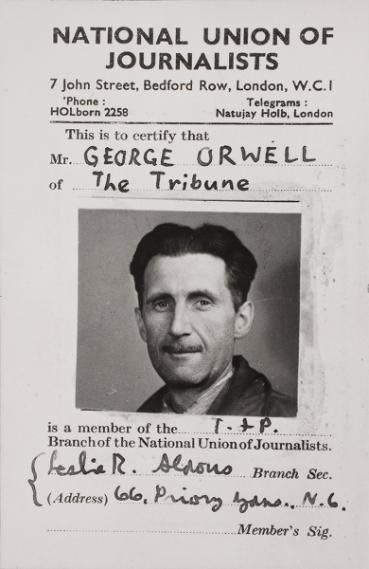
George Orwell is one of the world’s most influential writers, the visionary author of Animal Farm and Nineteen Eighty-four and eyewitness, non-fiction classics Down and Out in Paris in LondonThe Road to Wigan Pier and Homage to Catalonia.

George Orwell was born Eric Blair in India in 1903 into a comfortable ‘lower-upper-middle class’ family. Orwell’s father had served the British Empire, and Orwell’s own first job was as a policeman in Burma. Orwell wrote in “Shooting an Elephant” (1936) that his time in the police force had shown him the “dirty work of Empire at close quarters”; the experience made him a lifelong foe of imperialism.

By the time of his death in 1950, he was world-renowned as a journalist and author: for his eyewitness reporting on war (shot in the neck in Spain) and poverty (tramping in London, washing dishes in Paris or visiting pits and the poor in Wigan); for his political and cultural commentary, where he stood up to power and said the unsayable (‘If liberty means anything at all it means the right to tell people what they do not want to hear’); and for his fiction, including two of the most popular novels ever written: Animal Farm and Nineteen Eighty-Four.

The Orwell Foundation maintains a wealth of Orwell resources, free to access online, from Orwell’s essays and diaries, to a library of work about Orwell and his writing. Read on for an extended biography written by D.J. Taylor. Taylor is an author, journalist and critic. His Biography of Orwell, Orwell: the Life won the 2003 Whitbread Biography Award.

As part of our wider commitment to promote knowledge and understanding of Orwell’s life and work, the Foundation also regularly releases new short educational films. These are free to access on YouTube and include contributions from Orwell’s son Richard Blair, D. J. Taylor, and previous winners of the Orwell Prizes:

The Orwell Foundation is an independent charity – please consider making a donation or becoming a Friend of the Foundation to support our work and maintain these resources for readers everywhere. 


External links:


Resources

We hope teachers will find the Orwell Youth Prize a valuable way of introducing students to writing independently, as well as Orwell’s own work. But there are many other ways of using Orwell in the classroom.

Whatever your subject  – politics, English, history, citizenship, drama to name but a few – whatever the age group – the Orwell Foundation website also has a wealth of resources about Orwell and his work. Over the year’s, we’ve also produced a range of resources to accompany our Youth Prize themes. These are available free to everyone.

Our resources include works by George Orwell, works about George Orwell and video of events run by the Orwell Prize on politics and literature. Below we provide a useful guide to material that might be of particular interest in the classroom; much more is available through the publishers of Orwell, Penguin and Harvill Secker, and the works below are reproduced under copyright of them and the Orwell Estate and with their kind permission.

Works by Orwell

We have dedicated webpages for each of Orwell’s six novels – Burmese Days, A Clergyman’s Daughter, Keep the Aspidistra Flying, Coming Up for Air and of course Animal Farm and Nineteen Eighty-Four – and three major non-fiction works – Down and Out in Paris and London, The Road to Wigan Pier and Homage to Catalonia. Additionally, a selection of other essays and short works (including poetry) by Orwell is available.

Orwell Daily is our weekly Substack serial, picking out highlights and hidden gems from Orwell’s journalism, letters and diaries and sharing them with subscribers “on the day” that they were first published. Please not that the serial is pitched at adult readers.

Orwell and Journalism

In July 2022, the Orwell Youth Prize teamed up with University College London Special Collections and the Orwell Archive to run a summer school for Year 12s on ‘Orwell and Journalism: In Pursuit of Truth’. As part of this project, we also produced online resources, designed for students in Years 12 and 13, on Orwell’s work as a journalist and how his life experiences informed his work.

The written resource includes materials from the Orwell Archive, while the short film includes background about Orwell’s life, journalism and writing style, as well as insights from contemporary journalists.

Events and films

Many of our Orwell Foundation events based on Orwell’s life and work and might be useful: we keep a library of free-to-view recordings on our YouTube.

The Orwell Youth Prize also filmed our own exclusive interview with Richard Blair, which you can see here. Additionally, there are events based on themes Orwell wrote about and many events discussing different aspects of politics and society. In 2020, we also created a new resource on “Orwell and Empire” to accompany Dr Tristram Hunt’s Orwell Memorial Lecture.

Orwell in the Classroom

Below are a few examples of works, or combinations of works, which could work particularly well in the classroom or workshops. They have been selected based on the depth of what we have available, but also the sorts of exercises that they could be used for (e.g. comparing source material with the finished product) and curriculum relevance.

Individual essays that could prompt discussion – a few suggestions

Orwell wrote a number of compelling, accessible essays about language and literature: what do we think of Orwell’s rules? What should the role of literature be?

Eyewitness/descriptive essays: how does Orwell use imagery and other techniques?

Orwell’s essays about politics and ideas (these could be particularly useful in 20th century history – WWII; The Cold War; decolonization etc):

He was also a master at writing about the particular to make a more general point:

Other:

Reviews of authors on the curriculum

Orwell’s best-known pieces of criticism include his essays  on Charles Dickens and Rudyard Kipling; lesser-known reviews include an essay on W. B. Yeats.

Works about particular novels

We have a wealth of background material on all of Orwell’s works, many of which are curriculum stalwarts.

  • for Nineteen Eighty-Four we have Orwell’s essays about language, politics and culture, works by others adapting it, reviews and analysis which could all give a fresh perspective
  • for Animal Farm we have essays concerned with similar themes, Orwell’s proposed prefaces, reviews, analysis and the stories behind the rejections and adaptations

Related works by others

We have pieces about other works contemporary to Orwell. For example, how does Orwell’s reportage in Down and Out (e.g.) compare to other similar works? How was it received by similar authors? And how do Orwell’s dystopias/representations of politics compare to others? (Not least those, like Zamyatin and Koestler, whose works he reviewed.)

We have some material on adaptations. How have others adapted Orwell and his work? For example, Mike Radford and the BBC on Nineteen Eighty Four, Chris Durlacher on adapting Orwell’s life, the story about the cartoon film of Animal Farm. How would you adapt Orwell?

And we have pieces by those inspired by Orwell. How have others followed in Orwell’s footsteps? For example, Emma Larkin in Burma, Stephen Armstrong and others to Wigan. How would you approach a similar project?

The Diaries

For historical source analysis – especially World War II – we have Orwell’s 1938-42 diaries. These also include other interesting contemporary sources, or links to them, such as a public information leaflet on masking windows in July 1939. Most striking are the newspaper articles Orwell references (and which the Diaries blog includes) in the approach to war, summer 1939, e.g. the surprise as the Nazi Soviet Pact is signed in August 1939.

These could help pupils improve their reading of historical sources, contribute to their historical understanding and be used to stimulate wider discussion. Orwell’s diaries can also be read as preparatory work for his longer essays and work, which could be an engaging way of comparing rough drafts with finished products.

For instance, The Road to Wigan Pier diary and Orwell’s other notes (e.g. Barnsley) were obviously kept with The Road to Wigan Pier in mind. Orwell’s Morocco diary (September 1938 to March 1939, part of the 1938-42 diaries) provides the basis for the essay ‘Marrakech’, while the Hop-Picking diaries are used for Down and Out in Paris and London, A Clergyman’s Daughter and essays including ‘Hop-picking’, ‘A Day in the Life of a Tramp’ and ‘The Spike’ (and the links from the Hop-Picking blog include newsreel and other materials).

A simple question would be: how does Orwell turn this material into essays and books? More complex questions might touch on the motivations, ethics and effects of this editing is. This extract from chapter one of Wigan Pier could be a starting point, as is this Observer article, which considers Orwell’s fact and fiction, and articles by Orwell winners, Timothy Garton Ash and Neal Ascherson on journalist Ryszard Kapuściński.

English Language Practice Papers

We have prepared these GCSE AQA-style exam practice papers to give you a helping hand – and to promote the Orwell Youth Prize (registered charity 1156494).

About George Orwell

“My starting point is always a feeling of partisanship, a sense of injustice. When I sit down to write a book, I do not say to myself, ‘I am going to produce a work of art’. I write it because there is some lie that I want to expose, some fact to which I want to draw attention, and my initial concern is to get a hearing. But I could not do the work of writing a book, or even a long magazine article, if it were not also an aesthetic experience.”

George Orwell, Why I Write

George Orwell was born Eric Blair in India in 1903. He was born to a comfortable ‘lower-upper-middle class’ family and a father who served the British Empire (Orwell’s own first job was as a policeman in Burma).

By the time of his death in 1950 (and since), he was world-renowned as a journalist and author: for his eyewitness reporting on war (shot in the neck in Spain) and poverty (tramping in London, washing dishes in Paris, visiting pits and the poor in Wigan); for his political and cultural commentary, where he stood up to power and said the unsayable (‘If liberty means anything at all it means the right to tell people what they do not want to hear’); and for his fiction, including two of the greatest novels ever written: Animal Farm and Nineteen Eighty-Four.

His clear writing and political purpose have inspired and influenced countless journalists, authors and others, of all political persuasions and none, in the generations since. We hope he can do the same for you.

The Orwell Prize website has a large number of Orwell’s work available free online – you can see the collection here.

For teachers

Whatever your subject  – politics, English, history, citizenship, drama to name but a few – whatever the age group you teach – the Orwell Foundation website has a wealth of resources. These are available free to everyone, regardless of whether you or your school are currently involved with the Youth Prize. If you are interested in learning more about our workshops in schools, please get in contact with the administrator at admin@orwellyouthprize.co.uk.

Our resources include works by George Orwell, works about George Orwell and video of events run by the Orwell Prize on politics and literature. Below we provide a useful guide to material that might be of particular interest in the classroom; much more is available through the publishers of Orwell, Penguin and Harvill Secker, and the works below are reproduced under copyright of them and the Orwell Estate and with their kind permission.

Works by Orwell

There is a dedicated webpage for each of Orwell’s six novels – Burmese Days, A Clergyman’s Daughter, Keep the Aspidistra Flying, Coming Up for Air and of course Animal Farm and Nineteen Eighty-Four – and three major non-fiction works – Down and Out in Paris and London, The Road to Wigan Pier and Homage to Catalonia.

Additionally, a selection of other essays and short works (including poetry) by Orwell is available.

There are also three blogs of diaries written by Orwell:

  • 1938-42, includes eyewitness accounts of the Blitz and the run up to WWII (as well as Orwell’s time in Morocco and his experiences of keeping animals and growing vegetables…)
  • Hop-picking (1931), follows some of Orwell’s tramping exploits and his experience of picking hops in Kent, which many urban workers and their families would do in the summer
  • The Road to Wigan Pier (1936), includes Orwell’s research for the book of the same name

Works about Orwell

We have links to analysis, reviews and other material based on Orwell’s life and work; the most relevant to individual novels and diaries should already be linked to from the relevant novel and diary pages.

Orwell Prize events

Many of our Orwell Prize events based on Orwell’s life and work and might be useful. These include:

The Orwell Youth Prize also filmed our own exclusive interview with Richard Blair, which you can see here. Additionally, there are events based on themes Orwell wrote about (such as 2012’s ‘Poverty then and now, Orwell and his successors’), events about political writing more generally (such as ‘Autopsy of a Story’ with three shortlisted journalists dissecting their work and debates like ‘What makes a good political novel?’ with a critic and political novelists), and many events discussing different aspects of politics and society.

Below are a few examples of works, or combinations of works, which could work particularly well in the classroom or workshops. They have been selected based on the depth of what we have available, but also the sorts of exercises that they could be used for (e.g. comparing source material with the finished product) and curriculum relevance.

The Diaries

For historical source analysis – especially World War II – we have Orwell’s 1938-42 diaries. These also include other interesting contemporary sources, or links to them, such as a public information leaflet on masking windows in July 1939. Most striking are the newspaper articles Orwell references (and which the Diaries blog includes) in the approach to war, summer 1939, e.g. the surprise as the Nazi Soviet Pact is signed in August 1939.

Thesecould help pupils improve their reading of historical sources, contribute to their historical understanding and be used to stimulate wider discussion. Orwell’s diaries can also be read as preparatory work for his longer essays and work, which could be an engaging way of comparing rough drafts with finished products.

For instance, The Road to Wigan Pier diary and Orwell’s other notes (e.g. Barnsley) were obviously kept with The Road to Wigan Pier in mind. Orwell’s Morocco diary (September 1938 to March 1939, part of the 1938-42 diaries) provides the basis for the essay ‘Marrakech’, while the Hop-Picking diaries are used for Down and Out in Paris and London, A Clergyman’s Daughter and essays including ‘Hop-picking’, ‘A Day in the Life of a Tramp’ and ‘The Spike’ (and the links from the Hop-Picking blog include newsreel and other materials).

A simple question would be: how does Orwell turn this material into essays and books? More complex questions might touch on the motivations, ethics and effects of this editing is. This extract from chapter one of Wigan Pier could be a starting point, as is this Observer article, which considers Orwell’s fact and fiction, and articles by Orwell winners, Timothy Garton Ash and Neal Ascherson on journalist Ryszard Kapuściński.

Individual essays that could prompt discussion – a few suggestions

Orwell wrote a number of compelling, accessible essays about language and literature: what do we think of Orwell’s rules? What should the role of literature be?

Eyewitness/descriptive essays: how does Orwell use imagery and other techniques?

Orwell’s essays about politics and ideas (these could be particularly useful in 20th century history – WWII; The Cold War; decolonization etc):

He was also a master at writing about the particular to make a more general point:

Other:

Reviews of authors on the curriculum

Orwell’s best-known pieces of criticism include his essays  on Charles Dickens and Rudyard Kipling; lesser-known reviews include an essay on W. B. Yeats.

Works about particular novels

We have a wealth of background material on all of Orwell’s works, many of which are curriculum stalwarts.

  • for Nineteen Eighty-Four we have Orwell’s essays about language, politics and culture, works by others adapting it, reviews and analysis which could all give a fresh perspective
  • for Animal Farm we have essays concerned with similar themes, Orwell’s proposed prefaces, reviews, analysis and the stories behind the rejections and adaptations

Related works by others

We have pieces about other works contemporary to Orwell. For example, how does Orwell’s reportage in Down and Out (e.g.) compare to other similar works? How was it received by similar authors? And how do Orwell’s dystopias/representations of politics compare to others? (Not least those, like Zamyatin and Koestler, whose works he reviewed.)

We have some material on adaptations. How have others adapted Orwell and his work? For example, Mike Radford and the BBC on Nineteen Eighty Four, Chris Durlacher on adapting Orwell’s life, the story about the cartoon film of Animal Farm. How would you adapt Orwell?

And we have pieces by those inspired by Orwell. How have others followed in Orwell’s footsteps? For example, Emma Larkin in Burma, Stephen Armstrong and others to Wigan. How would you approach a similar project?

English Language Practice Papers

We have prepared these GCSE AQA-style exam practice papers to give you a helping hand – and to promote the Orwell Youth Prize (registered charity 1156494).

Scripts – which would allow performance

Many radio scripts by Orwell exist, such as adaptations of Animal Farm and various fairy tales. These can be found in the Orwell Archive and in editions of the Complete Works.

However, online we have a Christmas edition of his radio poetry programme, Voice as well as his own poetry. We also have a short one scene piece by a young Orwell called ‘Free Will’. There is also one chapter of A Clergyman’s Daughter, set in Trafalgar Square, which is written entirely in dramatic form.

Subscribe to our mailing list

* indicates required


A week for Nineteen Eighty-Four

The Orwell Prize, Britain’s most prestigious prize for political writing, is supported by the Media Standards Trust, Political Quarterly, AM Heath and Richard Blair (Orwell’s son). Following its 64th publication anniversary on Sunday sales of Nineteen Eighty-Four spiked amid the surveillance disclosures. Amazon.com reported that the sales increased by 7,000% taking the book from a ranking of 13,074 to the top 200 in the bestseller lists. News outlets across the globe have taken this opportunity to ask questions like, “Is Obama Big Brother, at once omnipresent and opaque? And are we doomed to either submit to the safety of unthinking orthodoxy or endure re-education and face what horrors lie within the dreaded Room 101?” For a selection of the coverage on this see our ‘From elsewhere’ section below. For lots more on Nineteen Eighty-Four you can see the dedicated page on our website.

Dystopian visions of the future

Don’t forget our forthcoming event with The International Anthony Burgess Foundation, hosted by our new friends at their headquarters in Manchester. The Orwell Prize is taking Dr Michael Sayeau for a discussion on Dystopian Visions of the Future. George Orwell’s Nineteen Eighty-Four and Anthony Burgess’s dystopias (including 1985 and A Clockwork Orange) provide the starting point for the conversation in which Sayeau will be joined by Dr Eleanor Byrne (MMU) and Dr Kaye Mitchell (University of Manchester) to examine literary dystopias, and to consider the significance of dystopian ideas for contemporary readers. The event will take place on the evening of Thursday 27th June. Places are free, full details here. In the meantime, you might like to have a listen to this brilliant podcast on Burgess and dystopias.

Things I Don’t Want to Know

Man Booker shortlisted author Deborah Levy has written a response to Orwell’s essay ‘Why I Write’. “Perhaps when Orwell described sheer egoism as a necessary quality for a writer, he was not thinking about the sheer egoism of a female writer. Even the most arrogant female writer has to work over time to build an ego that is robust enough to get her through January, never mind all the way to December,” says Levy of her new work entitled Things I don’t want to know. On Wednesday night we joined Notting Hill Editions to celebrate the launch of the essay at Daunt Books, Marylebone. You can get your copy here now.

From elsewhere

  • Sales of the George Orwell Classic Nineteen Eighty-Four Soar in the TIME
  • ‘Nineteen Eighty-Four’ Sales Spike Amid Surveillance Disclosures in Wall Street Journal
  • So are we living in 1984 in The New Yorker
  • George Orwell back in fashion as Prism stokes paranoia about Big Brother in The Guardian
  • China: turn to Orwell too, post-Snowden in The Financial Times
  • The diaries

    Don’t forget our other Orwell Diary blogs: his Wartime Diary, Hop-Picking Diary and The Road to Wigan Pier Diary. You can sign up to our newsletter If you’ve got any suggestions about our website(s), we’d love to hear from you – email us on katriona.lewis@mediastandardstrust.org. You can also follow us on Twitter and like us on Facebook.

    The Orwell Prize in Manchester

    The Orwell Prize, Britain’s most prestigious prize for political writing, is supported by the Media Standards Trust, Political Quarterly, AM Heath and Richard Blair (Orwell’s son). We’re thrilled to announce our first event with The International Anthony Burgess Foundation, hosted by our new friends at their headquarters in Manchester. The Orwell Prize is taking Dr Michael Sayeau for a discussion on Dystopian Visions of the Future. George Orwell’s Nineteen Eighty-Four and Anthony Burgess’s dystopias (including 1985 and A Clockwork Orange) provide the starting point for the conversation in which Sayeau will be joined by Dr Eleanor Byrne (MMU) and Dr Kaye Mitchell (University of Manchester) to examine literary dystopias, and to consider the significance of dystopian ideas for contemporary readers. The event will take place on the evening of Thursday 27th June. Places are free, full details here. In the meantime, you might like to have a listen to this brilliant podcast on Burgess and dystopias.

    Our 2013 Winners

    The winners of our 20th Orwell Prize were announced on the evening of Wednesday 15th May at a ceremony held at Church House, Westminster. The Journalism Prize was split between Andrew Norfolk for his scoop for The Times on child grooming and Tom Bergin who broke the tax scandal for Reuters. The 2013 Book Prize went to A. T. Williams for A Very British Killing: The Death of Baha Mousa and a Special Prize was awarded to another shortlisted book, On the Front Line: The Collected Journalism of Marie Colvin. You can see photographs of the event on our Facebook page here and we’ll upload a video of the event shortly. Thank you to those who attended, it was a wonderful evening.

    Deborah Levy’s response to ‘Why I Write’

    Man Booker shortlisted author Deborah Levy has written a response to Orwell’s essay ‘Why I Write’. “Perhaps when Orwell described sheer egoism as a necessary quality for a writer, he was not thinking about the sheer egoism of a female writer. Even the most arrogant female writer has to work over time to build an ego that is robust enough to get her through January, never mind all the way to December,” says Levy of her new work entitled Things I don’t want to know. Notting Hill Editions welcome supporters of the Orwell Prize to join Levy at her launch which will take place at Daunt Books Marylebone on Wednesday 12th June, 6.30-8pm. If you’d like to join us there please RSVP to Rosamund Hutchison at rosamundpr@gmail.com

    From elsewhere: a round up of winners coverage

  • No doublespeak in the Hindustan Times
  • Abuse of women and children – even nice guys are guilty of looking away in The Guardian
  • Baha Mouse Book wins Orwell Prize in The Bookseller
  • Baha Mousa book and Marie Colvin honoured by Orwell Prize on BBC News
  • Orwell Prize winners announced: A.T. Williams takes top honor for ‘A Very British Killing’ in NY Daily News
  • From the archive

    The 8th June will mark the 64th anniversary of Orwell’s Nineteen Eighty-Four. Arguably Orwell’s most famous and abidingly relevant work the anniversary is often met with celebration even in lieu of a particularly distinctive year. In the lead up to this you might like to look at the content we have on our website like D.J. Taylor on ‘Orwell and the rats’ or even revisit this year’s BBC series on ‘The Real George Orwell’ with The Road to Nineteen Eighty-Four narrated by Orwell Prize winner David Aaronovitch. For full details on all of our material on this consumate classic see our Nineteen Eighty-Four page on the website.

    The diaries

    Don’t forget our other Orwell Diary blogs: his Wartime Diary, Hop-Picking Diary and The Road to Wigan Pier Diary. You can sign up to our newsletter If you’ve got any suggestions about our website(s), we’d love to hear from you – email us on katriona.lewis@mediastandardstrust.org. You can also follow us on Twitter and like us on Facebook.

    The Real George Orwell and the BBC

    It’s been a phenomenal week for the Prize and Orwell fans everywhere. The inaugural launch of George Orwell Day on Monday 21st spawned a mass celebration of his works. The Orwell Prize ran a read-in of ‘Politics and the English Language’ by offering the consummate essay to read on our website. While Penguin launched their new covers designed by David Pearson which included a special release of the essay in pamphlet form for just 99p. Lots of newspapers got into the spirit of the event; Shami Chakrabarti told us what she thinks Orwell would have written about today, Prospect Magazine celebrated with their best articles on Orwell, the New Statesman looked back on their encounters with Orwell and Stuart Jeffries of the Guardian asked What would Orwell have made of the world in 2013? The Prize also made friends with a few new fans including BBC 6 Music DJ Lauren Laverne who pointed out to us that her twitter biography quotes Orwell. The excitement continues with the BBC Radio 4 season of ‘The Real George Orwell’ which will run on into February with programmes on Animal Farm, Homage to Catalonia, Down and Out in London and Paris and Nineteen Eighty-Four as well as some very special biographical dramatisations of his life. There’s lots of information as well as very interesting blog posts and interviews on the BBC website for the season. The next play is aptly on his time in Burma and will broadcast at 2.15pm today.

    The Irrawaddy Literary Festival

    We’ll be listening to the BBC’s Burma from Burma as the Orwell Prize has now arrived in Rangoon to set up for the first international literary festival here. From Friday we will be disseminating books raised from the ‘Buy a Book for Burma’ campaign, with generous support from our good friends at Penguin Books. We’re bringing along past Prize winner Timothy Garton Ash as well as our Director Jean Seaton to speak on panels at the festival which will include an Orwell lecture as well as talks on censorship and witnessing violence. We’ll be collecting interviews from writers here as well as capturing the essence of Burma and it’s feel for Orwell all these year’s on, to bring back to you soon.

    From the archive

    To join in with the festival why not have a read of one of the three novels we will be giving out. The first chapters of Animal Farm, Burmese Days and Nineteen Eighty-Four are all available on our website. You can also find Orwell’s two big essays on his time in Burma as a police officer; ‘A Hanging’ and ‘Shooting an Elephant‘.

    From elsewhere BBC Special

  • Who was the Real George Orwell? Biographer DJ Taylor speculates on the man himself
  • George Orwell and the BBC by Mark Lawson
  • Animal Farm narrated by Tamsin Greig
  • Homage to Catalonia Part 1 starring Joseph Milne as Eric Blair
  • Burma: a biographical play by Mike Walker
  • George Orwell’s resignation letter to the BBC
  • Aung Sun Suu Kyi on BBC Radio 4 desert island discs
  • The diaries

    Don’t forget our other Orwell Diary blogs: his Wartime Diary, Hop-Picking Diary and The Road to Wigan Pier Diary. You can sign up to our newsletter If you’ve got any suggestions about our website(s), we’d love to hear from you – email us on katriona.lewis@mediastandardstrust.org. You can also follow us on Twitter and like us on Facebook.

    Great Lives

    This week George Orwell was the subject of BBC Radio 4’s Great Lives. The show was presented by Matthew Parris who won the Orwell Prize for Journalism in 2005 and featured former MP Alan Johnson as well as our Orwell Prize Director, Professor Jean Seaton. “A tall thin man sits up in bed with a typewriter on his knees chain smoking,” the program opens on the scene of Orwell’s last months and traces his great life through Eton to Burma, Paris to Wigan, Spain to Jura. During the broadcast Alan Johnson says that Orwell was a crucial part of his political development and central to his education. Reflecting on production of the piece today Jean Seaton said; “People are made of the books they encounter. Alan Johnson is an autodidact; a wise and communicative man. One of the books that made him was Orwell’s.” You can listen to the programme here. George Orwell’s works have inspired many more by nurturing writers like Margaret Atwood. Many have turned their attention to the examination of Orwell’s life including DJ Taylor, Bernard Crick and Gordon Bowker. John Banville once said, ‘his must be the most picked-over illustrious literary corpse of the twentieth century’. On our website you can find a library of pieces on Orwell with words from Will Self, Salman Rushdie, Andrew Marr, Christopher Hitchens and many more.

    The Orwell Lecture

    We are delighted to announce that this year’s Orwell lecture will be delivered by Christopher Andrew on the subject of ‘The Most Important Year in British History, Secrets of the 1962 Missile Crisis’. You can see further details as well as a link on how to book tickets on our website.

    Orwell Art

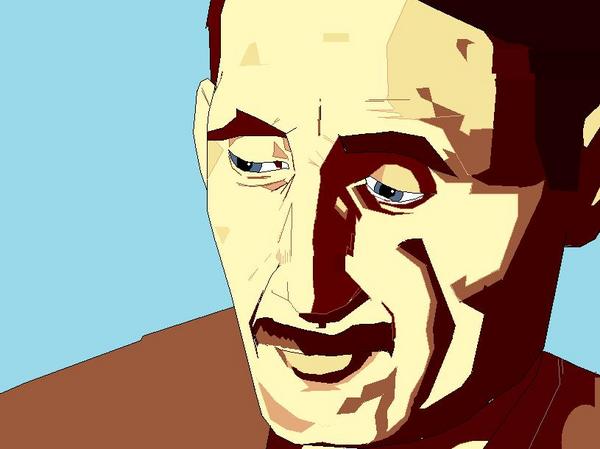
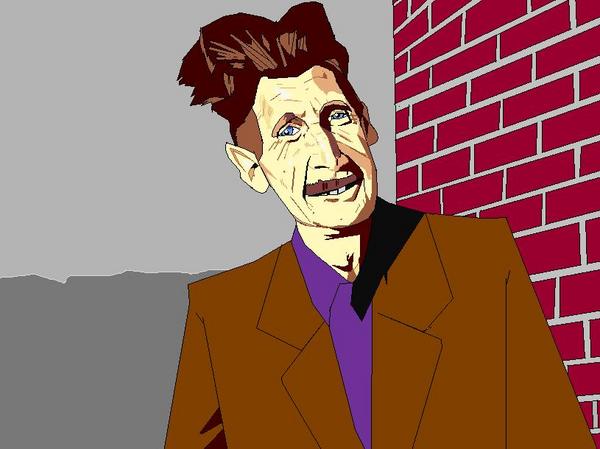
    This week it’s a pleasure to share with you some wonderful artistic portraits of Orwell by Dean Noble who sent the pictures into us via Twitter and said that his inspiration was reading Orwell’s novels.

    From the archive

    While thinking about Orwell’s life and great work, remember The Orwell Prize are able to bring you the first chapter of all of Orwell’s books as well as many essays, courtesy of Penguin Books and AM Heath. See a snapshot of sheer destitution in Down and Out in Paris and London, experience his fight against Spanish fascism in Homage to Catalonia, feel George Bowling’s nostalgic despair in Coming Up for Air, read the scathing critique of totalitarianism that is Animal Farm, remember his stark, dystopian vision of a tyrannical future in Nineteen Eighty-Four and more, all available on our website.

    From elsewhere

  • Sarah Burnside discussed Orwell’s legacy in a comment piece for Eureka Street, and spoke about the continuing ‘intellectual tug-of-war’ induced by the complexities of his political positions
  • Historian Simon Schama told the Financial Times that Orwell was the reason that he became a writer
  • Man Booker-shortlisted novelist Deborah Levy backed Orwell’s conclusions for why writers write during an interview with the Guardian; Deborah has been commissioned to write an essay in response to Orwell’s classic ‘Why I Write’
  • The Comet reported that the organisers of the Letchworth literary festival are ‘thrilled’ to be having The Orwell Prize tonight, where we will be hosting a panel on the topic of ‘Poverty Then and Now: Orwell and his Successors’.

  • The wartime diaries

    This week’s entries were published on 21st and 22nd August 1942. Next week’s entry will be published on 28th September 1942. This newsletter was written with contribution from Tom Webb Don’t forget our other Orwell Diary blogs: his Hop-Picking Diary and The Road to Wigan Pier Diary. You can sign up to our newsletter If you’ve got any suggestions about our website(s), we’d love to hear from you – email us on katriona.lewis@mediastandardstrust.org. You can also follow us on Twitter and like us on Facebook.

    Treading Orwell’s road to Wigan

    A guestpost by Stephen Armstrong, author of Road to Wigan Pier Revisited. Stephen will join our panel for Poverty then and now; Orwell and his successors at Letchworth Festival Thursday 20th September. I don’t think I truly realised the dangers of revisiting Orwell’s The Road to Wigan Pier until I met a former steelworker in Sheffield – a burly man with muscles that clenched like anacondas writhing beneath his skin and who boasted two large tattoos, one on each brawny forearm. On the left he had the white rose of Yorkshire. On the right he had George Orwell’s face. ‘You’d better not fuck this up,’ he warned at the end of a long conversation, pointing at my chest with a finger that looked like it had survived a forge or two. I nodded, thanked him and started to worry. In the south of England telling people I was planning to revisit Orwell’s north west 75 years on, to see what had changed and how the grandchildren of those he met were doing, I found they all thought it was a great idea – up to a point. ‘I mean, there’s no poverty really any more,’ they’d say. ‘So what are you going to write about? Them having last years Nikes?’ In the north, however, people would pause and look at me for a second before replying – a pause that said ‘really? Are you sure?’ in much the same way you might look at a tone deaf relative stepping up to the karaoke stand or nightclub bouncer deciding to fight the Taleban with a pointy stick. If you head beyond Letchworth you find The Road to Wigan Pier joins 1984 and Animal Farm in Orwell’s holy triptych of rebellion. Would you rewrite 1984? Then why dick around with Road, middle class boy? ‘It’s been done before you know,’ a quiet, watchful former shop steward in Liverpool warned me. Huddled in a messy, semi derelict office building near the docks, he crunched data and raised money for old men seeking compensation for industrial injuries from twenty years ago. ‘I know – I’ve read Bea Campbell,’ I nodded, and he relaxed a little. At least he was in favour of the original and welcomed the idea of an update. In Wigan, however, the careful pause was usually followed by a couple of pointers as to where Orwell got things wrong. Orwell focussed on the worst of the worst – a handful of streets, some already scheduled for demolition. They think the tripe shop is half fiction and they’re keen to say how brief his stay was, how he never went back and how he didn’t send a copy of the book to anyone who helped him. ‘Well, he did head off to fight the Spanish Civil War,’ I offered a couple of times – which wasn’t a smart move. ‘So where are you off to once you’ve finished Stephen?’ one women shot back. ‘Afghanistan? My nephew’s out there, you can say hello to him.’ The message was pretty clear – you’re writing about our lives. If you’re doing it to further your career, we’d prefer it if you left right now. If not, you’d better not fuck this up. I’m certain of only three things – death, taxes and the fact that I will never come close to Orwell as a writer or as a man. If there is one area I could compare myself with him, however, it’s in the privilege of my background. I have none of Orwell’s talent. We do, however, have our class in common. He described his family as ‘lower-upper-middle-class.’ I’d describe mine as ‘upper-lower-middle-class.’ My parents were the first in their family line to attend university, I went to a good state school and had the government pay my university fees. We were the product of the post-war welfare state. Free schools, free healthcare – even, briefly, free milk. For my parents it was possible to imagine progress as a given. When Orwell travelled north he did so initially for money – it was a well-paid commission. What he found changed his perspective and helped crystallise his political beliefs. Of course you don’t get that kind of advance these days so I barely covered my travel expenses, but I did begin with a similar motive – I thought it would be interesting, almost a high concept book. The more I saw, the angrier I became – it felt as if the children of those Orwell had met had won opportunities their parents could never have imagined – helped, in part, by Orwell’s writing – but these were being snatched away by people who had never known hardship or hard work. In Wigan Orwell met three people whose names we know – Sid Smith, a paperboy; Gerry Kennon, a union organiser and Jim Hammond, an unemployed blacklisted coal miner. When I went back, Gerry’s son Harry was gravely ill and sadly died last autumn. I did meet Sid’s son Trevor, who told me how his dad had built the largest independent retailer in the North West – Smiths Bookshop – and how the family had sold at the peak of the noughties boom. He has a large house on the edge of town overlooking fields and rolling hills. I also met Jim Hammond’s son Tony – who’s a retired judge. Imagine that – blacklisted coalminer to retired judge in one generation. It’s the British Dream – not to be a millionaire but to see the family do OK and your kids get a better chance than you. Trevor and Tony’s grandchildren now face zero hours contracts, benefit sanctions, agency jobs at food plants sweeping dirty brown water from freezer floors and a gradual destruction of the health and welfare services that kept their grandparents, parents and the like of me and my family alive. At the same time, the left has quietly slipped away from places like Speke and Scholes in Wigan, where Orwell stayed – it prefers to spend its time calling for Blair to be tried as a war criminal. And yet there are acts of violence committed by that government that carry on bullying the grandchildren of Orwell’s people without comment or opposition. The benefit sanctions ramped up by this coalition began in 2000. If you’re late signing on, miss a job interview, misunderstand a form, are late for enforced voluntary work, are deemed healthy by an ATOS computer even though your GP knows you’re on chemotherapy you can have all of your benefits taken away as a punishment. You might get a crisis loan – £28 a week, not even enough to keep a young homeless girl safe from harm. You might not – in which case you’re reliant on the charity of neighbours, churches, mosques and what few UK poverty organisations still have money to help you. The Trussell Trust provides the vast majority of the UK’s food banks. Right now they’re opening two food banks a week all over the country. The Trust’s Coventry food bank opened in 2011 and in its first year fed 7,000 people. The Salisbury food bank fed 4,000 last year, handing out parcels containing roughly three days’ worth of tinned or dry food – the charity calls it ‘a nutritionally balanced, non-perishable ration’. Typically a family with children will get cereal, pasta, tinned meat and veg, cans of tuna, tinned fruit, rice pudding, biscuits, tea, coffee, juice and UHT milk. It’s all put together with the help of nutritionists – but there’s no fresh fruit as the charity is supplied by donations and needs food that will keep. The Trust is a Christian organisation and runs its food banks from churches. In Speke, Liverpool – a garden estate on the fringe of the city built near factories that have long since closed – there are no churches for a couple of miles. The bus fare to the nearest food bank is £4 return. These are people so poor they can’t afford food – if they had £4 they’d eat better. So they walk. But mothers can’t walk, pensioners can’t walk, the ill and infirm can’t walk so the local Citizens Advice Bureau – lead by the redoubtable Eileen Devaney – pay some bus fares out of their tea money. They’re holding a 70s disco on September 14th to raise a little more money – money to pay for the bus fares for people who have no food. Orwell visited political meetings, debated the merits of opposing political ideas, saw violent clashes over intense belief and was helped from city to city by a network of activists and organisers who clubbed together to defend their neighbours and themselves. He found solidarity and a rich working class culture that seemed in some ways superior to his Eton education. Today there are isolated community centres on desolate ground, held together by older working class women who have no time for anything beyond permanent crisis management. In Scholes I met Barbara Nettleton, who lives a few hundred yards along Darlington Street from the site of Orwell’s tripe shop. She runs a community centre and art club, giving Manga classes to school kids and guiding them towards courses in graphic design. She receives no regular funding, but pulls every string and every trick she can to keep hope and beauty alive. There’s art exhibitions every autumn – it’s like the return of the Pitmen Painters – and small social enterprises offer handmade rafts and plumbing services. Like Eileen Devaney, Barbara will not be cowed – governments, councillors, hoodies from the estates, liberal do gooders like me, we all get short shrift. In the end, she cut me some slack after I agreed to help teach writing classes to 14 year olds from rough comprehensives so they could think about journalism, novels or scripts as well as call centres and food plants. Will Self, amazingly, agreed to help, as did Shameless writer and producer Ed McCardie. I like to think that Orwell, if he’d met her and if there hadn’t been a war, would have done something similar. Because in putting down his pen and reaching for a rifle he showed me, at least, that writing isn’t enough. Sometimes writers have to stop observing and actually do something. It’s not enough, but it’s a start. You can sign up to our newsletter. If you’ve got any suggestions about our website(s), we’d love to hear from you – email us on katriona.lewis@mediastandardstrust.org. You can also follow us on Twitter and like us on Facebook.

    Why I wrote Dead Men Risen

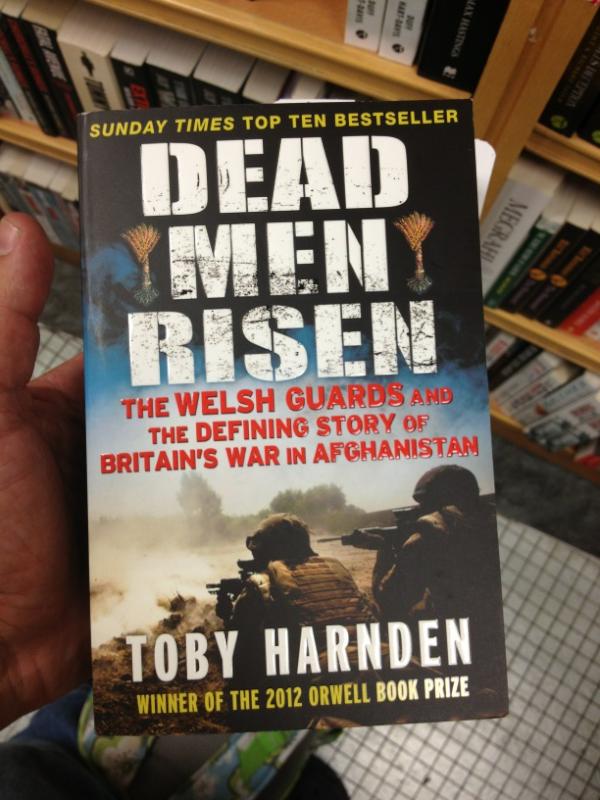
    This is a guest post by Toby Harnden, winner of the 2012 Orwell Prize for Books

  • Toby Harnden on winning The Orwell Prize

  • In his essay of self-examination ‘Why I Write’, George Orwell wrote that “All writers are vain, selfish and lazy, and at the very bottom of their motives there lies a mystery”. Somewhat contradicting the lazy part, in the following sentence he describes the act of writing a book as a “horrible, exhausting struggle, like a long bout of some painful illness”. He was right, of course, that writing a book is not the effortless joy that some might imagine. At times I viewed writing Dead Men Risen as akin to wrestling with a large, slippery monster. On some occasions, it seemed like the pursuit of a quarry I might never catch. Towards the end, it was a test of sheer endurance. And after it was written dealing with a Ministry of Defence determined to gut it or bar it from publication was like a small war, complete with trenches (the offices of Quercus), comrades in arms (the Quercus CEO and his senior staff) and even a little espionage being conducted by either side. But alongside the pain, there is also the sheer pleasure of writing something that will be permanent, of gathering information that might otherwise have been lost in time, of recording how things were in order to prevent them being distorted for propagandist or other purposes. The question of why an author writes a particular book is always instructive. As Orwell argues, there is likely to be a mixture of public-mindedness and ego. Some books are written simply for the money, others as an act of vanity. A few could have been produced by Orwell’s Ministry of Truth in 1984. There are political books written in Washington DC these days by teams of ghost writers at PR firms churning out chapters to a preordained agenda. One of the questions about Dead Men Risen I hadn’t anticipated was one I have frequently been asked: “Why did you write it?” As with most people asked a particular question again and again, I developed an answer. The reason, I said, was that it was to honour my friend Lieutenant Colonel Rupert Thorneloe, the Welsh Guards commanding officer who was killed in action in Afghanistan. And it was because various people told me that the story of the Welsh Guards in Helmand needed to be told. In answering, I stressed external factors, as if acting on these made my motives more respectable. My answer was truthful but it was far from the whole truth. The book needed to be written but, equally, I needed to write it. Looking back (I finished the manuscript nearly 18 months ago), Dead Men Risen was a book that had been in me for almost as long as I could remember. Recently, leafing through some old childhood drawings and writings kept by my parents, I came across a picture of a battle between ‘Great Britain’ and ‘Germany’ in which I had totted up the ‘dead men’ on each side. I also found a work entitled The Cry of Death: The Adventures of Nigel Murphy – my first book, written when I was about seven. War stories and military service fill my memories of childhood. On my mother’s side, all three services were represented – her brother had been in the RAF, her brother-in-law in the Army and my father in the Royal Navy. My grandmother’s cousin, who we would see, had suffered terribly in a Japanese Prisoner of War camp. I remember him pottering around in his garden; we had been told to keep our distance because he had been very badly affected by his experiences. My paternal grandfather had joined the South Wales Borderers with the rank of Boy in the 1920s and retired as a Major three decades later. His father had been a Sergeant in the Royal Berkshire Regiment, serving in the Nile and Egypt campaigns of the 1880s. My grandfather would often bring out an old box and show us his array Second World War medals and the Egypt Medal and Khedive’s Star awarded to his father. Also in the box was a silver identity bracelet that my grandfather had taken from a dead soldier he had found in the desert in North Africa. After the war, he had tried to find his wife, without success. Around the same time, I remember watching a film about the D-Day landings and following a tiny figure storming the beach until he was shot and fell. I then followed another until he too fell. And another. Each man, I reflected, had been a child like me, with a family and a bedroom and things he liked to do. But in an instant, he was dead and anonymous. After leaving school, I followed my father into the Navy and, like him (neither of us got any medals), I never saw active service. I joined three years after the Falklands and, despite my best efforts to get involved – I have a letter chiding me for my excessive zeal in seeking to desert my shore billet for one in Kuwait or Saudi Arabia – the US-led coalition was able to win the Gulf War without me. I’ve seen a lot more war as a journalist than I did in a decade in the Navy. If I’m honest with myself, reporting on wars, and writing Dead Men Risen, has been partly a substitute for not having been a combatant myself. And my childhood fascination with war (and journalism – I would publish my own newspapers with a printing set and pin them up at school, inviting much derision from my peers) led fairly directly to much of what I have done as an adult. So perhaps I should come up with a new answer as to why I wrote Dead Men Risen. Yes, there were those external impulses. And I certainly wanted to know how Britain’s latest Afghan war being prosecuted and whether it was worth it, as the politicians and generals kept asserting in the affirmative. But I also wanted to tell a story about the reality of war and the men who fight it. In the end, Dead Men Risen wasn’t all that different from my counting up those dead Germans and penning The Cry of Death all those years ago. You can sign up to our newsletter. If you’ve got any suggestions about our website(s), we’d love to hear from you – email us on katriona.lewis@mediastandardstrust.org. You can also follow us on Twitter and like us on Facebook.

    Buxton Festival and The Orwell Prize

    This newsletter was written by Olivia De Raadt-St. James Tucked away in Derbyshire’s Peak District, the bustling market town of Buxton annually celebrates art. In two weeks, the area will observe its 34th annual Buxton Festival – a nineteen day event showcasing some of the finest opera, music and literature in the land. For several years, The Orwell Prize has taken a panel of historians, journalists, authors and academics to Buxton. In 2009 we asked what makes a good political novel, in 2010 we debated over whether Dickens or Orwell is the greater writer and last year we discussed the notion that politics could be corrupted by corrupted language. For 2012, on 16th July 2012 Tony Wright will chair a debate; Orwell vs. Kipling. In defence of Orwell will be Paul Anderson and Stuart Evers; fighting for Kipling, Jan Montifiore and Charles Allen. Both Orwell and Kipling were award-winning British authors who were born in India and wrote extensively about the British Empire. However, the manner in which each wrote about the British Empire differed greatly. According to Orwell, Kipling was ‘the prophet of British imperialism in its expansionist phase’ who held ‘romantic ideas about England and the Empire’. Orwell himself was known for writing more critically about British Imperialism and the British Empire, as evidenced in his 1948 essay ‘Shooting an Elephant’; which promoted the idea that both the conqueror and the conquered are destroyed by the process of imperialism. Despite their differences, both Englishmen were incredibly talented intellectuals. Each recognised and utilised the power of publication as a medium through which greater political consciousness could be cultivated within society. In anticipation of the event you could watch the debate that we took to Oxford with a slightly different panel or read ‘Orwell, Kipling and Empire’, a comparison of the men by Douglas Kerr, on our website. We would love to see you on the 16th of July 2012 at the debate between team Orwell and team Kipling, at the Pavilion Arts Centre in Buxton. You can buy tickets here. However, for those of you who are unable to join us a video will be uploaded to our website soon after.

    Orwell BBC series announced

    We are delighted to share with you that last week Jonathan Holloway’s new radio dramatisation of Nineteen Eighty-Four was recorded at the BBC’s Broadcasting House. Christopher Eccleston plays Winston Smith, Tim Piggott-Smith is O’Brien and Pippa Nixon is Julia. The two-part classic serial for BBC Radio 4 will be broadcast in January 2013 as part of a series celebrating George Orwell which will also include a new dramatisation of Homage to Catalonia and a new production of Orwell’s own radio adaptation of Animal Farm.

    From the archive

    Thinking about BBC production as well as the man Orwell was, we are reminded of Chris Durlacher’s work to remember Orwell’s life through film. The Emmy-winning dramatised biography was shown in 2003 for Orwell’s birthday which we celebrated again just last week. You can see the footage on our website. If you’re interested in other Orwell adaptations you might also like the video of how Animal Farm was adapted into an animation here.

    From elsewhere

  • Douglas Murray, who was longlisted for the Book Prize this year (and the Journalism Prize last year), wrote a wonderful diary entry on his experience of our 2012 Prize Ceremony
  • If you missed the Orwell Society’s, ‘One Georgie Orwell’ at the Greenwich Theatre earlier this year, you can now watch a clip of the musical tribute on youtube
  • On Monday, George Orwell appeared in a Guardian quiz of their suggested questions for a citizenship test. They asked; what did George Orwell identify as the ‘most hateful of all names in an English ear’? a) Tightwad, b)Nosey parker, c) Trollop or d) Lounge Lizard. You can take the whole quiz here
  • In an interview with The Asian Age, Siddhartha Deb spoke about his 2012 shortlisted book The Beautiful and The Damned
  • The wartime diaries

    This week’s entry was published on 3rd July 1942. Next week’s entry will be published on 10st July 1942. Don’t forget our other Orwell Diary blogs: his Hop-Picking Diary and The Road to Wigan Pier Diary. If you’ve got any suggestions about our website(s), we’d love to hear from you – email us on katriona.lewis@mediastandardstrust.org. You can also follow us on Twitter and like us on Facebook.

    Happy Birthday to George

    George Orwell was born as Eric Blair on 25th June 1903 so Monday could have been his 109th birthday. We had lots of tweets on what people were reading to celebrate and the most prominent were; Nineteen Eighty Four, Road to Wigan Pier and Homage to Catalonia. If you’d like to celebrate Orwell you can find many of his essays, as well as notes on his novels with their first chapter and much much more on our website.

    Buxton Festival 2012

    We’re so excited to be returning to Buxton on 16th July. For 2012 we’ll be taking Paul Anderson, Jan Montifiore, Charles Allen, Tony Wright and Stuart Evers to row about who is the better writer; Orwell or Kipling. You can see full details on our website.

    From the archive

    Independent Booksellers’ Week starts tomorrow. Why not pick up Keep the Aspidistra Flying for a picture of Orwell’s Gordon Comstock working in a book shop? Or you can read ‘Bookshop Memories’ which tells the story of Orwell’s own experiences selling books. Or you could reacquaint yourself with Orwell’s, ‘Confessions of a Book Reviewer’ and have a look at 2012 posthumous Special Prize winner Christopher Hitchens’ ‘Fleet Street’s Finest’. Or you could read Orwell’s brilliant ‘Good Bad Books’.

    From elsewhere

  • Orwell Prize winner Clive James recently looked back across his entire career on BBC Radio 4s Meeting Myself Coming Back.You can listen to the podcast here.
  • For the week of Orwell’s birthday, news site Flavorwire put together a package of 15 Authors on Why They Write
  • This week Raja Shehadeh, winner of the 2008 Orwell Prize for Books, wrote a great post for the New York Times blog on Israeli Checkpoints.

  • The wartime diaries

    This week’s entry was published on 26th June 1942. Next week’s entries will be published on 1st and 3rd July 1942. Don’t forget our other Orwell Diary blogs: his Hop-Picking Diary and The Road to Wigan Pier Diary. If you’ve got any suggestions about our website(s), we’d love to hear from you – email us on katriona.lewis@mediastandardstrust.org. You can also follow us on Twitter and like us on Facebook.

    Dickens and O’Shaughnessy

    Tomorrow it will be 142 years since Charles Dickens died. Two centuries since his death Dickens is still much loved for his great contribution to classic English literature. It is thought by many that he was the quintessential Victorian author. Dickens is quoted as saying; “Every human creature is constituted to be that profound secret and mystery to every other.” You can read Orwell’s views on Dickens’ message in his essay Charles Dickens on our website. In 2010 we took a debate to Buxton festival called The Greatest Political Writer: Orwell versus Dickens. In July this year we will be returning to Buxton to debate Orwell versus Kipling. On a brighter note tomorrow is also the wedding anniversary of George Orwell and Eileen O’Shaughnessy who married in 1936.

    Awards Ceremony 2012

    The photographs of this year’s Orwell Prize Ceremony have been uploaded to The Orwell Prize Facebook page. And remember – you can read the first chapter of the winning book, all of the winning journalism and the winning blogposts on our site.

    From the archive

    All the excitement over the Queen’s Diamond jubilee celebration reminded us of this quote from Orwell’s essay The Lion and the Unicorn; “In England patriotism takes different forms in different classes, but it runs like a connecting thread through nearly all of them.” Today we have celebrated the anniversary of Nineteen Eighty Four which was published on 8th June 1949

    From elsewhere

  • For a chance to win a copy of The Orwell Prize winning, Dead Men Risen tweet The Orwell Prize telling us why you write. The winners will be chosen by Toby Harnden and announced on Monday 11th June
  • Last week Elton John said the Animal Farm stage musical he’s working on is “really dark”
  • Ray Bradbury, who wrote Fahrenheit 451, died this week
  • Orwell Prize 2012 Blog Judge, Hopi Sen, won a gigantic cake carved into a likeness of Her Majesty at Jubilee fete on the weekend
  • The wartime diaries

    This week’s entries were published on 4th, 6th, 7th and 10th June 1942. Next week’s entries will be published on 11th, 13th and 15th June 1942. Don’t forget our other Orwell Diary blogs: his Hop-Picking Diary and The Road to Wigan Pier Diary. If you’ve got any suggestions about our website(s), we’d love to hear from you – email us on katriona.lewis@mediastandardstrust.org. You can also follow us on Twitter and like us on Facebook.

    1984

    A week today, Friday 8th June, will be the 63rd anniversary of the publication of Nineteen Eighty-Four. Since its first publication in 1949 reportedly more than 25 million copies have been sold worldwide and Nineteen Eighty-Four is regularly cited as one of the best books of the 20th century. The novel is the source of phrases now used as commonplace in the English language like ‘Big Brother’, ‘thought police’, ‘Room 101′, ‘doublethink’ and ‘newspeak’ and the cultural impact of 1984 has resonated into its imagined time setting and beyond. In the year 1984, Apple Macintosh launched their brand in a once only aired ad inspired by a 1984 film adaptation, more and more the book is used in the style of a cautionary tale upheld to warn against the introduction of a surveillance society. Almost every day Orwell’s arguably most famous work is referenced in the popular press. You can enjoy the anniversary of this much celebrated book with some reading on our website. The first chapter of 1984 is on our dedicated 1984 webpage, along with lots of other pieces about the book. These include some of Orwell’s own articles on language (‘Politics and the English Language’ and ‘In Front of Your Nose’), dystopian fiction (on Zamyatin’s WeWe and Arthur Koestler) and other subjects (‘Just Junk’ and ‘Pleasure Spots’). We also have plenty of other treats: the original reviews of 1984 by The Guardian and the New Statesman (by V. S. Pritchett), articles by Bernard Crick, Robert Harris, Robert McCrum and Ben Pimlott and a video Q&A with Mike Radford (director of the 1984 film version of 1984). You can also watch the BBC’s 1954 TV adaptation on YouTube (Wikipedia has some more information on the controversy around the broadcast).There’s much more on our website.

    From the archive

    ‘Benefit of Clergy’ is Orwell’s analysis of Salvador Dali’s autobiography, his life and work and the difficulties of memoir writing. ‘Why I Write’ containing the Orwell Prize’s motto, ‘What I have most wanted to do… is to make political writing into an art’ was published in June 1946.

    From elsewhere

  • We’ve uploaded a new podcast to our website in which Stephen Armstrong talks about the journey of his book The Road to Wigan Pier: Revisited continuing celebrations for the 75th anniversary of Orwell’s original The Road to Wigan Pier
  • More listening for you this week as Radio 4 have uploaded all of Clive James’ Orwell Prize winning A point of view essays for you to hear here
  • Shortlisted blogger Rebecca Omonira-Oyekanmi’s new book with will be among the first published by independent house Lonely Coot. Lonely Coot are launching and celebrating the release of their first titles in Dalston on the evening of 7th June. For more details
  • Standby for a new Twitter competition to win copies of Orwell Prize for Books 2012 winner, Dead Men Risen, judged by the author Toby Harnden
  • The wartime diaries

    This week’s entry was published on 30th May 1942. Next week’s entry will be published on 4th, 6th, 7th and 10th June 1942. Don’t forget our other Orwell Diary blogs: his Hop-Picking Diary and The Road to Wigan Pier Diary. If you’ve got any suggestions about our website(s), we’d love to hear from you – email us on katriona.lewis@mediastandardstrust.org or follow us on Twitter.

    Longlists to be announced on Wednesday

    We received a record number of entrants for the 2012 Prize; 264 authors, 140 journalists and 226 bloggers submitted work. Our judges have been busy reading since the New Year and the longlists are due to be announced at midday on Wednesday 28th March. They will be available on our website. For a reminder of the full list of entrants go to Book PrizeJournalism Prize and Blog Prize on our website.

    The new administrator has been appointed

    The Orwell Prize has appointed a new full-time administrator to replace Gavin Freeguard. Katriona Lewis joins the Prize after recently completing a postgraduate degree at Goldsmiths, University of London. You can contact her on Katriona.Lewis@mediastandardstrust.org or call 0207 229 5722

    Orwell at the Sunday Times Oxford Literary Festival

    We’ll be at the Sunday Times Oxford Literary Festival for a fifth year with three events. Click the links to find out more, to book and to read relevant Orwell essays:

    • Politics and the Press, 4pm, Sunday 1 April: Gaby Hinsliff, Martin Moore, Lance Price chaired by Jean Seaton

    From the archive

    One of Orwell’s most interesting essays on political language, ‘In Front of Your Nose’, was first published on 22nd March 1946. You can read the article on our website.

    From elsewhere

    The Guardian reports on plans for a new film adaptation of George Orwell’s Nineteen Eight-Four. – John O’Sullivan, blogging for the National Review Online, cites Orwell’s essay, ‘Decline of the English Murder’ in a piece about the challenges associated with writing a modern-day murder thriller.

    The wartime diaries

    This week’s entry was published on 22nd March 1942. Next week’s entries will be published on 27th March 1942. Don’t forget our other Orwell Diary blogs: his Hop-Picking Diary and The Road to Wigan Pier Diary. If you’ve got any suggestions about our website(s), we’d love to hear from you – email us on katriona.lewis@mediastandardstrust.org or follow us on Twitter. And you can subscribe to this newsletter via email.

    Anniversary of The Road to Wigan Pier’s publication

    This Thursday, 8th March, saw the 75th anniversary of the publication of The Road to Wigan Pier. To mark the anniversary, why not listen to Stephen Armstrong, author of The Road to Wigan Pier Revisited, and Professor Stephen Ingle, a George Orwell biographer, discussing how working class life has changed in 75 years, on BBC Radio 4’s Today (Friday 9th March). Don’t forget you can read the first chapter, as well as other pieces about the book on our website. The Road to Wigan Pier Diary, is also available, as are a flickr set of archive images, and a Google Map, tracking Orwell’s journey.

    Orwell Prize Entries 2012

    The full list of entries, for the Book PrizeJournalism Prize and Blog Prizecan be found on our website. And you can find out more about this year’s judges, too.

    At the Sunday Times Oxford Literary Festival 2012

    We’ll be at the Sunday Times Oxford Literary Festival for a fifth year, with three events. Click on the event titles for full details, to book and to read some relevant Orwell essays:

    • Homage to Catalonia: the Spanish Civil War, 2pm, Friday 30 March: Helen Graham, Paul Preston, Francisco Romero Salvado, chaired by Jean Seaton
    • The Road to Wigan Pier: 75 years on, 6.30pm, Saturday 31 March: Stephen Armstrong, Beatrix Campbell, Juliet Gardiner, Paul Mason, chaired by D. J. Taylor
    • Politics and the Press, 4pm, Sunday 1 April: Gaby Hinsliff, Martin Moore, Lance Price, chaired by Jean Seaton

    From the archive

    To mark International Women’s Day 2012 (Thursday 8th March), you can listen to Orwell Prize Director, and Orwell biographer, D.J. Taylor, talk about Orwell’s women on BBC Radio 4’s Woman’s Hour, from 2009.

      From elsewhere

      A letter sent to Orwell in 1949 by Aldous Huxley has been added to the website Letters of Note. In the letter, Huxley praises 1984, before focusing on the differences between Orwell’s predictions and those revealed in his own masterpiece, Brave New World.

    This year’s entries

    Here’s your reading list for the next few months: we’ve published a full list of entries for the Orwell Prize 2012. Yet again, we’ve received a record number of submissions for each Prize, with 263 264 books140 journalists and 226 bloggers put forward. More details – and links – can be found on the Book Prize 2012Journalism Prize 2012 and Blog Prize 2012 entry pages.

    Job advert: Orwell Prize administrator

    We’re advertising for a new Orwell Prize administrator. The current deputy director, Gavin Freeguard, will be leaving the Prize and the Media Standards Trust (which administers the Prize on behalf of the Council of the Orwell Prize) at the beginning of March. He has been responsible for running the Prize since November 2007. You can find the advert on the w4mp website, on the Orwell Prize website, and on the Media Standards Trust website.

    Christopher Hitchens on Animal Farm

    The Prize is privileged to be able to give you an exclusive extract of an introduction to Animal Farm by the late Christopher Hitchens. Thanks to publishers Harvill Secker, you can – for a limited time – read Christopher’s thoughts on the publication, and the afterlife, of Orwell’s classic, on our website.

    Nineteen Eighty-Four at Foyles

    The Foyles Café at Foyles Bookshop, Charing Cross Road is currently exhibiting some of Aleks Krotoski’s photographs inspired by Nineteen Eighty-Four. Aleks spent just over a year telling the first 369 words of the novel, one word at a time, in photographs. You can see the full set of images on her Flickr stream, and you can buy some of the images via her online storeMore on the novel on our site.

    Nightjack

    Nightjack (or properly, Jack Night, blogging at ‘Nightjack: An English Detective’) was the winner of the first Orwell Prize for Blogs, in 2009. A few weeks later, he was revealed by The Times to be Richard Horton, after Lord Justice Eady refused an injunction to protect Nightjack’s identity. The case has been revisited during the course of the Leveson Inquiry on press ethics, with evidence suggesting that Nightjack’s identity was exposed as a result of email hacking by a Times reporter. The police are now investigating, and this Wednesday’s Times carried ‘Times Editor James Harding apologises for email hacking’ (£)Times carried ‘Times Editor James Harding apologises for email hacking’ (£) on its front page. Former Orwell Prize judge, David Allen Green (shortlisted by Richard when he judged the Blog Prize 2010, and who discussed political blogging with him at our 2011 longlist debate) has written about the case here and here (Jack of Kent), and herehereherehere and here (New Statesman).

    At the Sunday Times Oxford Literary Festival 2012

    We’ll be at the Sunday Times Oxford Literary Festival for a fifth year, with three events. Click on the event titles for full details, to book and to read some relevant Orwell essays:

    • Homage to Catalonia: the Spanish Civil War, 2pm, Friday 30 March: Helen Graham, Paul Preston, Francisco Romero Salvado, chaired by Jean Seaton
    • The Road to Wigan Pier: 75 years on, 6.30pm, Saturday 31 March: Stephen Armstrong, Beatrix Campbell, Juliet Gardiner, Paul Mason, chaired by D. J. Taylor
    • Politics and the Press, 4pm, Sunday 1 April: Gaby Hinsliff, Martin Moore, Lance Price, chaired by Jean Seaton

    From the archive

    Fans around the world celebrated the 200th anniversary of Charles Dickens’ birth on 7 February. On our website, we have Orwell’s famous essay, ‘Charles Dickens’ (originally published in 1940, along with ‘Inside the Whale’ and ‘Boys’ Weeklies’). We’ve also used the essay as a happy excuse for a couple of debates  on Orwell vs Dickens, both of which you can watch video of: Francine Stock, Jenny Hartley, Philip Hensher, Hardeep Singh Kohli and Jean Seaton in Oxford, 2009; and Dame Janet Smith, David Aaronovitch, Lucinda Hawksley, Michael Slater and DJ Taylor in Buxton, 2010. There have been a number of Orwell publication anniversaries over the last few weeks, too. ‘Books vs. Cigarettes’ was first published on 8 February 1946. ‘The Moon Under Water’, on Orwell’s perfect pub, was first published on 9 February 1946 (the late Keith Waterhouse and BBC Radio 4’s Today programme have both considered the essay in the past, while Orwell also wrote a review of Mass Observation’s ‘The Pub and the People’ in 1943). There are a couple of new Orwell essays on poetry on our site. W. B. Yeats died on 28 January 1939 – Orwell wrote an essay on him in 1943 – and you can also read ‘Nonsense Poetry’ from 1945, all about Edward Lear (who died on 29 January 1888). Our section on Orwell’s poetry has poems by Orwell, and some essays by and about him on the subject. Also new to our site recently: Orwell’s ‘Antisemitism in Britain’ (1945) and ‘Reflections on Gandhi’ (1949).

    From elsewhere

    The Wartime Diaries

    The next entry will be published on 14th March. Don’t forget our other Orwell Diary blogs: his Hop-Picking Diary and The Road to Wigan Pier Diary. If you’ve got any suggestions about our website(s), we’d love to hear from you – email us on gavin.freeguard@mediastandardstrust.org or follow us on Twitter. And you can subscribe to this newsletter via email.